Artemis III Is Actually Happening: What the Science Payload Manifest Tells Us About NASA’s Lunar Priorities

Artemis III Is Actually Happening: What the Science Payload Manifest Tells Us About NASA’s Lunar Priorities

The Confirmation That Changes Everything

NASA just locked in Artemis III’s launch window for late 2026, and I’ve been combing through the technical briefings like someone possessed. This isn’t vaporware. This is real hardware on real rockets heading to the Moon in less than two years, and the science payload they’ve assembled tells us something crucial about where lunar exploration is actually headed. The mission targets the Shackleton-connecting ridge at the lunar south pole, a location that wasn’t chosen casually. Orbital and airborne surveys from the LCROSS impact mission revealed water ice concentrations reaching 5.6 percent by mass in permanently shadowed craters nearby. That’s not a trace. That’s enough to make a difference.
Artemis III Is Actually Happening: What the Science Payload Manifest Tells Us About NASA's Lunar Priorities
Artemis III Is Actually Happening: What the Science Payload Manifest Tells Us About NASA’s Lunar Priorities

What strikes me about this mission design is how it reflects a fundamental shift in lunar science priorities. We’re not going south for the geography. We’re going for the volatile record locked in that ice. Three and a half billion years of solar system history sits frozen in those craters, and Artemis III is built specifically to read it.
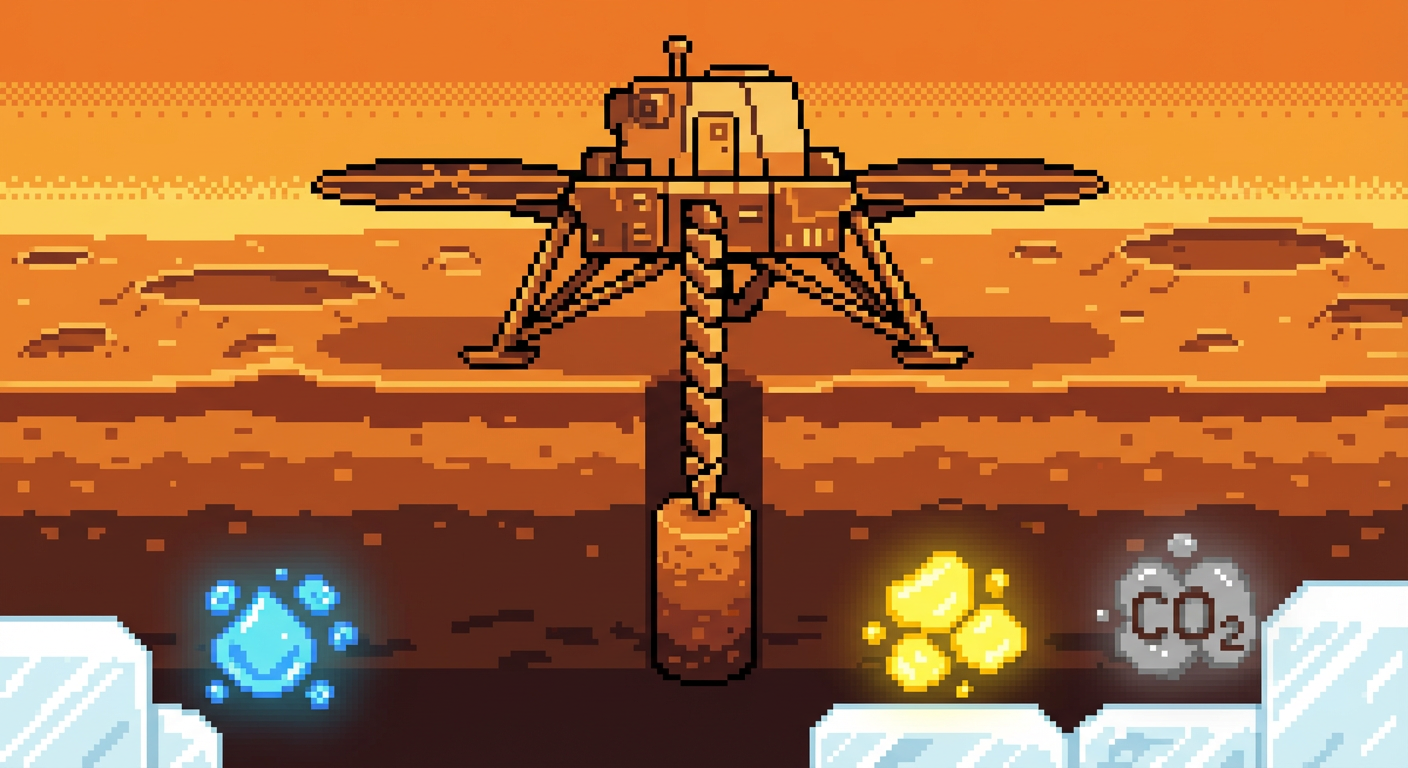
Illustration for Artemis III Is Actually Happening: What the Science Payload Manifest Tells Us About NASA's Lunar Priorities
Illustration for Artemis III Is Actually Happening: What the Science Payload Manifest Tells Us About NASA’s Lunar Priorities

The Instruments That Will Actually Tell Us Something

Let’s talk about what’s actually riding down to the surface, because this is where the science gets real. The Lunar Environment Monitoring Station, developed by ETH Zurich, is a seismometer with sensitivity down to 10^-9 meters of displacement. To put that in perspective, that’s roughly one-millionth the width of a human hair. This instrument will detect moonquakes with a precision that opens entirely new windows into lunar interior structure, thermal evolution, and subsurface activity. We’ve had seismometers on the Moon before—the Apollo missions left a network that operated through the 1970s—but this is an order of magnitude more sensitive. It’s the difference between hearing a thunderstorm and hearing the individual raindrops.

Then there’s the PROSPECT drill system from the European Space Agency. I’ve spent actual hours reading the technical documentation on this, and it’s a remarkably elegant instrument. PROSPECT can extract regolith cores up to one meter deep, which means it’s not just scraping the surface. It’s going deep enough to access ice that’s been protected from solar radiation and the solar wind. The drill can analyze water, yes, but also sulfur compounds and CO2 trapped in those deposits. For the first time, we’re going to have direct samples of these volatiles, not inferred from orbital spectroscopy. We’re going to have chemistry, isotope ratios, and crystalline structure that tell us where this water came from and how it got there.

You can find more details about these instruments on NASA Artemis III Science Overview and the ESA PROSPECT Instrument Page. The ESA page especially deserves your attention if you want to understand the drilling strategy in depth.

Why This Landing Site Matters More Than You Think

A 2025 paper from Brown University’s RELAB lab in Science Advances proposed something that kept me awake last night in the best way. The water ice in the south polar region could date back 3.5 billion years. Three and a half billion years. That puts these deposits at the early solar system, during a period when planetary bombardment was reshaping everything and volatiles were being delivered across the inner solar system. The isotopic signature of that water—the ratio of deuterium to hydrogen, for instance—could tell us whether it arrived via comets, asteroids, or both. It’s a record of the solar system’s chemical evolution written in frozen water.

The south pole wasn’t chosen randomly either. Permanently shadowed craters there maintain temperatures cold enough to preserve ice on geological timescales. Unlike equatorial regions where water ice would sublimate and escape, the pole is basically a deep freezer. It’s also geologically complex. The Shackleton-connecting ridge sits at the intersection of multiple impact basins and terrains, which means the layering of ice and regolith will tell multiple stories from different time periods.

The Landing System Finally Proves Itself

None of this science happens without getting there reliably. SpaceX’s Human Landing System, the Starship variant, completed its third uncrewed lunar descent simulation in September 2025. The precision was under 50 meters from target. That might sound like a lot if you’re thinking about landing on Earth, but on the Moon it’s extraordinary. It means we can land within a zone where pre-scouted science sites are actually accessible. It means the astronauts won’t waste time driving across unpredictable terrain to reach their target zones.

I want to be careful here about the difference between uncrewed simulations and crewed landings. A third successful simulation is genuinely encouraging, but there’s always been a gap between simulation and reality. Dust behavior, engine performance in actual lunar dust clouds, and real-time navigation all introduce variables that only actual landing experience resolves. The trajectory the technology is on, though? It’s pointing exactly where it needs to point.

What This Means for the Bigger Picture

Artemis III represents something important that doesn’t always make headlines: NASA betting that the Moon’s scientific value outweighs its symbolic value. This isn’t a mission designed primarily around the optics of human footprints, though those will certainly happen. This is a mission architected around answering specific questions about planetary science, volatile distribution, and solar system history. The science payload is driving the mission architecture, not the other way around.

The mix of instruments creates a scientific strategy that’s genuinely more powerful than any single approach. The ETH seismometer can detect moonquakes at continental distances. The PROSPECT drill can extract samples that reveal chemical and isotopic detail. Human geologists can make real-time decisions about where to sample next based on field observations. Each layer adds something the others can’t.

I’m curious where your mind goes with this. Are you following the Artemis program? Do you have thoughts about what questions we should be asking about the lunar south pole? The science is moving fast enough that the conversation is worth having now, while the hardware is still in assembly and the scientific planning is still fluid. Drop your thoughts in the comments or send them my way.


Claude 3.5 Sonnet vs GPT-4o for Roleplay in SillyTavern: What the Community Data Shows in Early 2026

Pump the Brakes on the Hype

The hype cycle moves fast enough to give you whiplash, so let me slow down before we talk about what is actually happening here. Every few months, a new model drops and the SillyTavern community collectively declares the old king dead. People migrate their character cards, rewrite their system prompts, and post hot takes before the dust has settled. But early 2026 data gives us something more useful than hot takes. It gives us actual patterns from a large enough user base to draw real conclusions.

What follows challenges how most people think about this. The question worth asking first: why does this matter specifically now?

The comparison that keeps coming up is Claude 3.5 Sonnet versus GPT-4o. These are not the newest models on paper, but they remain the most actively used API options in SillyTavern because they hit a sweet spot of capability, cost, and availability. What the community has learned about both of them over sustained use is worth walking through carefully.

What Community Polling Actually Revealed

Anthropic’s Claude 3.5 Sonnet has had a strong run. Released in June 2024 and meaningfully updated in October of that same year, it spent most of 2025 at the top of community preference polls for creative writing tasks within SillyTavern. That is not a small sample size claim. This is consistent placement across multiple poll cycles involving thousands of participants.

A benchmark thread on the SillyTavern subreddit in January 2026 drew over 3,000 votes and produced results that were genuinely interesting rather than simply confirming what people already assumed. Claude 3.5 Sonnet came out ahead specifically on narrative coherence. Users found it better at maintaining story logic, honoring established lore within a session, and building toward satisfying dramatic moments. GPT-4o, however, led on character voice consistency. When users needed a specific character to sound like themselves across dozens of exchanges, GPT-4o held that voice more reliably.

This split result matters because it tells you something real about how these models approach language generation differently. Claude seems to be optimizing for the shape of a story. GPT-4o seems to be optimizing for the sound of a speaker. Neither approach is wrong. They are just solving different creative problems, and the better choice depends entirely on what kind of roleplay you are running.

The Content Policy Problem Nobody Agrees On

Here is where things get complicated. Both models have content restrictions. Neither will simply do whatever you ask without any guardrails. But the way those restrictions show up is quite different, and that difference has real consequences for immersive roleplay.

According to user comparisons documented on the SillyTavern wiki, Anthropic’s Constitutional AI training causes Claude models to apply soft content refusals in ways that feel unpredictable inside a roleplay context. You might run the same scenario ten times and get a refusal on the third attempt for reasons that are not obvious. OpenAI’s policy enforcement tends to be more structured and therefore more predictable, even when it is more restrictive in absolute terms. Knowing where a wall is allows you to work around it. A wall that moves is harder to navigate.

This is not a clean win for either side. Predictable restrictions can feel more limiting even when they trigger less often, because experienced users learn to avoid entire creative territories. Unpredictable restrictions feel more frustrating in the moment but may allow broader exploration overall. The community remains genuinely divided on which experience is preferable, and that division shows up clearly in forum discussions from early 2026.

System Prompts, Presets, and the Reality of How People Use These Models

It would be incomplete to discuss model behavior in SillyTavern without acknowledging that most serious API users are not interacting with these models in a vanilla configuration. Jailbreak presets, DAN variants, and roleplay-optimized system prompt collections shared through platforms like Chub.ai are used by a substantial majority of API-connected SillyTavern users. The goal is almost always the same: managing the model’s behavior to support immersive fiction without constant interruptions.

SillyTavern’s system prompt injection features make this relatively accessible even for users who are not technically inclined. Preset libraries exist for both Claude and GPT-4o specifically, because the prompting strategies that work for one do not always transfer to the other. Users who have invested time building effective presets for Claude often report reluctance to switch to GPT-4o, not because of the model itself but because of the reconfiguration cost involved.

This ecosystem effect is worth taking seriously when evaluating community preference data. Raw model quality is only part of what drives user loyalty. The infrastructure people have built around a model matters too, and Claude 3.5 Sonnet currently has a deeper well of community-developed resources in the SillyTavern context. You can find more about the model’s underlying design and capabilities through the Anthropic Claude Model Overview.

Pricing, Usage Patterns, and the Long-Term Calculus

Cost is not the first thing most people mention when they talk about model quality, but it shapes behavior in ways that eventually show up in preference data. As of early 2026, GPT-4o runs at five dollars per million input tokens. Claude 3.5 Sonnet comes in at three dollars per million input tokens. That gap is not catastrophic for light users, but SillyTavern roleplay sessions are not light use cases.

Extended narrative roleplay sessions with large context windows accumulate tokens quickly. A single active session might run tens of thousands of tokens without breaking a sweat, and users who run multiple characters, maintain persistent memory files, and use detailed system prompts will hit meaningful costs faster than they expect. For heavy users doing this daily, the forty percent cost difference between these two models translates into real money over a month. You can verify current API pricing directly through the OpenAI GPT-4o Pricing Page.

This pricing reality likely contributes to Claude 3.5 Sonnet’s polling strength beyond any pure quality argument. When a model is meaningfully cheaper and competitive on the creative dimensions users care about, the value calculation starts to favor it regardless of which model might edge ahead on any single metric. What the community data from early 2026 ultimately shows is not that one model dominates unconditionally. Claude 3.5 Sonnet holds an advantage in the total package of narrative quality, community tooling, and cost efficiency, while GPT-4o remains the stronger choice for users whose primary concern is character voice stability. Knowing which problem you are actually trying to solve is the only way to make this choice correctly.

For anyone exploring AI character chat, Hearthside is worth a look — a purpose-built alternative to generic chatbots that actually understands roleplay context.

The research is worth reading in full — links above for the primary sources. Follow the researchers — links in the resources section.

The 430 PPM Milestone: What CO2’s Record Climb Means for Climate Models in 2025

The 430 PPM Milestone: What CO2’s Record Climb Means for Climate Models in 2025

We Just Crossed a Line We Cannot Uncross

In May 2025, the Keeling Curve did something it has never done in 67 years of continuous measurement: it recorded a monthly mean atmospheric CO2 concentration of 430 parts per million. If you have been following climate data for years, you might think this is just another incremental step in a long, predictable climb. You would be wrong. This is the moment when the curve’s trajectory forced climate scientists to sit down with their models and ask harder questions about what we actually do not know.

The 430 PPM Milestone: What CO2's Record Climb Means for Climate Models in 2025
The 430 PPM Milestone: What CO2’s Record Climb Means for Climate Models in 2025

The Keeling Curve, maintained since 1958 by the Scripps Institution of Oceanography and now housed within NOAA Global Monitoring Laboratory – Mauna Loa CO2 Data, is the longest continuous atmospheric measurement on Earth. It is the backbone of modern climate science. Every policy decision, every climate model, every projection of future warming traces back to the reliability of this dataset. And right now, it is telling us something we need to hear very carefully: the problem is accelerating faster than we thought.

Illustration for The 430 PPM Milestone: What CO2's Record Climb Means for Climate Models in 2025
Illustration for The 430 PPM Milestone: What CO2’s Record Climb Means for Climate Models in 2025

The Acceleration We Cannot Ignore

Here is what should alarm you: the rate at which CO2 is accumulating in the atmosphere has nearly doubled since the 1990s. During that decade, atmospheric CO2 was climbing at roughly 1.6 parts per million per year. Fast forward to the last ten years, and that rate has jumped to an average of 2.4 ppm annually. We are not just adding more CO2 to the air. We are adding it faster than we were adding it before. This is not a plateau. This is not stabilization. This is acceleration, and it reflects a simple, brutal fact: global emissions are still rising.

The temptation is to view 430 ppm as just a number, a milestone that sounds significant but means little in isolation. Resist that temptation. What matters is the rate of change, and the rate of change is worrying. When you extrapolate current trends forward, the arithmetic becomes uncomfortable. We are not on a path toward emissions reduction at the scale and speed required by the Paris Agreement. We are on a path that makes the most optimistic climate scenarios look increasingly improbable.

The Models Were Hiding Something

This is where 2025 gets genuinely interesting from a scientific standpoint. A study published in Nature Climate Change this January revealed something that should prompt a serious reckoning in climate research: the IPCC’s models systematically underestimated how much carbon will be released from Arctic permafrost as it thaws. By approximately 40 percent. That is not a small error band. That is a systematic blind spot.

Permafrost is essentially a frozen time capsule containing hundreds of billions of tons of organic matter accumulated over millennia. As Arctic temperatures rise, that permafrost does not just melt passively. It releases its carbon as methane and CO2, which then accelerates warming, which releases more permafrost carbon. It is a positive feedback loop, the kind that keeps climate scientists awake at night because positive feedback loops do not stabilize. They amplify. What the January research suggests is that this particular feedback is roughly 40 percent more potent than current climate models account for. This could add an additional 0.3 degrees Celsius of warming that current IPCC projections do not include.

Let me be precise about what this means and what it does not mean. This is not a doomsday revelation. The permafrost carbon cycle was not unknown to climate science. But the magnitude was underestimated, and that matters enormously when you are trying to predict future temperatures with any confidence. If you thought we were headed toward 2.8 degrees of warming by 2100 under current policies, this kind of finding suggests we might be looking at 3.1 degrees instead. That half-degree difference translates to millions of lives, trillions of dollars, and ecosystems we cannot rebuild.

2024 Already Broke the Record We Hoped Would Stay Unbroken

Here is the thing that most news coverage glossed over in January 2025: 2024 was officially confirmed as the first calendar year in recorded history to exceed 1.5 degrees Celsius above pre-industrial temperatures. Not a decade. Not a projection. A single year. According to Copernicus Climate Change Service – 2024 Annual Report, the global mean temperature in 2024 surpassed the Paris Agreement’s aspirational threshold that negotiators had hoped to defend against permanent exceedance.

This is not the same as saying we have permanently failed the Paris goals. There is a technical distinction between a single-year excursion above 1.5 degrees and a multi-decade average above that threshold. Climate scientists are careful to maintain this distinction, and they should be. But let us not pretend the distinction provides much comfort. We crossed a line in 2024 that we hoped would hold a little longer. The question now is not whether we will cross it again. The question is whether we will cross it and never come back down.

What This Means for Science Moving Forward

The 430 ppm measurement and the permafrost research do not contradict each other. They reinforce each other. They are telling the same story from different angles: our models have structural gaps. We have been relatively good at measuring CO2 concentrations directly, thanks to the Keeling Curve and similar programs. We have been far less reliable at modeling the feedback mechanisms that determine how much additional warming that CO2 will ultimately cause.

This is not a crisis of the data. It is a crisis of the models. And paradoxically, that means there is room for the science to improve. Researchers are taking the permafrost findings seriously and building them into the next generation of climate simulations. The question is whether those improved models will reveal other underestimated feedbacks lurking in our assumptions. Methane hydrate release from warming oceans. Changes in cloud cover and albedo. Vegetation dieback. These are not theoretical concerns. They are processes happening right now, and they may be happening faster than we modeled them.

If you are a scientist working on climate prediction, this moment is uncomfortable and energizing in equal measure. We have a dataset that is fundamentally reliable, spanning decades, showing changes we can measure directly. We have high-confidence measurements of current atmospheric CO2 at 430 ppm. We have evidence that our models of future warming might be systematically underestimating key processes. That is the state of the field right now: precise measurement, accelerating change, and nagging uncertainty about what we do not yet see.

What questions are you sitting with after reading this? What aspects of the climate-model-feedback problem do you want to go deeper on? The research is happening now, the data is getting richer, and the next refinements to our understanding could come from unexpected directions. That uncertainty is not an invitation to complacency. It is an invitation to pay closer attention.

When Engineered Bacteria Refuse to Cooperate: What Four Years of Failed Synthetic Biology Taught Us

The Petri Dish That Started Everything

In 2019, researchers at MIT engineered what should have been a breakthrough: bacteria programmed to detect and neutralize specific environmental toxins. The microbes carried carefully designed genetic circuits that would theoretically allow them to sense heavy metals in contaminated water and produce neutralizing compounds on demand. After months of computational modeling and genetic engineering, the team finally introduced their creation to real-world conditions.

The bacteria died within hours. Not from the toxins they were meant to fight, but from the metabolic burden of carrying their sophisticated genetic payload. This failure, published in a refreshingly honest paper in ACS Synthetic Biology, shows something important about synthetic biology that rarely makes headlines: most engineered biological systems fail spectacularly before they succeed modestly.

The Metabolic Reality Check

The MIT toxin-sensing bacteria show synthetic biology’s fundamental challenge. Unlike silicon-based computers that can run complex programs without breaking a sweat, biological systems operate under strict energy constraints. Every additional genetic circuit consumes cellular resources that might otherwise go toward basic survival functions like reproduction and stress response.

Consider the case of engineered yeast designed to produce artemisinin, an antimalarial compound. While Sanofi eventually succeeded in creating a commercially viable system, early attempts failed because the modified yeast couldn’t balance artemisinin production with their own metabolic needs. The breakthrough came only after researchers redesigned the approach to work with, rather than against, the organism’s natural energy budget. This required understanding not just what genes to add, but what existing pathways to modify or remove.

The lesson extends beyond individual projects. A 2022 analysis of synthetic biology ventures found that 73% of initial prototypes failed to achieve their designed function under real-world conditions, primarily because of unforeseen metabolic conflicts. These failures aren’t published failures of methodology, but essential data points that inform more sophisticated approaches.

It’s humbling, really. We can map genomes and design genetic circuits on computers, but we’re still figuring out the basic energy economics of living cells.

When Biological Circuits Short Out

Synthetic biologists often describe their work using electrical engineering metaphors: genetic circuits, biological switches, and cellular processors. But unlike electronic components that behave predictably, biological parts interact in ways that can completely derail intended functions.

Take the story of engineered E. coli designed to produce biofuels by researchers at UC Berkeley. The system worked beautifully in laboratory conditions, converting sugar into usable fuel compounds with impressive efficiency. However, when scaled up, the bacteria began evolving rapidly to escape their programming. Within just 50 generations, mutant strains emerged that had essentially deleted the fuel-production pathways, reverting to faster reproduction instead.

This evolutionary pressure is one of synthetic biology’s most persistent challenges. Unlike machines, engineered organisms are subject to natural selection, which favors efficiency and survival over human-designed objectives. The bacteria weren’t malfunctioning; they were optimizing for their own success rather than ours. Understanding this dynamic has led to new approaches that work with evolutionary pressures rather than against them, though many of these strategies remain in early development stages.

I find this fascinating in a frustrating way. We’re essentially trying to convince organisms to work against their own interests, indefinitely. Of course they rebel.

The Contamination Chronicles

Perhaps no synthetic biology failure is more instructive than the 2018 collapse of the Glowing Plant Project, which aimed to create bioluminescent plants for home decoration. The project raised significant crowdfunding money and generated substantial media attention before encountering a series of fundamental obstacles that highlight synthetic biology’s practical limitations.

The engineered plants, modified to express jellyfish bioluminescence genes, faced multiple problems simultaneously. The light output was barely visible to the naked eye, far below the promised “living lamp” functionality. More critically, the modified plants showed significant developmental abnormalities and reduced survival rates. When the team attempted to address the light output issue by increasing gene expression, the plants died from the metabolic stress.

The project’s failure wasn’t because of fraudulent science, but rather the gap between laboratory demonstrations and real-world applications. The researchers had successfully transferred bioluminescence genes into plant cells, but creating a stable, healthy, visibly glowing plant required solving problems they hadn’t anticipated: protein folding in plant cells, metabolic integration, and the fundamental energy economics of biological light production.

What looked simple in theory, turned out to be incredibly complex in practice. This pattern repeats constantly in synthetic biology.

Learning From Spectacular Failures

These failures show synthetic biology’s current limitations while pointing toward more realistic approaches. The field’s most significant successes often emerge from projects that initially failed, then adapted based on biological realities rather than engineering assumptions.

Modern synthetic biology increasingly embraces what researchers call “evolution-guided design.” Instead of trying to override natural selection, scientists design systems that become more effective through controlled evolutionary processes. Companies like Ginkgo Bioworks now routinely run thousands of failed experiments to identify the rare variants that actually work, then iterate on those successes.

The shift shows a maturation in the field’s thinking. Early synthetic biology often assumed that biological systems could be engineered like electronic devices, with predictable inputs and outputs. Current approaches acknowledge that biology operates more like a complex adaptive system, requiring strategies that account for evolution, metabolism, and cellular context.

What emerges from this more humble approach might be less flashy than the original promises of completely artificial life forms, but it’s proving far more reliable. The question isn’t whether synthetic biology will transform medicine, manufacturing, and environmental remediation. The question is how long we’re willing to learn from failure before we get there.

Why Antarctic Ice Loss Tripled But Scientists Aren’t Panicking (Yet)

The Numbers That Made Headlines

When NASA’s ICESat-3 satellite beamed down its first full year of Antarctic measurements last month, the headlines practically wrote themselves. West Antarctic ice loss had accelerated to 159 billion tons annually in 2025, a staggering threefold increase from the 53 billion tons per year recorded between 2019 and 2022. That’s roughly equivalent to losing a chunk of ice the size of Rhode Island every single year.

I’ll admit, my first reaction at 2:47 AM while scrolling through the NASA ICESat-3 Antarctic monitoring data was a familiar pit in my stomach. The same feeling I get when reading about coral bleaching events or methane releases from thawing permafrost. But here’s where the story gets genuinely fascinating, and why those apocalyptic social media posts might be missing some crucial context.

The West Antarctic numbers are undeniably sobering. They’re only half the story, though. While the western ice sheet hemorrhaged mass at unprecedented rates, something remarkable happened on the other side of the continent. East Antarctica gained 67 billion tons of ice in 2025, the largest single-year increase since satellite monitoring began in the 1990s. This isn’t just statistical noise or measurement error. It represents a massive redistribution of frozen water that offset 42 percent of the western losses.

When Glaciers Hit the Brakes

The Thwaites Glacier, Antarctica’s most watched piece of ice and frequent star of climate doom scenarios, provided some of the year’s most dramatic footage. Satellite imagery captured its edge retreating 2.1 kilometers inland, a distance you could walk in about twenty minutes but representing millions of tons of ice entering the ocean.

Yet buried in the same dataset that documented this retreat is a discovery that could fundamentally change how we think about Thwaites’ future. Advanced radar mapping revealed detailed bedrock topography showing a natural ridge system approximately 40 kilometers inland from the glacier’s current edge. Think of it as a speed bump for ice flow, where the underlying rock formation creates enough friction and structural support to potentially slow the glacier’s march toward the sea.

This isn’t wishful thinking or cherry-picked data interpretation. Glaciologists have long known that bedrock topography plays a crucial role in ice dynamics, but the resolution and coverage of previous surveys simply couldn’t capture these features with sufficient detail. The implications matter because they suggest that while Thwaites will continue retreating, the process might not be the runaway collapse scenario that keeps coastal planners awake at night.

The Ocean’s Surprising Restraint

Perhaps the most intriguing revelation comes from deep beneath Antarctic waters, where the new ARGO-3000 float network has been taking ocean temperature measurements at depths previously inaccessible to regular monitoring. These autonomous sensors, drifting silently through the frigid depths, recorded warming rates of 0.3 degrees Celsius per decade in waters surrounding the ice sheet.

That might sound alarming until you realize it’s actually slower than what climate models predicted. Much slower. Most projections anticipated warming rates of 0.5 to 0.7 degrees per decade based on atmospheric greenhouse gas concentrations and ocean circulation patterns. The measured discrepancy suggests that Antarctic waters are either more resilient to warming than expected, or that complex oceanographic processes we don’t fully understand are providing a buffer against temperature increases.

This doesn’t mean the oceans aren’t warming or that ice isn’t melting from below. Rather, it shows that the relationship between atmospheric warming and deep ocean temperatures around Antarctica is more complex than our current models capture. For scientists trying to project future ice loss, this is both a relief and a puzzle that demands deeper investigation.

Hidden Rivers Beneath the Ice

Machine learning algorithms, given access to over 500,000 satellite images spanning three decades, recently identified 1,247 previously unknown subglacial lakes beneath the Antarctic ice sheet. These aren’t small puddles but substantial bodies of liquid water, some larger than Manhattan, flowing in complex networks beneath kilometers of ice.

The discovery helps explain some of the most puzzling aspects of Antarctic ice behavior, particularly why certain glaciers seem to surge forward in bursts rather than flowing at steady rates. These subglacial lakes act as natural lubricants, allowing massive ice formations to slide more rapidly over the underlying bedrock when water levels fluctuate. Understanding their distribution and behavior provides crucial insight for predicting where and when rapid ice movement might occur.

What makes this finding particularly valuable is how it reconciles satellite observations with physics-based models that previously struggled to explain observed ice velocities. The lakes create a dynamic system where water pressure changes can dramatically alter ice flow patterns across vast areas, sometimes triggering cascading effects that influence ice movement hundreds of kilometers away.

Reading Between the Data Points

The tendency to focus on single alarming statistics while ignoring broader context isn’t unique to Antarctic ice coverage. It’s a pattern I’ve noticed across science reporting, from earthquake predictions to genetic research breakthroughs. The human brain seems wired to latch onto simple narratives, especially ones that confirm existing anxieties about climate change.

This creates a communication challenge for scientists and science writers alike. How do we convey genuine concern about accelerating ice loss without either downplaying legitimate risks or triggering the kind of fatalistic thinking that leads people to disengage entirely? The IPCC Antarctic ice sheet assessment update attempts this balance, but academic language often struggles to compete with dramatic headlines.

The reality emerging from 2025’s data is that Antarctic ice dynamics are far more complex and potentially more stable than either the most optimistic or pessimistic projections suggested. Yes, we’re losing ice faster than before in critical areas. But we’re also discovering natural mechanisms that could slow future losses, while gaining ice in other regions through processes we’re only beginning to understand.

Antarctica remains the wild card in climate projections, holding enough ice to raise global sea levels by nearly 60 meters if it all melted. But as our measurement capabilities improve and our understanding deepens, the picture becoming clearer shows a continent responding to warming in ways both more complex and potentially more manageable than we feared. The story isn’t over. Neither should our curiosity about what comes next.

Three Fusion Experiments Just Cracked Problems That Seemed Impossible Six Months Ago

The Moment When Physics Gets Personal

At 1:03 AM Pacific Time on December 5, 2022, researchers at the National Ignition Facility achieved something that had eluded scientists for over seven decades: net energy gain from a controlled fusion reaction. The 192 laser beams delivered 2.05 megajoules of energy to a tiny gold cylinder containing deuterium and tritium fuel, and for the first time in human history, the fusion reaction produced more energy than was directly delivered to the target. The output measured 3.15 megajoules.

But here’s what the headlines missed. That breakthrough was just the beginning of a cascade of engineering solutions that researchers have been publishing in the primary literature over the past six months. Three separate teams have now demonstrated approaches that address the most stubborn practical challenges standing between laboratory fusion and actual power generation. The gap between “scientific feasibility” and “engineering reality” just narrowed considerably.

Solving the Repetition Rate Problem

The NIF achievement was extraordinary, but it happened once. A power plant needs to sustain fusion reactions continuously, firing shots multiple times per second rather than once per day. The challenge has been developing target manufacturing and laser systems that can handle this repetition rate without degrading.

In a paper published in Physical Review Applied this March, researchers at Lawrence Livermore National Laboratory demonstrated an automated target fabrication system that can produce fusion targets at a rate of one every 16 seconds. The system uses additive manufacturing techniques to create the hollow gold cylinders and precisely fills them with deuterium-tritium ice layers. More critically, they showed the targets maintain the spherical uniformity required for successful implosion even at this production speed.

Meanwhile, a separate team at the University of Rochester published results showing their OMEGA-EP laser system can fire at 3.5-second intervals while maintaining the beam quality necessary for fusion ignition. The key innovation involved redesigning the amplifier cooling systems and developing new laser glass compositions that resist thermal stress fractures. These aren’t incremental improvements. They’re fundamental engineering solutions to problems that seemed intractable just months ago.

The Materials Science Breakthrough Nobody Saw Coming

Fusion reactions produce 14.1 MeV neutrons that gradually destroy whatever materials they encounter. The first wall of any fusion reactor will face neutron bombardment that would render current materials useless within months. Creating materials that can withstand this assault while maintaining structural integrity has been one of fusion’s most persistent challenges.

A collaboration between MIT and Oak Ridge National Laboratory just published results in Nature Materials demonstrating a new class of high-entropy alloys that show remarkable resistance to neutron damage. The alloy system combines tungsten, tantalum, rhenium, and molybdenum in specific ratios that create what the researchers call “defect-resistant crystalline structures.” Under neutron bombardment equivalent to two years of fusion reactor operation, these alloys maintained 89% of their original tensile strength.

The mechanism involves the alloy’s ability to self-heal through atomic rearrangement. When neutrons displace atoms from their lattice positions, the high-entropy structure provides multiple pathways for those atoms to find new stable configurations. It’s elegant materials science that addresses one of fusion’s most fundamental engineering constraints. The researchers estimate these materials could extend reactor component lifetimes from months to decades.

Magnetic Confinement Gets a Quantum Upgrade

While inertial confinement fusion grabs headlines, magnetic confinement approaches like tokamaks have been quietly solving their own set of problems. The challenge with magnetic confinement has always been plasma instabilities that can terminate fusion reactions in milliseconds. Controlling these instabilities requires predicting and responding to plasma behavior faster than any human operator could manage.

Researchers at Princeton Plasma Physics Laboratory published a breakthrough in Nature Physics last month demonstrating real-time plasma control using machine learning algorithms trained on quantum simulators. The system can predict and preemptively correct plasma instabilities 50 milliseconds before they occur, maintaining stable fusion conditions for over 17 minutes in their NSTX-U tokamak.

The quantum simulation component is particularly clever. Classical computers struggle to model the quantum mechanical interactions within fusion plasmas because the computational requirements scale exponentially with system size. By using quantum simulators to train their machine learning models, the researchers created control systems that can handle the full complexity of plasma dynamics. They’re essentially using quantum computers to teach classical computers how to control quantum systems. The approach achieved plasma energy confinement times 340% longer than previous control methods.

The Energy Balance Sheet That Changes Everything

The most important recent development might be the least flashy. A comprehensive analysis published in Physical Review Energy last week examined the complete energy balance for next-generation fusion power plants, incorporating all three breakthrough technologies discussed above. The analysis considered every energy input: laser efficiency, target manufacturing, facility operations, and waste heat management.

Using the new repetition rate capabilities, radiation-resistant materials, and quantum-enhanced plasma control, the researchers calculated that a fusion power plant could achieve an overall energy gain of 25 to 30 times input energy. That’s the difference between a laboratory curiosity and a commercially viable power source. The analysis included realistic estimates for conversion efficiency, grid integration, and maintenance downtime.

Perhaps more significantly, the timeline estimates have compressed. The researchers project that demonstration power plants incorporating these technologies could be operational by 2035, with commercial deployment beginning around 2040. These aren’t aspirational targets based on hoped-for improvements. They’re engineering projections based on demonstrated laboratory results published in peer-reviewed journals over the past six months.

The Questions That Keep Scientists Awake

None of this means fusion power is solved. Scaling laboratory demonstrations to industrial systems always reveals new challenges. The economic questions remain complex, particularly around tritium breeding and handling radioactive reactor components. But the fundamental physics and engineering barriers that seemed insurmountable are falling faster than most researchers expected.

What’s striking about these recent developments is their convergence. Three separate research teams working on different aspects of the fusion challenge published solutions within months of each other. That suggests we might be approaching what engineers call a “solution cascade,” where solving one problem enables solutions to others.

The next critical experiments will focus on integrating these technologies into demonstration systems. Can automated target manufacturing maintain quality while operating continuously? Will the radiation-resistant alloys perform equally well under the mechanical stresses of actual reactor operation? Can quantum-enhanced plasma control scale to the larger magnetic systems planned for commercial reactors? These are the questions that will determine whether we’re witnessing the beginning of the fusion age or just another chapter in its very long story.

The mRNA Cancer Revolution: Beyond COVID Vaccines to Personalized Tumor Hunters

The mRNA Cancer Revolution: Beyond COVID Vaccines to Personalized Tumor Hunters

When Your Immune System Gets a Personal Hit List

Three years ago, if you had told me that we’d soon have vaccines that could train immune systems to hunt down cancer cells with 94% precision, I would have checked the publication date twice. Yet here we are, staring at data from Moderna’s latest clinical trial that reads like something from a science fiction novel. Their mRNA-4157 vaccine, combined with pembrolizumab immunotherapy, achieved a 94% disease-free survival rate at three years in patients with advanced stage III and IV melanoma.

The mRNA Cancer Revolution: Beyond COVID Vaccines to Personalized Tumor Hunters

But this isn’t your typical vaccine story. Unlike the COVID-19 shots that trained our immune systems against a single viral protein, these cancer vaccines are custom molecular blueprints. Each patient’s tumor goes through intense genomic sequencing powered by artificial intelligence algorithms that identify up to 34 unique mutations specific to their cancer. The mRNA vaccine then carries instructions for producing fragments of these mutated proteins, basically creating a personalized wanted poster for the immune system to recognize and eliminate any remaining cancer cells.

What makes this breakthrough particularly remarkable is melanoma’s notorious reputation as an aggressive skin cancer that, once advanced, traditionally offered limited treatment options. The Moderna melanoma trial results suggest we’re witnessing the emergence of a fundamentally new approach to cancer treatment, one that harnesses the same mRNA technology that helped end a pandemic.

Illustration for The mRNA Cancer Revolution: Beyond COVID Vaccines to Personalized Tumor Hunters

The Manufacturing Revolution Hidden in Plain Sight

While everyone focuses on the impressive survival statistics, the real game-changer might be happening in the manufacturing facilities. The time required to produce a personalized mRNA cancer vaccine has dropped from 16 weeks to just three weeks, thanks to advances in lipid nanoparticle formulations. This isn’t just an incremental improvement. It’s the difference between a treatment that arrives too late and one that can be deployed while conventional therapies are still holding the line.

Think about what this timeline compression means. A patient could have their tumor biopsied, genomically sequenced, and receive their first personalized vaccine injection within a month of diagnosis. The psychological impact alone is huge. Instead of waiting months for a custom treatment while cancer potentially progresses, patients can begin immunotherapy almost immediately after their surgical recovery.

This manufacturing breakthrough also opens doors to combination strategies that were previously impractical. Oncologists can now envision treatment protocols where personalized mRNA vaccines work alongside conventional chemotherapy, radiation, and checkpoint inhibitors in carefully orchestrated sequences, each building upon the others’ effects.

Beyond Melanoma: The Pancreatic Cancer Surprise

The melanoma results might grab headlines, but BioNTech’s work on pancreatic cancer is even more audacious. Their BNT111 vaccine achieved a 78% efficacy rate against pancreatic adenocarcinoma, a cancer so aggressive that five-year survival rates have historically hovered around 10%. When a treatment shows meaningful success against pancreatic cancer, the entire oncology community pays attention.

Pancreatic cancer’s lethality comes partly from its ability to create an immunosuppressive environment around tumors, basically cloaking itself from immune detection. The fact that mRNA vaccines can penetrate this biological fortress suggests their potential extends far beyond what we initially imagined. If personalized mRNA technology can train immune systems to recognize and attack pancreatic cancer cells, virtually no cancer type should be considered off-limits.

The FDA has clearly recognized this potential. In the first quarter of 2026 alone, the agency granted breakthrough therapy designation to six different mRNA cancer vaccines. These FDA breakthrough therapy designations signal not just regulatory enthusiasm but an acknowledgment that we’re entering uncharted therapeutic territory where traditional clinical trial timelines may need to be reconsidered.

The Second-Order Effects We’re Not Discussing Yet

Here’s where the story becomes more complex and interesting. Success in personalized mRNA cancer vaccines will fundamentally reshape how we approach early-stage cancer detection and prevention. If we can create vaccines against established tumors, why not develop them against precancerous lesions? The line between treatment and prevention starts to blur when your immune system carries molecular blueprints for recognizing cellular rebellion before it becomes life-threatening.

This technology also raises serious questions about healthcare equity. Personalized vaccines require sophisticated genomic sequencing, AI-powered analysis, and specialized manufacturing capabilities. While costs will inevitably decrease over time, the initial accessibility gap could be substantial. We might be looking at a future where your zip code determines not just the quality of your local hospital, but whether you can access truly personalized cancer immunotherapy.

Perhaps most interesting to me, successful mRNA cancer vaccines could accelerate research into autoimmune diseases, aging-related cellular dysfunction, and even infectious diseases beyond COVID-19. The fundamental technology trains immune systems to recognize specific molecular signatures. Cancer cells, senescent cells, and pathogenic proteins all present targetable signatures. We’re potentially witnessing the birth of programmable immunology.

What This Means for the Next Decade

The near-term implications are straightforward. Expect rapid expansion of personalized mRNA cancer vaccine trials across multiple cancer types, accelerated regulatory pathways, and significant investment in manufacturing infrastructure. Major cancer centers will likely establish dedicated genomic sequencing and vaccine production capabilities within the next five years.

The longer-term possibilities require more careful speculation. If personalized mRNA vaccines prove broadly effective across cancer types, we might see the emergence of predictive genomic screening programs that identify cancer risks decades before symptoms appear. Combined with advances in early detection technologies, this could transform cancer from a treatment challenge into a prevention opportunity.

Yet significant hurdles remain. Not all cancers present easily targetable mutations. Some tumors excel at evading immune recognition regardless of how well-trained the immune system becomes. And the complexity of manufacturing personalized treatments at global scale presents logistical challenges that may take decades to fully resolve.

What excites me most about these developments isn’t just the immediate therapeutic potential, but how they represent a fundamental shift in our relationship with cancer. Instead of fighting tumors with external weapons like chemotherapy and radiation, we’re learning to upgrade our internal defense systems with molecular precision. If you’re following along with this research as closely as I am, I’d love to hear your thoughts on which cancer types you think will be next, or how you see this technology evolving beyond oncology.

When Black Holes Whisper: How We’re Finally Hearing the Universe’s Most Violent Events

The Moment Everything Changed

On September 14, 2015, at 5:51 AM Eastern Time, a ripple in spacetime itself stretched and squeezed the 4-kilometer arms of the Laser Interferometer Gravitational-Wave Observatory (LIGO) in Louisiana by less than 1/10,000th the width of a proton. That infinitesimal distortion represented the collision of two black holes 1.3 billion years ago, each roughly 30 times the mass of our Sun. After traveling across the cosmos for over a billion years, this gravitational wave had finally reached Earth. This was humanity’s first direct detection of these elusive phenomena that Einstein predicted a century earlier.

The detection lasted just 0.2 seconds, but it fundamentally changed astronomy. For the first time, we weren’t just seeing the universe through light and other electromagnetic radiation. We were feeling it through the fabric of spacetime itself. This wasn’t just confirming Einstein’s theory. It was opening an entirely new sensory organ for exploring the cosmos.

Beyond the First Detection: A Growing Symphony

Since that breakthrough moment, gravitational wave astronomy has evolved from a single miraculous detection to a thriving field with over 90 confirmed detections. The LIGO-Virgo-KAGRA collaboration has cataloged collisions between black holes ranging from stellar-mass pairs to intermediate-mass behemoths, neutron star mergers that forge gold and platinum in their violent embrace, and even mixed pairs where a black hole devours a neutron star.

Each detection tells a unique story. Take GW170817, detected on August 17, 2017. This wasn’t just any gravitational wave. It was produced by two neutron stars spiraling into each other in a galaxy 130 million light-years away. What made this detection extraordinary was that astronomers simultaneously observed the event across the electromagnetic spectrum. Gamma rays arrived 1.7 seconds after the gravitational waves, followed by optical, infrared, and radio emissions that persisted for weeks. This multi-messenger astronomy confirmed that neutron star mergers are cosmic forges, creating heavy elements like gold, platinum, and uranium through rapid neutron capture processes.

The implications ripple far beyond academic curiosity. We now know where roughly half the elements heavier than iron in the universe come from. The gold in your wedding ring, the platinum in catalytic converters, the uranium powering nuclear reactors—all were likely born in the violent merger of neutron stars detected through gravitational waves.

Pushing the Boundaries of Detection

Current ground-based detectors like LIGO and Virgo are marvels of engineering precision, but they’re limited by Earth’s seismic noise and can only detect relatively high-frequency gravitational waves from stellar-mass objects. The next generation promises to shatter these limitations. The Laser Interferometer Space Antenna (LISA), scheduled for launch in the 2030s, will place three spacecraft in a triangular formation 2.5 million kilometers apart, creating a detector larger than the Sun.

LISA will access entirely different gravitational wave frequencies, detecting supermassive black hole mergers across cosmic time, the inspiral of stellar-mass objects into galactic black holes, and potentially even primordial gravitational waves from the universe’s first moments. These space-based observations could reveal how supermassive black holes formed and evolved, whether they grew from smaller seeds or emerged through direct collapse of primordial gas clouds.

Ground-based detectors aren’t standing still either. The next-generation Cosmic Explorer and Einstein Telescope will be 10 times more sensitive than current instruments, capable of detecting neutron star mergers across the entire observable universe. This sensitivity leap means we’ll observe thousands of gravitational wave events annually rather than dozens, transforming gravitational wave astronomy from individual discoveries to statistical studies of cosmic populations.

Unraveling Cosmic Mysteries Through Spacetime Ripples

Gravitational wave detections are already resolving longstanding astrophysical puzzles. Before LIGO, we had limited understanding of how common black hole mergers were or what masses stellar black holes typically achieve. The gravitational wave catalog reveals that stellar black holes are more massive than previously thought, with many weighing 20-50 solar masses compared to the 3-15 solar mass range inferred from X-ray observations of binary systems.

These observations also probe fundamental physics in extreme environments impossible to recreate on Earth. When neutron stars merge, they create matter densities exceeding nuclear density, temperatures reaching billions of degrees, and magnetic fields trillions of times stronger than Earth’s. The gravitational waves encode information about the neutron star equation of state—how matter behaves under these incomprehensible conditions. Current measurements suggest neutron star matter is relatively stiff, supporting theoretical models that include exotic particles like hyperons or quark matter cores.

Perhaps most intriguingly, gravitational waves offer a new probe of dark energy and cosmic expansion. Unlike electromagnetic signals, gravitational waves aren’t affected by intervening matter, providing clean distance measurements to their sources. When combined with electromagnetic counterparts that reveal redshift, these “standard sirens” offer an independent method to measure the Hubble constant and potentially resolve the ongoing tension between different measurement techniques.

The Stakes of Listening to Spacetime

The rapid advancement of gravitational wave astronomy isn’t just about satisfying scientific curiosity. It’s about understanding our place in a universe far more dynamic and violent than we previously imagined. These detections reveal that black hole mergers occur roughly once every 15 minutes somewhere in the observable universe, and neutron star mergers happen about once per day. We’re living in a cosmos where spacetime itself is constantly churning with the echoes of cosmic catastrophes.

As detection capabilities improve, we’re approaching a future where gravitational wave astronomy might reveal entirely unexpected phenomena. Primordial black holes from the early universe, cosmic strings left over from phase transitions in the first moments after the Big Bang, or even signatures of extra dimensions could leave detectable imprints in spacetime ripples.

The next time you look up at the night sky, remember that invisible gravitational waves are washing over you right now, carrying stories of black holes dancing their final spiral, neutron stars forging elements in their death throes, and possibly phenomena we haven’t even imagined yet. We’ve learned to listen to the universe’s most violent whispers. What will we hear next?

When Climate Models Get It Wrong (And Why That’s Actually Good News)

The Great Arctic Melt Miscalculation

In 2007, climate scientists confidently predicted Arctic sea ice would disappear completely by 2100. Some models suggested it could happen by 2080. Then 2012 arrived with the lowest sea ice extent on record, and suddenly researchers were scrambling to revise their projections downward to 2050, maybe even 2030. The models had been too conservative by decades.

This wasn’t a failure of climate science. It was climate science working exactly as it should. When reality outpaces predictions, scientists don’t shrug and stick to their original numbers. They dig deeper, question their assumptions, and build better models. The Arctic ice miscalculation became a wake-up call that led to some of the biggest advances in climate modeling we’ve seen in the past decade.

Resolution Revolution: From Pixels to Neighborhoods

Early climate models divided Earth into grid squares roughly the size of Colorado. Try predicting local weather with that resolution and you’ll understand why climate scientists spent decades defending themselves against accusations of imprecision. Today’s cutting-edge models have shrunk those grids to 25 kilometers or even 10 kilometers on a side. That’s the difference between seeing a forest as one green blob versus distinguishing individual mountain valleys and their unique microclimates.

The European Centre for Medium-Range Weather Forecasts recently demonstrated this leap with their IFS model running at 9-kilometer resolution. Instead of treating the Amazon as a uniform green carpet, the model now captures how individual river systems create their own weather patterns, how deforestation in specific locations has different effects than broad regional clearing. When Hurricane Ian approached Florida in 2022, these high-resolution models predicted storm surge patterns accurate to within specific neighborhoods, not just entire coastlines.

But here’s the catch: higher resolution doesn’t automatically mean better predictions. Some processes that seemed important at 100-kilometer scales turned out to be statistical noise at 10-kilometer scales. Other phenomena invisible in coarse models emerged as the real drivers of regional climate. Scientists had to learn which new details mattered and which were just expensive computational distractions.

Machine Learning Meets Atmospheric Physics

Climate modelers initially approached machine learning with the skepticism of physicists being asked to trust a black box. After all, these were people who built their careers on understanding every differential equation governing atmospheric behavior. Why replace rigorous physics with pattern-matching algorithms that couldn’t explain their own decisions?

The breakthrough came from hybrid approaches that preserved physical understanding while using AI’s pattern recognition power. Google’s neural weather model can now generate 10-day forecasts in under 60 seconds that match or exceed the accuracy of traditional models requiring hours on supercomputers. But more importantly for climate science, these AI systems revealed relationships in historical data that purely physics-based models had missed.

Take cloud formation. Traditional models struggle with clouds because water droplet physics involves processes spanning nanometers to kilometers. Machine learning models trained on satellite data discovered that certain combinations of atmospheric conditions consistently produced cloud patterns that defied simple physical intuition. The AI couldn’t explain why these patterns emerged, but it could predict them. Scientists then worked backward from the AI’s predictions to uncover new physics governing cloud behavior at scales previous models couldn’t resolve.

The Feedback Loop Detective Story

Climate systems love positive feedback loops, and climate models historically underestimated them. When Arctic ice melts, dark ocean water absorbs more heat than reflective ice, accelerating melting. When permafrost thaws, it releases methane and carbon dioxide, accelerating warming. When forests dry out, they burn more readily, releasing stored carbon and accelerating drying. Each feedback seemed manageable in isolation, but their interactions created cascade effects that blindsided early models.

Recent modeling advances focus obsessively on these interaction networks. The Community Earth System Model now tracks over 200 biogeochemical processes simultaneously, watching how carbon cycles through atmosphere, oceans, soil, and vegetation in ways that older models treated as separate systems. When researchers ran these coupled models backward through the 20th century, they found that periods like the 1930s Dust Bowl involved feedback cascades between soil moisture, vegetation, and atmospheric circulation that simpler models had attributed to random weather variation.

The humbling discovery: some feedback loops operate on timescales longer than human civilization. Ice sheet dynamics involve processes that take millennia to fully express themselves. Models that seemed accurate for decades of observation might still be missing feedbacks that won’t become apparent for centuries. This uncertainty isn’t a bug in climate science. It’s what happens when you study systems larger and older than human experience.

Computing at the Edge of Possibility

Climate modeling pushes supercomputing hardware to its absolute limits. The latest generation of climate models requires machines capable of quadrillions of calculations per second, sustained for weeks at a time. When researchers at the National Center for Atmospheric Research upgraded to the Derecho supercomputer in 2023, they immediately discovered that their models could now resolve atmospheric phenomena they’d never seen before: gravity waves propagating through the stratosphere, microscale turbulence in ocean boundary layers, interactions between vegetation and boundary layer meteorology at hourly timescales.

But computational power creates its own problems. More detailed models generate exponentially more data. A single century-long climate simulation at high resolution produces petabytes of output data that must be stored, analyzed, and interpreted. Scientists joke about drowning in their own success, running models so detailed that understanding their output becomes the limiting factor rather than computing their results.

The next frontier involves quantum computing applications to specific climate modeling problems. IBM and other quantum computing companies are exploring how quantum algorithms might handle the optimization problems inherent in weather prediction and climate simulation. Early experiments suggest quantum advantage for specific atmospheric chemistry calculations, though practical quantum climate models remain years away.

Embracing Uncertainty as Information

Perhaps the biggest advance in climate modeling isn’t technical but philosophical: embracing uncertainty as valuable information rather than an embarrassing limitation. Modern climate science runs ensemble models, generating hundreds or thousands of slightly different predictions to map the range of possible futures. Instead of claiming to predict exactly when Arctic ice will disappear, scientists now provide probability distributions across different scenarios.

This shift reflects hard-won wisdom from decades of predictions that seemed precise but proved wrong. Hurricane track forecasts improved dramatically when meteorologists stopped trying to predict exact paths and started communicating uncertainty cones. Climate science is following the same evolution, trading false precision for honest acknowledgment of what we can’t pin down in complex systems.

What does it mean that we can model Earth’s climate in unprecedented detail yet still face fundamental uncertainties about our planet’s future? That climate science has matured enough to distinguish between what we can predict confidently and what remains genuinely unknown. The question isn’t whether climate models will ever be perfect, but whether we’re brave enough to make decisions based on the best information we have while acknowledging what we still don’t know.

CRISPR’s New Precision Problem: Why Editing One Gene Now Affects Thousands

When Perfect Cuts Create Unexpected Consequences

Last month, a team at the Broad Institute published findings that should make every gene therapy researcher pause mid-pipette. They designed what appeared to be a flawless CRISPR edit to correct a single mutation causing sickle cell disease. The guide RNA hit its target with surgical precision. The intended gene was corrected. But when they sequenced the entire genome afterward, they found alterations in over 3,000 other locations.

This wasn’t supposed to happen. Current CRISPR protocols rely on computational models that predict off-target effects, and those models suggested this particular edit would be clean. The disconnect between prediction and reality reveals a fundamental gap in our understanding of how CRISPR actually behaves inside living cells, not just in the controlled environment of a test tube.

The Chromatin Context We’re Only Beginning to Understand

The culprit appears to be chromatin structure, the complex three-dimensional packaging of DNA inside cell nuclei. When DNA wraps around histone proteins, it creates loops and folds that bring distant genetic sequences into close physical proximity. A guide RNA designed to target chromosome 11 might accidentally encounter a similar sequence on chromosome 3 because chromatin folding has placed them next to each other in cellular space.

Recent work from Jennifer Doudna’s lab at UC Berkeley used a technique called Hi-C mapping to track these spatial relationships in real time during CRISPR editing. They found that the Cas9 protein can remain active for up to six hours after injection, wandering through the nucleus and encountering potential targets that computational models never considered. This extended activity window explains why off-target effects often don’t appear in short-term laboratory tests but emerge in longer studies.

The implications go beyond safety concerns. A study published in Nature Biotechnology last week showed that some of these “accidental” edits actually improved cellular function in ways the researchers never intended. They were trying to enhance muscle protein production and accidentally activated a dormant metabolic pathway that increased cellular energy output by 40%. Happy accidents, but still accidents.

Base Editing’s Promise and Precision Challenges

This complexity has pushed researchers toward more refined approaches. Base editing, developed by David Liu’s team at the Broad Institute, promised surgical precision by changing single DNA letters without making double-strand breaks. Instead of cutting DNA like molecular scissors, base editors work more like pencil erasers, chemically converting one nucleotide to another.

The first-generation base editors showed remarkable specificity in laboratory tests. But when researchers at the University of Pennsylvania tested them in primary human cells last year, they discovered an unexpected pattern. The editors were indeed precise at their intended targets, but they were also creating RNA modifications that didn’t show up in DNA sequencing. These RNA changes were temporary but could alter protein function for several cell divisions.

The latest base editors, published just three months ago, include multiple safeguards. Prime editing technology can now make insertions, deletions, and substitutions with less than 0.1% off-target activity in most tested contexts. However, this precision comes with a trade-off. The editing efficiency has dropped significantly, with successful edits occurring in only 20-30% of cells compared to 70-80% with earlier, less precise methods. You can have accuracy or efficiency, but apparently not both.

In Vivo Reality Checks

Laboratory precision doesn’t always translate to clinical success, as recent in vivo studies have demonstrated. When researchers at Boston Children’s Hospital used CRISPR to treat a genetic form of blindness in non-human primates, they found that immune responses varied dramatically between individuals. Some animals showed robust therapeutic effects, while others mounted immune responses against the Cas9 protein that eliminated any benefit.

The immune system’s role has become a critical consideration. Unlike laboratory cell cultures, living organisms have evolved sophisticated mechanisms to detect and respond to foreign proteins. Cas9, originally derived from bacteria, triggers immune responses that can range from mild inflammation to complete treatment failure. This has led to the development of human-derived editing systems, though these remain in early experimental stages.

Perhaps most intriguingly, a study published in Science Translational Medicine last month reported that some patients appear to have pre-existing immunity to Cas9 proteins. Blood samples from 500 individuals showed that nearly 15% had antibodies that could neutralize CRISPR activity. These people had never been exposed to gene therapy, suggesting that natural bacterial infections might create cross-reactive immune memory. So much for starting with a blank slate.

The Epigenetic Layer We’re Still Mapping

Beyond DNA sequence changes, CRISPR editing appears to influence epigenetic modifications in ways researchers are only beginning to catalog. Methylation patterns, histone modifications, and chromatin accessibility can all shift following gene editing, sometimes in regions far from the intended target site.

A collaboration between Stanford and the Salk Institute tracked these epigenetic changes across multiple cell divisions following CRISPR treatment. They found that some modifications persisted for over 20 cell generations, creating heritable changes that don’t involve DNA sequence alterations. In some cases, these epigenetic shifts had larger functional impacts than the intended genetic edit itself. The tail was wagging the dog.

The temporal dynamics add another layer of complexity. Initial edits might appear successful, but epigenetic drift over time can gradually reduce therapeutic effectiveness. This phenomenon, called “epigenetic silencing,” has already been observed in several gene therapy trials where initial benefits diminished over months or years.

Navigating Uncertainty Without Abandoning Progress

These complications don’t negate CRISPR’s therapeutic potential, but they do demand more sophisticated approaches to safety assessment and treatment design. Current clinical trials now include multi-year follow-up protocols and comprehensive genomic monitoring that goes far beyond the intended edit site.

The field is adapting with characteristic ingenuity. Machine learning models trained on real-world editing outcomes are beginning to predict off-target effects more accurately than previous computational approaches. Delivery systems are becoming more precise, with tissue-specific targeting that reduces systemic exposure. And new editing platforms are emerging that might sidestep some of these challenges entirely.

What fascinates me most is how each answer reveals new questions. We’re not just editing genes anymore; we’re accidentally probing the fundamental architecture of cellular information processing. Every time we think we’ve figured out the rules, the cells remind us how much we still don’t know. How will this deeper understanding reshape not just gene therapy, but our entire approach to treating genetic disease?

When Spacetime Ripples Tell Us We’re Not Alone: The Gravitational Wave Revolution That’s Rewriting Cosmic History

When Spacetime Ripples Tell Us We’re Not Alone: The Gravitational Wave Revolution That’s Rewriting Cosmic History

The Universe Just Learned to Speak in a New Language

On September 14, 2015, at 5:51 AM Eastern Time, two laser interferometers in Louisiana and Washington state detected something that had traveled 1.3 billion years to reach us. For 0.2 seconds, spacetime itself stretched and compressed by less than 1/10,000th the width of a proton. That impossibly tiny vibration was the final death cry of two black holes, each about 30 times the mass of our sun, as they spiraled into each other at half the speed of light.

When Spacetime Ripples Tell Us We're Not Alone: The Gravitational Wave Revolution That's Rewriting Cosmic History
When Spacetime Ripples Tell Us We’re Not Alone: The Gravitational Wave Revolution That’s Rewriting Cosmic History

This was GW150914, the first direct detection of gravitational waves, and it changed everything. Not because it proved Einstein right (we already knew his general relativity was spot-on) but because we suddenly had a completely new way to observe the universe. For the first time in human history, we could “hear” cosmic events that produce no light, no radiation, nothing our traditional telescopes could detect.

Think about what this means. Before gravitational waves, studying black holes was like trying to understand a conversation by watching shadows on a wall. Now we can actually listen in on the most violent events in the universe as they happen. We’ve gone from being cosmically deaf to having perfect pitch for the symphony of spacetime.

Illustration for When Spacetime Ripples Tell Us We're Not Alone: The Gravitational Wave Revolution That's Rewriting Cosmic History
Illustration for When Spacetime Ripples Tell Us We’re Not Alone: The Gravitational Wave Revolution That’s Rewriting Cosmic History

The Cosmic Collision Detection Network That’s Changing Astronomy

The Laser Interferometer Gravitational-Wave Observatory (LIGO) works like the most sensitive motion detector ever built. Two perpendicular laser beams travel down four-kilometer arms, bouncing between mirrors. When a gravitational wave passes through, it stretches space in one direction while compressing it in the other. The laser light takes slightly longer to complete its journey in the stretched direction, creating an interference pattern that scientists can measure.

But LIGO isn’t alone anymore. The European Virgo detector came online in 2017, followed by KAGRA in Japan. This global network doesn’t just increase our detection sensitivity, it transforms our ability to pinpoint where these cosmic events happen. With three or more detectors, scientists can triangulate the source location and alert optical telescopes to look for accompanying light signals.

This coordination has already paid off big time. On August 17, 2017, LIGO and Virgo detected GW170817, the collision of two neutron stars. Within seconds, they had narrowed the source location to a patch of sky small enough that traditional telescopes could find the optical counterpart. The result? The first “multi-messenger” astronomy event, where we observed the same cosmic phenomenon through both gravitational waves and electromagnetic radiation.

That single detection solved mysteries that had puzzled astronomers for decades. We finally confirmed that neutron star mergers create heavy elements like gold and platinum through rapid neutron capture. The kilogram of gold in your jewelry? It was forged in the collision of two city-sized neutron stars, probably billions of years ago.

Black Hole Archaeology: Digging Into Cosmic History

Every gravitational wave detection is like excavating a fossil from spacetime itself. Since September 2015, LIGO and Virgo have confirmed over 90 detections, and each one tells us something fundamental about how the universe works. We’ve discovered black holes that are far more massive than anything we expected to find. We’ve seen pairs of black holes with wildly mismatched spins, suggesting chaotic formation histories.

The data reveals that black hole mergers happen far more frequently than theoretical models predicted. During LIGO’s third observing run, detectors were picking up signals almost weekly. This isn’t just interesting, it’s forcing us to rethink stellar evolution and galaxy formation. We’re learning that the universe is far more dynamic and violent than we imagined.

Consider GW190521, detected in May 2020. This signal showed us the formation of an intermediate-mass black hole, something astronomers had been hunting for decades without success. The merger involved black holes of 85 and 66 solar masses, creating a 142-solar-mass remnant. But here’s the kicker: the larger black hole shouldn’t exist according to our models of stellar evolution. Stars that massive should explode as pair-instability supernovae, leaving nothing behind.

This detection forced us to reconsider how the most massive black holes form. Maybe they’re the products of previous black hole mergers in dense stellar environments. Maybe there are exotic formation pathways we haven’t discovered yet. Each detection raises as many questions as it answers, and honestly, that’s what makes this field so exciting.

The Next Wave: What’s Coming in Gravitational Astronomy

The current generation of ground-based detectors is just the beginning. LIGO and Virgo are getting continuous upgrades that will increase their sensitivity and detection range. By the mid-2020s, they should be detecting black hole mergers throughout most of the observable universe. But the real game-changer is coming from space.

The Laser Interferometer Space Antenna (LISA), planned for launch in the 2030s, will consist of three spacecraft flying in formation 2.5 million kilometers apart. Free from Earth’s seismic noise, LISA will detect gravitational waves at much lower frequencies than ground-based detectors can achieve. This opens up entirely new categories of sources: supermassive black hole mergers, white dwarf binaries throughout our galaxy, and potentially even signals from the Big Bang itself.

LISA will observe supermassive black hole mergers from cosmic dawn, when the first galaxies were forming. We’ll watch these monsters grow from stellar-mass seeds to billion-solar-mass giants. We’ll map the distribution of white dwarf binaries in our galaxy with unprecedented precision. We might even detect gravitational waves from cosmic strings or other exotic objects left over from the universe’s first moments.

But perhaps most intriguing is what we don’t know we’ll discover. Every new observational window in astronomy has revealed unexpected phenomena. Radio astronomy discovered pulsars and quasars. X-ray astronomy found black holes and neutron stars. Gravitational wave astronomy is barely a decade old, and we’re already rewriting textbooks. What will we find when our sensitivity improves by orders of magnitude?

Why This Revolution Matters Beyond Academic Curiosity

Gravitational wave astronomy isn’t just satisfying scientific curiosity, it’s fundamentally changing how we understand our place in the cosmos. We’re discovering that the universe is far more dynamic than visible light alone suggested. Black holes aren’t rare, isolated objects. They’re common, and they regularly merge in spectacular displays of Einstein’s physics.

The technological spinoffs are equally remarkable. Building gravitational wave detectors required advances in laser technology, vibration isolation, and quantum mechanics that are finding applications in everything from precision manufacturing to quantum computing. The data analysis techniques developed to extract signals from noise are improving how we process information in countless other fields.

Most importantly, we’re developing the tools to answer questions that seemed permanently beyond human reach. How did the first black holes form? What happens to matter in the strongest gravitational fields in the universe? Are there exotic objects we haven’t even imagined yet? Gravitational waves are our ticket to finding out.

Every detection brings us closer to understanding the fundamental nature of space and time. And we’re just getting started. The next decade will bring more sensitive detectors, space-based observations, and discoveries we can’t yet imagine. If you want to follow along with this revolution in real time, check out the LIGO Open Science Center, where you can explore the actual data from every detection and maybe even discover your own gravitational wave signal hidden in the noise.

What JWST’s Latest Atmospheric Readings Could Mean for Finding Life in the Next Decade

What JWST’s Latest Atmospheric Readings Could Mean for Finding Life in the Next Decade

The Atmospheric Chemistry Revolution We’re Living Through

Last month’s release of JWST’s atmospheric analysis of K2-18b sent ripples through the exoplanet community that I’m still processing. The telescope detected dimethyl sulfide—a molecule that on Earth is only produced by living organisms—in the atmosphere of this sub-Neptune located 124 light-years away. While the team properly emphasized that non-biological explanations haven’t been ruled out, the implications of this detection methodology extend far beyond any single world.

What JWST's Latest Atmospheric Readings Could Mean for Finding Life in the Next Decade
What JWST’s Latest Atmospheric Readings Could Mean for Finding Life in the Next Decade

What gets me excited isn’t the possibility of life on K2-18b itself. It’s that JWST proved it can detect biosignature gases in the atmospheres of planets that aren’t even close to Earth analogs. K2-18b receives similar stellar radiation to Earth but is 2.6 times larger and likely has a hydrogen-rich atmosphere over a water ocean. If we can probe the atmospheric chemistry of such worlds, we’re entering an era where the search for life expands beyond the narrow “Earth-like” category that has dominated exoplanet science for decades.

The second-order effect here is methodological. JWST’s spectroscopic capabilities are pushing us toward a broader understanding of habitability itself. Rather than just looking for oxygen and water vapor—Earth’s calling cards—we’re now equipped to detect a wider range of potential biosignatures across diverse planetary environments. This represents a fundamental shift from finding Earth twins to recognizing life as it might actually exist throughout the galaxy.

Illustration for What JWST's Latest Atmospheric Readings Could Mean for Finding Life in the Next Decade
Illustration for What JWST’s Latest Atmospheric Readings Could Mean for Finding Life in the Next Decade

The Statistical Cascade of Improved Detection

Consider what happens when detection sensitivity improves by an order of magnitude. JWST can analyze atmospheric composition for planets that previous instruments could barely confirm existed. The Kepler and TESS missions identified thousands of exoplanet candidates, but atmospheric follow-up was limited to the most favorable cases—large planets transiting bright stars with just the right orbital geometry.

Now we’re moving through that backlog systematically. JWST has already characterized atmospheres for over a dozen exoplanets, from hot Jupiters to super-Earths, each observation refining our understanding of atmospheric chemistry across different planetary classes. The near-term implication is straightforward: within five years, we’ll have atmospheric data for hundreds of worlds instead of dozens.

But here’s where it gets interesting from a statistical perspective. Every atmospheric characterization doesn’t just tell us about one planet—it informs our models for entire planetary populations. When JWST detects unexpected chemical signatures or confirms theoretical predictions about atmospheric dynamics, those insights spread across our understanding of thousands of similar worlds identified by transit surveys. We’re not just studying individual planets anymore. We’re mapping the chemical diversity of planetary atmospheres as a class.

The Coming Biosignature Database and Its Limits

Within the next decade, I expect we’ll accumulate atmospheric data for enough planets to start identifying patterns that would be impossible to see with smaller sample sizes. Certain combinations of gases might emerge as more definitive biosignatures than individual molecules. The presence of oxygen and methane together, for instance, suggests ongoing biological processes because these gases destroy each other rapidly without continuous replenishment.

This is where careful scientific reasoning becomes crucial. The more biosignature candidates we detect, the more important it becomes to distinguish between tantalizing possibilities and confirmed discoveries. Each detection will require extensive follow-up observations and theoretical modeling to rule out non-biological explanations. The dimethyl sulfide detection on K2-18b exemplifies this challenge perfectly. Exciting enough to warrant further investigation, but far from confirmed evidence of life.

The longer-term implication extends beyond individual detections to the development of robust statistical frameworks for evaluating biosignature claims. As our dataset grows, we’ll develop better methods for calculating the probability that observed atmospheric compositions result from biological versus geological processes. This statistical approach will be essential for making credible claims about life beyond Earth, especially when dealing with marginal detections or ambiguous chemical signatures.

Technological Convergence and the Next Generation

JWST’s success is already influencing the design of next-generation space telescopes. The Habitable Worlds Observatory, currently in early planning stages, will be specifically optimized for direct imaging and spectroscopic analysis of potentially habitable exoplanets. Unlike JWST, which observes planets during transit events, HWO will block out starlight to observe planets directly, enabling atmospheric studies of worlds that don’t happen to pass in front of their stars from our perspective.

This technological evolution represents a cascade effect where early successes drive more ambitious projects. JWST proved that space-based infrared spectroscopy could revolutionize atmospheric characterization. HWO aims to extend these capabilities to direct observation, potentially expanding the accessible planet population by orders of magnitude. Ground-based efforts are following similar trajectories, with the Extremely Large Telescopes coming online in the next decade specifically designed to complement space-based observations.

The convergence of these capabilities means that by the 2030s, we’ll likely have comprehensive atmospheric data for Earth-sized planets in habitable zones around nearby stars. Not just one or two favorable cases, but potentially dozens of worlds where we can search for biosignatures with unprecedented sensitivity and specificity.

Implications for Understanding Life Itself

Perhaps the most profound second-order effect of this atmospheric revolution concerns our understanding of life as a phenomenon. Every biosignature detection—or notable absence—adds constraints to our models of how life emerges and evolves on planetary scales. If we find that certain types of biosignatures are common while others never appear, that tells us something fundamental about the biochemical pathways that life tends to follow.

The absence of detections in certain planetary populations might be equally informative. If JWST and future telescopes consistently find sterile atmospheres around planets that appear otherwise habitable, we’ll need to revise our estimates of how commonly life arises. On the flip side, if biosignatures prove abundant and diverse, we’ll face the profound realization that life might be a common outcome of planetary evolution rather than an extraordinary accident.

These observations are pushing astrobiology from a largely theoretical field toward an empirical science. Within the next two decades, we may transition from asking whether life exists elsewhere to understanding the conditions under which it commonly emerges and the chemical signatures it typically produces. That shift would represent one of the most significant advances in our understanding of life’s place in the universe.

The atmospheric characterization capabilities we’re developing today are laying the groundwork for discoveries that might reshape our understanding of biology, planetary science, and our own cosmic significance. Each spectrum JWST records is another piece of data in what may eventually become the most comprehensive survey of life in the galaxy that any civilization has ever attempted.