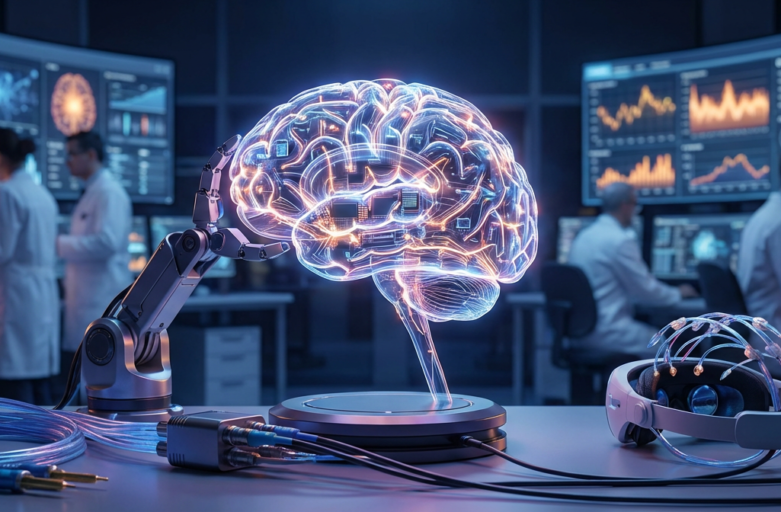
When Silicon Meets Synapses
The promise of controlling computers with pure thought has captivated researchers for decades, but the path toward functional brain-computer interfaces looks less like a straight line and more like a chaotic maze of breakthroughs and setbacks. Recent developments show both the remarkable potential and persistent challenges facing this field. A Neuralink participant successfully guided a computer cursor using only neural signals, while competitor Synchron achieved human implantation eighteen months earlier using an innovative stent-based approach that avoids open brain surgery.
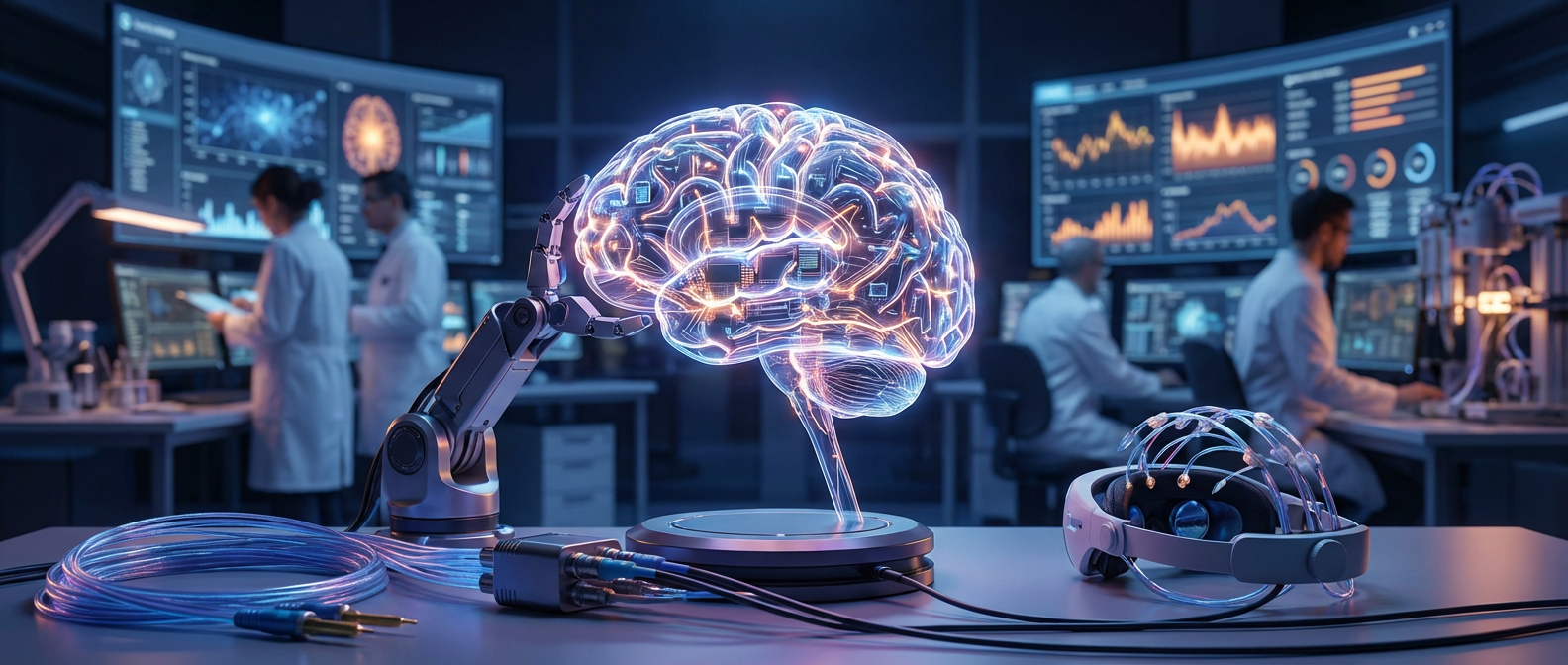
These achievements represent years of incremental progress built upon countless failed experiments, abandoned prototypes, and refined hypotheses. The Nature Neuroscience journal regularly publishes studies documenting both successful neural decoding attempts and the numerous technical hurdles that researchers encounter. Each failure provides crucial data about signal stability, biocompatibility, and the complex relationship between neural activity and machine interpretation.
The field extends beyond invasive implants to include consumer-grade headsets with 32-channel designs for gaming applications. These non-invasive devices face different challenges related to signal clarity and user experience, yet their development follows the same iterative process of testing, failure, and refinement that defines all scientific progress.

Decoding the Neural Code
Speech restoration is one of the most compelling applications for brain-computer interfaces, particularly for individuals with paralysis or severe motor impairments. Recent trials demonstrate neural decoding systems achieving speeds of 80 words per minute by interpreting the brain signals associated with intended speech. This breakthrough emerged from decades of failed attempts to understand how the motor cortex generates commands for articulation.
Early speech decoding experiments yielded frustratingly poor results. Systems struggled to distinguish between basic phonemes or required extensive training periods that exhausted participants. Researchers systematically addressed each limitation through improved electrode designs, advanced machine learning algorithms, and better understanding of individual neural patterns. The current success rate reflects this accumulated knowledge from previous setbacks.
Memory enhancement through neural prosthetics presents another frontier where failure drives innovation. Clinical trials show 30 percent improvement in recall performance for participants using memory-assisting devices. These devices emerged from earlier attempts to stimulate memory regions that often produced confusing or contradictory results. Researchers learned that precise timing and location of stimulation proved critical, knowledge gained only through careful analysis of unsuccessful interventions.
Regulatory Uncertainty and Scientific Reality
The regulatory framework governing brain-computer interfaces remains frustratingly unclear across both FDA and European MDR systems. This uncertainty reflects the novel nature of these technologies and the challenge of establishing safety standards for devices that interact directly with neural tissue. Regulatory agencies must balance innovation encouragement with patient protection, often resulting in lengthy approval processes that can seem to stifle progress.
However, this apparent obstacle has an important scientific function by forcing researchers to document safety data thoroughly and consider long-term consequences of neural intervention. Early brain-computer interface studies often overlooked potential immune responses, tissue damage, or signal degradation over time. Regulatory scrutiny has highlighted these concerns and driven more comprehensive testing protocols.
The absence of clear guidelines also creates opportunities for different approaches to emerge. Synchron’s stent-based system gained approval partly because it leveraged existing vascular intervention techniques, while more novel implant designs face greater regulatory uncertainty. This diversity of approaches increases the likelihood that viable solutions will emerge, even as individual projects encounter setbacks.
The Innovation Ecosystem of Failure
Brain-computer interface development shows how scientific progress depends on embracing failure as an essential component of discovery. Companies like Neuralink generate significant media attention for their successes, but their progress builds upon decades of academic research that included numerous dead ends and abandoned approaches. Early attempts at neural interfaces often failed because of inadequate materials, primitive signal processing, or incomplete understanding of neural plasticity.
The field benefits from diverse research strategies that allow multiple teams to pursue different solutions simultaneously. IEEE Spectrum brain-computer interfaces coverage highlights how academic labs, startup companies, and established technology firms each contribute unique perspectives and risk tolerances. This ecosystem ensures that promising approaches receive continued development even when initial results disappoint.
Commercial gaming applications, while seemingly less critical than medical devices, provide valuable testing grounds for user interface design and signal processing algorithms. Failed gaming implementations reveal important limitations about attention spans, learning curves, and the practical challenges of translating neural signals into consistent user experiences.
Embracing Uncertainty in Neural Engineering
The current state of brain-computer interfaces reflects both remarkable achievements and persistent unknowns. Signal stability remains problematic for long-term implants. Many devices show degraded performance over months or years. Biocompatibility issues continue to limit implant lifespans, while individual variation in neural anatomy creates challenges for standardized approaches.
These ongoing challenges shouldn’t diminish appreciation for recent progress but rather highlight the complexity of interfacing artificial systems with biological networks that evolved over millions of years. Each failed experiment contributes to a growing understanding of neural engineering principles that will ultimately enable more robust and reliable brain-computer interfaces.
The path forward requires continued acceptance of setbacks as learning opportunities rather than obstacles to progress. The most significant breakthroughs in this field will likely emerge from researchers who view each failed experiment as valuable data rather than disappointment. What aspects of brain-computer interface development do you find most intriguing, and how might current limitations actually accelerate future discoveries?