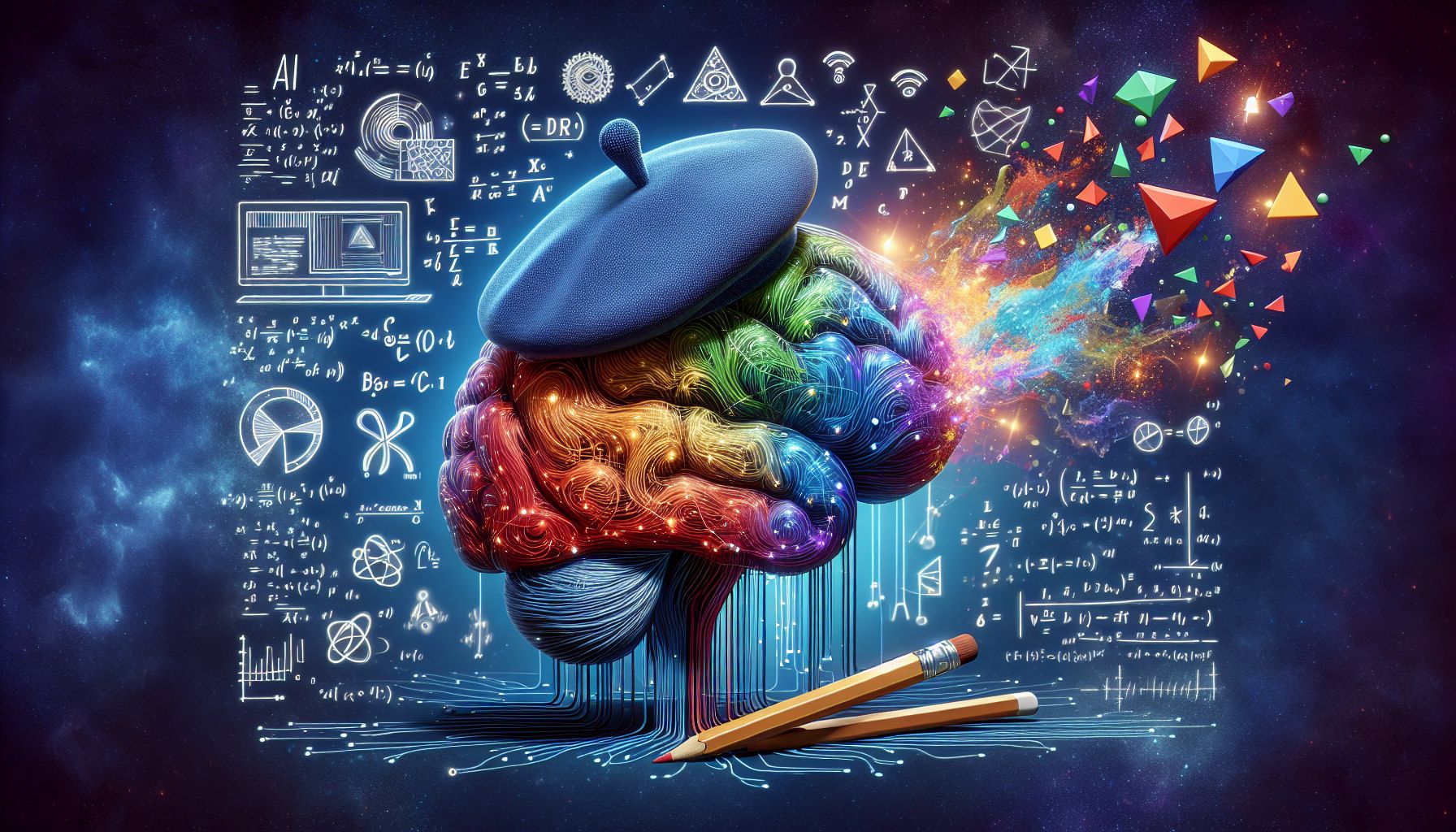
Hey there tech aficionados and the creatively curious! Today, we’re diving headfirst into a fascinating fusion of pixels and paintbrushes, algorithms and art history — I’m talking about Artificial Intelligence (AI) in the creative arts. It’s like Bob Ross meets the Matrix, and it’s as mesmerizing as it sounds. So grab your mocha latte, put on your metaphorical beret, and let’s get our gears turning on how AI is reshaping creativity. And because I love a good teaser, I’ll say this: by the end of this post, you might find yourself pondering whether it’s time to give your laptop some art supplies.
The New Renaissance
Remember when AI was just about automating mundane tasks? Yeah, those days are long gone. Now, AI is kicking its metaphorical feet up on the creative arts sofa, sipping an espresso, and making itself right at home. Developers and artists have teamed up like never before, crafting artworks using complex algorithms that might someday rival the masters of the Renaissance. It’s as if Da Vinci and DeepMind had a backyard barbecue and decided to start a new culture.
The tools of this modern renaissance aren’t chisels and marble but neural networks and datasets. Take the mind-boggling work from OpenAI with GPT-3 and its younger sibling ChatGPT. These language models are starting to write poetry, prose, and even scripts that feel so authentic, you might momentarily forget you’re reading words that came from the digital ether. AI-generated art has come a long way since the simplistic pixelated outputs of its early days. Now it can produce works so lifelike and filled with emotion, it’s tough not to feel a twinge of insecurity about your paint-by-numbers kit.
The Great Algorithmic Imagination
At its core, AI in art challenges the very notion of creativity. Traditionally, creativity has been considered a uniquely human trait—our domain and, perhaps, our one-upmanship over our silicon counterparts. AI questions this assumption and does it with style. Google’s DeepDream, back in 2015, was one of the first glimpses into the surreal artistry possible through AI. DeepDream’s psychedelic outputs were a trip down the rabbit hole, making us see ordinary images in completely transformed iterations—the stuff of Salvador Dalí’s wildest dreams.
These innovations aren’t just curious artifacts to display in museums anymore. AI-generated art is being auctioned at art houses, sometimes for staggering sums. Take Christie’s auction of an AI-generated artwork, “Portrait of Edmond de Belamy,” which sold for $432,500. To put it in perspective, that’s enough to buy an actual Monet, or perhaps even a room full of them!
Music and Movies: The AI Jam Session
Turning our attention to the world of music and film, AI is doing more than just banging on the digital drums. It’s composing symphonies. Platforms like Amper Music allow musicians to craft original compositions with the help of AI, essentially having a digital Mozart as your jam buddy. Sure, it might not replace the raw passion of a live human from Liverpool in the 60s, but it gets pretty darn close to sounding authentic.
On the cinematic front, AI is dabbling in filmmaking as well. From helping streamline editing processes to even scripting elements of a film, its role is growing. AI-assisted scripts may never win an Oscar, but they’re starting to play important roles in the world of amateur and even professional filmmaking.
But Can Machines Really Be Creative?
Here’s the billion-dollar question (or trillions, once inflation catches up): Can machines be truly creative? Some skeptics argue that AI merely mimics human creativity, recycling data from countless human-generated works and algorithms pre-tuned by developers. Others insist that creativity itself relies on constraints and that AI, with its vast array of learned limitations, expresses its creativity through them.
Perhaps the answer lies in a middle ground. AI can be seen as a tool that enhances human creativity rather than replacing it. It provides new canvas and color palette options, so to speak. Artists aren’t being replaced by AI. They’re changing, enhanced by the powers these technologies offer.
Challenges and Possibilities
As we’ve all probably learned from superhero movies, with great power comes even greater responsibility, and AI artistry is no exception. Intellectual property and authorship controversies abound. Who owns the rights to an artwork created by an artificial entity? The lines are blurry, and the legal world is playing catch-up.
On the tech side, AI-generated art’s impact on employment raises questions. Will AI sideline human artists, or will it lead to new roles we’ve yet to imagine? It’s a conundrum wrapped in an enigma, laced with the tantalizing whiff of opportunity.
A Speculative Future
Looking forward, AI in creative arts is ready to revolutionize education, potentially redefining how we teach art and design by personalizing learning experiences in ways traditional methods can’t. We might even see AI collaborate in real-time with artists, creating dynamic art exhibitions that change and grow.
Picture this: an art gallery where each painting changes depending on the mood of its viewers, detected by sensors and processed by AI. It’s not sci-fi—it’s the near-future horizon of artistic expression.
In this brave new world of AI in creative arts, technology and creativity aren’t at odds. They’re partners in a dance, a swirling, unpredictable, and utterly thrilling waltz into uncharted territory. Whether you’re cheering from the sidelines or jumping into the fray yourself, one thing is for sure: the artistic revolution that AI brings is as awe-inspiring as it is unstoppable.
To wrap it up, remember to tip your robots and visit your local neural network studio soon. There’s a brave new world out there just waiting to be created. Keep your inner artist curious and never stop exploring the abstract paths where humans and machines come together to create something genuinely magical.