When the Merger Spreadsheet Meets Dirt Roads

The logic of hospital consolidation is seductive in its simplicity. Combine administrative functions, negotiate better rates with suppliers, eliminate duplicative services—suddenly, healthcare becomes more efficient. This is the argument parroted in boardrooms and policy briefs. But when that logic is applied to rural America, it collapses under the weight of geography and human need. Hospital mergers do not just fail to improve access in rural communities; they systematically dismantle it.

Aerial view of a small rural town surrounded by farmland, illustrating geographic isolation.
Geographic isolation in rural areas means every mile matters when a hospital closes services. (Image: Pexels)

The Promises That Precede the Fall

Mergers are almost always announced with a flourish of promises. The acquiring system pledges to invest in technology, recruit specialists, and stabilize the fragile finances of the small community hospital. What goes unstated is the corporate structure’s intolerance for low patient volumes. A rural hospital with 25 beds cannot generate the throughput that a tertiary care center demands. So the merged entity quickly “right-sizes” the facility—a euphemism that usually means closing the obstetrics unit, eliminating inpatient surgery, and converting the emergency department into a triage outpost that funnels patients to the main campus 90 miles away.

This is not a hypothesis. It is a pattern I’ve watched unfold across the Upper Midwest, the Appalachian foothills, and the High Plains. When a critical access hospital is absorbed by a regional system, labor and delivery services are among the first to vanish. The reason is starkly financial: maintaining a 24-hour obstetrics unit requires a minimum volume of deliveries to justify the staffing costs of an on-call surgical team. Most rural hospitals fall below that threshold. But before the merger, the community bore that cost as a public good. After the merger, the spreadsheet wins.

Distance as a Clinical Risk Factor

In urban medicine, distance is measured in minutes. In rural medicine, it is measured in miles—and those miles are often unpaved, unlit, and unplowed. When a merged system closes a rural emergency department or downgrades it to a freestanding emergency room without inpatient beds, the nearest definitive care can be an hour or more away. For a patient with a myocardial infarction, that hour is the difference between salvageable myocardium and permanent heart failure. For a stroke, it is the difference between independent function and lifelong disability. For a farm accident, it is the difference between a tourniquet holding and exsanguination.

The merger proponents will point to helicopter transport as a solution. This is a costly evasion. Air ambulances are weather-dependent, frequently unavailable, and financially ruinous for uninsured or underinsured patients. The median charge for a helicopter transport in the United States exceeds $40,000, and balance billing remains common despite legislative attempts to curb it. A merger that forces reliance on air transport has not preserved access; it has outsourced it to a system that only works for those who can pay.

Lonely stretch of two-lane highway through open countryside under a cloudy sky.
In rural areas, the distance to the nearest hospital can turn treatable conditions into emergencies. (Image: Pexels)

The Specialist Desert Expands

Rural communities already struggle to attract physicians. Mergers accelerate this scarcity. When a hospital becomes a satellite of a distant hub, the specialists who might have maintained a rotating clinic schedule are pulled back to the mothership. The cardiologist who visited twice a month is now incentivized—or contractually obligated—to stay at the main campus where procedure volumes are higher. The orthopedic surgeon who set fractures in the local operating room is redirected to the ambulatory surgery center in the suburbs. The pulmonologist, the endocrinologist, the rheumatologist: all recede like a tide going out, leaving the rural patient stranded on a mudflat of primary care that was never designed to manage complex chronic disease alone.

This exodus is not accidental. It is a feature of the merger model. Health systems optimize their specialist workforce around the facilities that generate the most revenue. Those facilities are never the rural outposts. The result is a tiered system where the rural hospital becomes little more than a referral generator, a loss leader whose sole purpose is to capture patients and send them downstream to the profitable urban centers.

The Financial Extraction Model

There is a corrosive irony in how mergers handle billing. The merged system often applies the higher urban facility fee to services still delivered at the rural location. A colonoscopy that cost $1,200 at the independent rural hospital suddenly costs $2,800 because it is now billed under the acquiring system’s hospital outpatient department designation. The patient pays more, the insurer pays more, and the rural community gains nothing. The additional revenue does not stay local. It flows to corporate headquarters, where it funds executive compensation and the acquisition of the next targeted hospital.

This pricing power is one of the primary drivers of consolidation. The merged entity gains negotiating strength with insurers, who must include the system’s facilities in their networks or risk losing subscribers in the region. The resulting price hikes are well documented in the health economics literature. A 2019 study in The Quarterly Journal of Economics found that hospital mergers in concentrated markets increased prices by 6% to 18% without any measurable improvement in quality. For rural patients, who already have higher rates of uninsurance and underinsurance, these price increases are not abstractions. They are bills that go unpaid, collections calls, and decisions to skip care.

Abandoned rural building with peeling paint, symbolizing economic decline after a hospital closure.
When a hospital closes or shrinks its services, the economic blow to a small town is often permanent. (Image: Pexels)

The Employment Collapse That Follows

A rural hospital is often the largest employer in its county. When a merger leads to service line closures, the jobs disappear. Nurses, technicians, custodial staff, cafeteria workers—the entire ecosystem of hospital employment contracts. The economic multiplier effect is savage. A closed obstetrics unit means fewer families traveling to town for prenatal visits, fewer meals purchased at the diner, fewer nights booked at the motel. The hospital that once anchored Main Street becomes a ghost facility, its emergency room sign still lit but its parking lot empty.

This economic hollowing out has health consequences that the merger architects never measure. Unemployment and underemployment are themselves risk factors for morbidity and mortality. The laid-off nurse who loses her health insurance delays her mammogram. The former maintenance worker who cannot afford his blood pressure medication has a stroke. The community’s health deteriorates not just because the hospital is gone, but because the social fabric that supported health has been shredded. The merger accounting never includes these costs because they do not appear on a balance sheet.

The Antitrust Vacuum

Federal antitrust enforcement has been asleep at the switch for decades. The Clayton Act was designed to prevent exactly this kind of consolidation, but the Federal Trade Commission has challenged only a fraction of hospital mergers. The reasons are partly legal—courts have accepted geographic market definitions that make rural mergers look harmless—and partly political. State governments, desperate to preserve any healthcare presence in rural areas, often waive antitrust review through certificates of public advantage. These certificates grant merged systems immunity from federal antitrust law in exchange for vague promises of community benefit. The promises are rarely enforced, and the mergers proceed unchallenged.

The result is a healthcare landscape where a handful of systems control entire regions. In northern Wisconsin, two systems dominate. In eastern Kentucky, one system calls the shots. When a rural hospital in these regions faces a merger, there is often no competing bidder. The “choice” is between consolidation and closure. But this framing is a false dichotomy. The closure comes anyway, just in slow motion, under the banner of the merger.

What Actually Works

The alternative to merger-driven decline is not simple, but it is proven. Rural hospitals that remain independent and join clinically integrated networks can achieve many of the efficiencies of scale without surrendering local control. These networks allow hospitals to share telehealth services, joint purchasing, and quality improvement infrastructure while keeping governance local. The hospitals in Kansas that formed the Kansas Rural Health Network have maintained obstetrics services by pooling call coverage across facilities. The Critical Access Hospital Network in the Upper Peninsula of Michigan has kept emergency departments open by negotiating shared staffing agreements that no single hospital could sustain alone.

These models require something that the merger wave actively destroys: trust among neighboring communities and willingness to cooperate rather than compete. They also require policy support that is currently absent. Medicare’s critical access hospital designation provides cost-based reimbursement that is essential for survival, but it does not fund the capital investments needed for modernization. Federal and state governments could direct infrastructure funding toward rural hospital networks, support broadband expansion for telehealth, and expand loan repayment programs that place clinicians in rural areas. These are not radical proposals. They are the logical response to a market failure that is entirely predictable.

The Moral Dimension

There is a moral question at the core of this issue that the language of efficiency cannot answer. Do we believe that a person’s access to emergency care should depend on their ZIP code? If the answer is no, then we must treat hospital mergers as what they are: a mechanism for redistributing healthcare resources from the periphery to the center. The rural communities losing their hospitals did not make a choice to be unhealthy. They inherited a geography that the market considers unprofitable. The job of policy is to correct that market signal, not amplify it.

The next time a hospital merger is announced with talk of “stabilizing access” and “strengthening services,” look at what happens in year three. Count the service lines that are gone. Count the miles that patients now travel. Count the jobs that have vanished. The promises are public relations. The spreadsheets tell the truth.

Frequently Asked Questions

Why do rural hospital mergers so often lead to the closure of maternity wards?

Maternity wards are expensive to staff around the clock and need a minimum volume of deliveries to maintain clinician proficiency and cover costs. Rural hospitals typically have low birth volumes, so these units become financially unsustainable under the cost-cutting logic of merged systems. The acquiring system consolidates obstetrics at a larger hub, leaving rural patients with long travel times for prenatal care and delivery.

Doesn’t telemedicine solve the access problem created by hospital mergers?

Telemedicine is a useful tool, but it cannot replace physical emergency care, surgical services, or inpatient beds. A telemedicine consult cannot stop a hemorrhage, set a compound fracture, or monitor a patient overnight. In rural areas with limited broadband, the technology itself is unreliable. Telemedicine supplements local care; it does not substitute for the closure of a hospital.

What can rural communities do to resist harmful hospital mergers?

Communities can demand that state attorneys general scrutinize the merger for anticompetitive effects and enforce any conditions placed on the transaction. They can advocate for the hospital to explore clinically integrated networks instead of full acquisition. Local governance, such as public hospital districts, can retain control and prioritize service preservation over short-term financial relief. Public pressure and organized opposition have, in some cases, blocked mergers that would have devastated local access.


The Hollowing Out of Rural Care: How Hospital Mergers Systematically Dismantle Access

Rural hospital exterior with empty parking lot

Let’s be direct. The standard pitch for hospital consolidation—efficiencies, standardized quality, sophisticated resources finally reaching struggling towns—is, for rural people, a dangerous fairy tale. What we’re actually seeing is a methodical extraction of value dressed up as integration. When a big health system swallows a rural hospital, the upfront promise of financial rescue conceals a grimly predictable sequence: services vanish, staff get relocated, prices spike. Access shrivels for people who already face the steepest barriers to care. This isn’t some unintended glitch. It’s the business model.

The evidence has matured enough that we can stop hedging. Hospital mergers in rural America shrink access. They don’t, on the whole, lift quality. And they funnel both clinical and financial muscle toward urban referral centers at the direct cost of local capability. I’m not going to pretend there are two reasonable sides to this.

Elderly patient sitting alone in a small clinic waiting room

The Rescue Fantasy: Why Mergers Actually Happen

First, look at the pre-merger reality. Independent rural hospitals run on margins that would make any sensible business analyst break into a cold sweat. Fixed costs—24/7 ERs, inpatient beds, imaging gear—stay stubbornly high while population density drops and the payer mix skews heavily toward Medicare and Medicaid. One lousy year in farm country—drought, commodity prices cratering—can blow up the whole employer-sponsored insurance base. Capital markets have zero interest in financing a 25-bed facility in a county that’s losing people. So when a regional system glides in, offering to absorb debt, install an electronic health record, and open the door to its posse of specialists, the choice looks stark: merge or padlock the doors.

That stark choice is manufactured. The acquirer’s real math rarely centers on keeping local services alive. It’s about routing patients, locking in referral streams, and squashing a competitor for outpatient procedures. The rural hospital turns into a feeder outpost. The CEO who inks the deal might sincerely buy into the partnership story. The corporate strategy decks tell a very different tale.

The Service Line Amputation Pattern

Within 18 to 36 months after the merger closes, a drearily familiar sequence of cuts kicks in. Obstetrics is usually the first to go. Labor and delivery units demand 24/7 anesthesia coverage, surgical backup, and a volume threshold that plenty of rural facilities can’t hit even when independent—but once a system owns the place, the ax falls faster and with a lot less local accountability. The system funnels deliveries to the regional hub, often 60 or 90 miles away. What follows isn’t just a hassle. It’s a measurable spike in preterm births, out-of-hospital deliveries, and women dropping out of prenatal care. When a pregnant woman has to drive two hours for each appointment, she goes to fewer of them. That’s not a patient compliance problem. It’s the entirely predictable consequence of distance imposed by design.

Surgical services come next. Low-acuity procedures—gallbladder removals, hernia repairs, colonoscopies—are moneymakers. The acquiring system shifts those cases to its own ambulatory surgery centers or main hospital, waving quality standards and volume benchmarks like a flag. The rural facility is left with emergency stabilization and maybe basic endoscopy, but the surgical revenue that once helped prop up its ER drains away. Cardiology, oncology, orthopedics consults shift to telemedicine or require a road trip. The local hospital becomes, in practice, a triage station with a swing bed program.

Stethoscope on a table with rural landscape visible through a window

Emergency Department Degradation

Emergency care erodes in a quieter, sneakier way. The acquiring system typically rolls out standardized staffing models built for busier suburban EDs—parallel processing, dedicated triage nurses, speedy lab turnaround. But in a rural department that sees 12 patients a day, that math falls apart completely. The typical response? Slash physician coverage hours, swap in advanced practice providers without solid backup, or flip the ED into a freestanding emergency room with no inpatient admission ability. A patient who once would’ve been stabilized and admitted right there now needs a transfer. Transfer times stretch. Stroke and heart attack outcomes get worse. This isn’t conjecture. It’s documented across multiple states and merger waves.

Workforce Extraction and the Specialist Vacuum

Recruiting clinicians to rural areas has always been tough, and that problem predates consolidation. But mergers speed up the workforce drain through deliberate relocation. A cardiologist who splits time between the rural hospital and the regional center gets told the schedule is no longer workable. A general surgeon eyeing retirement isn’t replaced; the system calculates the hub can soak up the volume. Local primary care doctors, now on the system’s payroll, find their referral freedom boxed in. They’re nudged—sometimes via compensation tweaks, sometimes by blunt policy—to refer inside the system, which increasingly means shipping patients out of town. The community loses not just its specialists but the informal curbside consults that once let complex patients be managed locally with occasional specialist input.

The system’s HR department will call this workforce optimization. The community feels it as a slow bleed of trusted clinicians. Trust isn’t some fuzzy sentiment. It’s a clinical asset. When patients trust their local providers, they mention symptoms sooner, stick with treatment plans, and avoid the ER for stuff that could be handled in a clinic. Break that trust, and you tear the fabric of preventive care.

Price Effects and the Monopoly Blind Spot

Federal antitrust enforcement has been practically asleep in rural markets, mostly because the FTC sizes up mergers using metropolitan statistical areas and Herfindahl-Hirschman Index thresholds that completely whiff on how rural healthcare works. A merger between a critical access hospital and a regional system 80 miles away might not set off any HHI alarms. But after that deal closes, the system controls the only hospital, the only surgical facility, and increasingly the only primary care practices across multiple counties. Patients can’t exactly drive farther than the next system’s territory without crossing state lines or mountain passes. The result is a de facto monopoly that commands commercial payer rates 20 to 40 percent higher than before the merger, according to research from the National Bureau of Economic Research and the Health Care Cost Institute. Employers eat the hikes or drop coverage. Patients shift to high-deductible plans and delay care. The downstream health damage compounds.

The Cost of Distance

We also need to tally the non-clinical costs mergers pile on. When a specialist visit means a full day off work, a 200-mile round trip, and scrambling for childcare, the real cost of that visit multiplies. Patients skip follow-ups. They show up later with advanced disease. The health system pockets the revenue from the acute episode but faces zero financial consequence for the chronic disease management failure that its consolidation strategy created. That’s a moral hazard baked into the payment system, and mergers exploit it without a shred of hesitation.

Quality Claims Versus Quality Data

The quality pitch for consolidation leans on volume-outcome relationships that are real for certain complex procedures—pancreatic resections, cardiac surgery, Level I trauma care. Nobody argues those shouldn’t be regionalized. But mergers hijack that narrow evidence to justify stripping away low-complexity services that don’t benefit from volume concentration at all. A routine colonoscopy doesn’t have a meaningful volume-outcome curve beyond a basic competency bar that rural gastroenterologists and general surgeons clear without trouble. Yanking colonoscopy out of a rural hospital doesn’t improve polyp detection rates. It tanks screening rates. The quality measure that actually matters for population health—screening adherence—gets worse, while the system trots out the procedural quality metric at the hub to claim victory. That’s statistical sleight of hand.

Patient satisfaction scores in merged rural facilities tell a similarly uncomfortable story. Communication ratings drop as patients cycle through rotating locum tenens doctors they’ve never laid eyes on. Care coordination splinters between the local site and the distant referral center. Readmission rates for chronic conditions climb, not because the inpatient care was lousy, but because discharge planning ignores the real-world barriers patients hit trying to access follow-up care 70 miles away. The system’s quality dashboard doesn’t catch these failures because it’s designed not to look for them.

Policy Responses That Merit Attention

I have scant patience for policy proposals that treat rural communities as problems to be managed rather than populations with a legitimate claim to equitable access. Still, a few directions deserve hard looks. State-level certificate-of-need reform could block the most predatory service line closures by requiring community impact assessments before yanking essential services. The FTC could adopt rural-specific merger guidelines that weigh travel time, referral patterns, and the cumulative loss of service lines instead of narrow market share arithmetic. Medicare could stretch the Rural Emergency Hospital designation past its current limits and pair it with anti-redirection rules that stop systems from steering patients away from local facilities they own.

There’s also a case for public utility models in places where private consolidation has already cratered. County-owned hospitals with publicly accountable governance have, in a handful of states, outperformed system-owned facilities on both access metrics and patient satisfaction. When a community takes back its hospital through a public authority or a cooperative model, it can contract for services strategically rather than handing over the keys. That demands political will plenty of rural counties currently lack, but the alternative is more of the same extraction.

Frequently Asked Questions

Don’t hospital mergers save rural hospitals that would otherwise close?

Sometimes they stave off immediate closure. But that question assumes a merged hospital that’s lost its maternity unit, surgical services, and specialist clinics is meaningfully open. A facility that offers emergency triage and a handful of outpatient services isn’t a hospital. It’s an urgent care center with a sign out front that still says “hospital.” Communities need to ask what functions are being preserved, not just whether the lights are still on.

Can’t telemedicine fill the gaps mergers create?

Telemedicine is a useful add-on. It can’t replace a physical exam, a procedure, or the kind of relational continuity that sharpens diagnostic accuracy over time. For a patient with undifferentiated belly pain, a video visit with a gastroenterologist 200 miles away isn’t the same as a local surgeon who can examine, image, and decide on surgery within hours. Telemedicine works best when it props up local clinicians, not when it papers over their absence.

Isn’t this just the reality of rural population decline? Shouldn’t we accept consolidation?

Population decline is real in plenty of rural counties. But the policy choice isn’t consolidation versus pretending demographics aren’t shifting. It’s between managed consolidation that hangs onto essential local capacity and unregulated consolidation that squeezes out maximum short-term revenue. A county losing people still contains folks who have heart attacks, deliver babies, and need colonoscopies. Those clinical needs don’t shrink in lockstep with the population. They demand a deliberate service configuration, not a shrug toward market logic that treats rural patients as grist for a referral mill.

The evidence is clear, and I’ll state it without softening: hospital mergers, as currently practiced and regulated, shrink access in rural communities. They do so predictably, measurably, and with real harm to health outcomes. The question is whether we have the institutional spine to act on what we already know.

The Failure of Individual Behavior Change as Public Health Strategy

Stop Telling People to Eat Better

Every few years, a new public health campaign rolls out with the same exhausted premise: if we just tell people what to do differently, they will do it. Eat less. Move more. Don’t smoke. Drink in moderation. The messaging changes its font and color scheme, but the underlying logic remains untouched—disease burden is primarily a problem of bad personal choices, and the solution is better personal choices.

This is not merely an ineffective strategy. It is a category error. It misidentifies the locus of disease production, wastes finite public health resources, and—perhaps most damagingly—provides political cover for the systems that actually make people sick. We have decades of evidence that individual behavior change interventions, deployed at population scale, produce effects so modest they barely register above statistical noise. And yet the strategy persists, zombie-like, impervious to its own demonstrated failure.

Clinical health data displayed on monitors

The Evidence Has Already Spoken

Let us review what we actually know. Systematic reviews of individually-targeted dietary interventions—counseling, education, motivational interviewing—consistently show effect sizes in the range of 0.1 to 0.3 standard deviations. Translated into real-world terms: a motivated subgroup changes modestly, the majority reverts within 12 months, and population-level health indicators barely budge.

The Diabetes Prevention Program is frequently cited as a triumph. Participants in the intensive lifestyle intervention lost an average of 5.6% of body weight at one year. By year four, they had regained half of it. And those were the people who completed the program. Attrition rates in community translations of the DPP regularly exceed 40%. This is the gold standard, and it is insufficient.

Smoking cessation tells a similar story. Individual counseling produces quit rates of roughly 15-20% at six months, compared to 5-10% for unassisted quitting. That is a real effect. It is also a small effect applied to a diminishing fraction of smokers—the ones with the most resources and the fewest compounding stressors. The population-level decline in smoking over the past half-century maps not onto counseling access but onto tax policy, advertising bans, and clean air laws. The behavior change followed the structural change, not the other way around.

The Structural Determinants That Erase Choice

Public health professionals love to say that behavior is “shaped by environment.” This is true but inadequately stated. A more precise formulation: individual behavioral choice is a variable whose range is constrained by material conditions, and those constraints are distributed unequally by class, race, and geography.

A person working two jobs to pay rent does not have the same capacity to meal-prep as someone with discretionary time. A person living in a food desert does not have the same access to produce, regardless of nutritional knowledge. A person subjected to chronic housing instability, wage theft, and discriminatory policing experiences a stress physiology that directly promotes metabolic disease through cortisol-mediated pathways. Telling that person to “make healthy choices” is not neutral advice. It is a moral judgment dressed in clinical language.

Healthcare professional reviewing patient data

Why the Myth Persists

If the evidence is clear, why does the strategy endure? Three intersecting reasons.

First, political convenience. Attributing disease to individual behavior absolves governments and corporations of responsibility. If diabetes is a failure of willpower, then soda companies and agricultural subsidies face no scrutiny. If heart disease is about “laziness,” then urban planning that mandates car dependency never gets questioned. The individual responsibility frame is not ideologically neutral; it is a defensive structure that protects the status quo.

Second, professional inertia. Clinical training produces clinicians who intervene on patients, one at a time. The leap from “what should I recommend to this person in front of me” to “what policies should we advocate for this population” requires a conceptual rewiring that most health professional education never attempts. The intervention tool stays the hammer, so every problem stays the nail.

Third, measurement bias. Individual-level interventions produce individual-level data, which is easy to collect, easy to randomize, and easy to publish. Structural interventions—taxes, regulations, infrastructure changes—produce population-level data, which is harder to attribute causally and harder to fund. The published literature systematically over-represents the kind of intervention that is easiest to study, not the kind that works best.

What Actually Reduces Disease Burden

The interventions that produce large, sustained population health improvements are almost never individual behavior change programs. They are structural changes that alter the default conditions of daily life.

Consider the reduction in motor vehicle fatalities over the past 50 years. Improved vehicle safety standards, speed limits, seatbelt laws, and road design produced declines that no driver education program could have achieved. When the environment changes, behavior follows at scale without requiring anyone’s motivation.

Consider trans fat bans. When Denmark restricted industrially produced trans fats in 2003, cardiovascular mortality declined by approximately 700 fewer deaths per year within a decade. No counseling. No motivational interviewing. No “five-a-day” campaigns. A regulatory change altered the composition of the food supply, and the population’s arteries responded accordingly.

Consider sugary beverage taxes in Mexico. The 10% excise tax produced a 7.6% reduction in purchases in its first two years, with larger effects among lower-socioeconomic groups. This is the kind of effect size that individual dietary counseling never achieves at population level.

Public health research and data analysis

The Uncomfortable Implication

Accepting that individual behavior change is a failed public health strategy means accepting something more demanding: that health is primarily produced by the distribution of power, resources, and environmental conditions, not by the sum of personal decisions. This is uncomfortable because it demands political confrontation. It is easier to fund a cooking class than to challenge a zoning law. It is easier to distribute pedometers than to demand a living wage.

The cooking class and the pedometer are not harmful in isolation. They become harmful when they substitute for the structural work that actually reduces suffering—when they serve as performative alternatives to the policies that food, tobacco, alcohol, and fossil fuel industries spend millions to prevent.

We have enough evidence. The question is whether the field of public health will continue to operate as a chaplaincy that counsels the sick on making better choices, or whether it will operate as an advocacy discipline that targets the systems making those choices impossible for the people who most need alternatives.

FAQ

Does this mean individual behavior change programs should be eliminated entirely?

No. Individual-level interventions can provide genuine benefit to the people who access and complete them. The objection is to positioning these programs as the primary public health strategy. They should occupy a subordinate role—available as a complement to structural policy, not as a substitute for it. When we fund a workplace wellness program but not a sugary beverage tax, we have chosen the strategy with the weakest evidence and the smallest effect.

How do you respond to the argument that structural interventions are “paternalistic”?

This argument almost always comes from people who already benefit from the current structure. Trans fat bans, sugary drink taxes, and smoke-free laws restrict the options available to individuals—and that is the point. The current environment is not a neutral marketplace of free choices; it is an engineered landscape designed to maximize consumption of products that concentrate profit in private hands while distributing disease across populations. Regulation does not introduce paternalism into a previously free system. It replaces one form of paternalism (corporate) with another (democratic). The relevant question is which form of paternalism produces less disease.

What should public health professionals do differently starting now?

Redirect funding and institutional credibility toward structural interventions. Advocate for sugar taxes, trans fat bans, living wage laws, affordable housing mandates, and urban design that makes walking and cycling the path of least resistance. When you do intervene at the individual level, be honest about effect sizes and time horizons. Stop allowing individual behavior change programs to serve as political cover for inaction on structural determinants. And stop using language that implies disease is primarily a consequence of poor decision-making. It isn’t. The evidence has been in for years. The profession needs to act like it.

Why Social Determinants Explain More Than Genetics Ever Will

We keep sequencing genomes as though the answers to human suffering are written in base pairs. They are not. The stubborn fascination with genetic explanations for health outcomes is not merely insufficient—it is a distraction from the forces that actually shape who gets sick and who stays well. Social determinants of health—those structural, economic, and environmental conditions that dictate the contours of daily life—account for far more variation in health outcomes than any polygenic risk score ever will. And the evidence for this is not subtle. It is overwhelming, repetitive, and consistently ignored by people who would rather believe that disease is written into our DNA than confront the political and economic realities that make people ill.

Researchers analyzing health data in a laboratory setting

The Genetic Explanation Is Seductive—And Incomplete

Let us be clear about what genetics actually explains. Genome-wide association studies have identified thousands of variants associated with various diseases. For most common conditions—heart disease, type 2 diabetes, depression—each individual variant explains a fraction of a percent of the variance in outcomes. Even combined into polygenic risk scores, the predictive power remains modest. A 2020 study in Nature Genetics found that polygenic scores for coronary artery disease explained roughly 4-5% of variance in disease risk. By contrast, traditional risk factors like smoking, diet, and socioeconomic status explained substantially more.

This is not an argument that genetics does not matter. Of course it does. Monogenic disorders like cystic fibrosis or Huntington’s disease demonstrate that single genes can produce devastating illness. But these conditions are rare. The vast majority of disease burden in any population comes from conditions where environment, behavior, and structural factors dominate. When we focus on genetics, we are explaining the margins, not the main event.

What Social Determinants Actually Encompass

The term “social determinants of health” gets thrown around so casually in medical education that it has nearly lost its meaning. So let us be specific. Social determinants include:

  • Income and economic stability—not just whether you can afford medication, but whether you can afford to live in a neighborhood with clean air, safe housing, and grocery stores that sell fresh food.
  • Education—not merely years of schooling, but the quality of that education and the economic opportunities it unlocks.
  • Neighborhood and built environment—the physical conditions that determine whether walking is safe, whether parks exist, whether pollutants concentrate in your zip code.
  • Healthcare access and quality—whether you have insurance, whether providers listen to you, whether your nearest hospital is thirty minutes or thirty seconds away.
  • Social and community context—discrimination, social support, incarceration history, civic participation.

Each of these categories contains dozens of specific, measurable factors that independently predict health outcomes. They do not merely “contribute” to disease. They generate it. They produce the gradient we see across every health metric: the steep, consistent correlation between social position and mortality that has been documented in every industrialized nation studied.

Community health workers engaging with neighborhood residents

The Evidence Is Not Close

Consider the following. In the United Kingdom, the Marmot Review demonstrated that people in the poorest neighborhoods die, on average, seven years earlier than those in the wealthiest—and spend more of their shorter lives in poor health. That gap is not driven by genetic differences between postcodes. It is driven by the material conditions of life: work, housing, stress, food, pollution, and the cumulative biological toll those conditions exact.

A World Health Organization synthesis of global data estimates that social determinants account for 30-55% of health outcomes overall. Genetic factors, even broadly construed, do not come close. And within populations of shared genetic ancestry—comparing, say, second-generation immigrants from the same region living in different socioeconomic conditions in the same country—the health differences remain enormous. Same genes, different environments, radically different outcomes.

The Case of Migration Studies

Migration studies make this point with brutal clarity. When populations move from low-income to high-income countries, their disease profiles shift to match the host nation within a generation. Japanese immigrants to the United States develop coronary heart disease rates far exceeding those of their relatives who remained in Japan, approaching the rates of white Americans. Their genes did not change. Their food, their activity patterns, their stress levels, and their social environments did.

Why This Makes People Uncomfortable

There are several reasons the genetic explanation retains such cultural force despite its limited explanatory power. First, it is individual. Genetic narratives align with a worldview that locates cause—and therefore responsibility—inside the body. If your disease is in your DNA, then it is yours alone. If your disease is a product of economic inequality, residential segregation, and food deserts, then it is a collective failure. And collective failures demand collective solutions, which require political will and resource redistribution.

Second, genetic explanations are comforting to those in power. If health disparities reflect genetic differences rather than social ones, then no policy intervention is needed—or even warranted. The status quo is naturalized. This is not a new phenomenon. The history of using genetics to justify inequality is long and ugly, from eugenics to The Bell Curve to contemporary fetishization of personalized medicine.

Third, genetic research is fundable. Pharma and biotech see profit in genetic data. There is no comparable financial incentive for demonstrating that housing policy is medicine, that minimum wage laws are public health interventions, that desegregating schools reduces disease burden downstream.

Medical professional reviewing patient health records and social data

The Biological Embedding of Social Conditions

One objection persists: if social conditions matter so much, then what is the mechanism? How does a zip code get under the skin? This is a reasonable question, and we now have answers. Chronic stress from economic insecurity, racial discrimination, and social isolation activates the hypothalamic-pituitary-adrenal axis repeatedly and persistently. Cortisol dysregulation, inflammatory marker elevation, accelerated telomere shortening, and epigenetic modifications—all of these have been documented in populations experiencing social disadvantage.

Notice what this means. The biological mechanisms exist. We can measure them. They are real physiological processes. But they are responsive to social conditions, not to genetic inheritance. Epigenetic modifications triggered by childhood poverty are not “genetic” in any meaningful sense—they are environmentally induced changes in gene expression that can, in some cases, be reversed if the social conditions change.

Conflating these mechanisms with “genetics” is not just a category error. It is a strategic one. It directs resources and attention toward mapping the genome when we should be mapping the food desert. It funds another SNP chip when we should be funding affordable housing.

What a Serious Response Would Look Like

If social determinants explain more than genetics, then our public health infrastructure should reflect that reality. It currently does not. The National Institutes of Health devote approximately 4-5% of their budget to social determinants research. Private investment in social interventions is dwarfed by biotech spending on genomics. Medical education still treats social determinants as a curricular afterthought—a two-hour lecture sandwiched between pharmacology blocks—rather than the central organizing framework for understanding disease.

A serious response would treat housing policy as health policy. It would treat education funding as health spending. It would recognize that the most effective cardiovascular intervention available is not a statin—it is a living wage. These are not radical claims. They are empirically supported. What is radical is the continued refusal to act on them.

Frequently Asked Questions

Does this mean genetics is irrelevant to health?

No. Genetics explains rare monogenic disorders, contributes to susceptibility for common diseases, and has important clinical applications in pharmacogenomics and cancer treatment. The argument is about proportion—about where the majority of population-level health variation comes from, and therefore where the majority of our attention and resources should go. For most common diseases affecting most people, social conditions swamp genetic effects. That is simply what the data show.

Can’t we address both genetics and social determinants simultaneously?

In principle, yes. In practice, resource allocation is zero-sum. Every dollar spent on another genome-wide association study is a dollar not spent on evaluating housing interventions, nutrition programs, or income support policies. More importantly, the framing matters. When we present genetics as the primary explanation for health disparities, we do not merely understate social determinants—we actively undermine the political will to address them. The public and policymakers absorb the message that disease is individual, biological, and largely fixed. That message is wrong, and its consequences are measurable in preventable deaths.

How can social determinants be more important than biology? Disease is biological.

Disease manifests biologically. That is not in dispute. But the question is not whether disease is biological—it obviously is. The question is what produces the biological dysfunction. When a child develops asthma because she lives in substandard housing with mold and cockroach allergens, the asthma is biological. The cause is not genetic. It is a landlord who will not remediate, a housing market that concentrates poverty, and a regulatory system that tolerates it. Calling something “biological” describes where it appears. It does not explain why it appears. For that, you have to look at the conditions that generated the biology—and those conditions are, overwhelmingly, social.

Inside the CRISPR Revolution: How Base Editing Just Rewrote the Rules for Sickle Cell Disease

The Headline Everyone Missed

When news broke that a 12-year-old girl named Zyntiere Copeman walked out of a hospital corridor free from vaso-occlusive crises, science Twitter rightfully celebrated. But here’s what got buried under the mainstream relief: the mechanism that made this possible isn’t just CRISPR. It’s something far stranger and, honestly, far more elegant. We’re talking about adenine base editing, a technique so new that most people still confuse it with regular CRISPR gene cuts. The distinction matters, and not just for journal club trivia. It matters because it explains why this particular victory in gene medicine feels different from previous attempts.

The sickle cell world has been waiting for something like this for decades. Every year, about 300,000 babies are born with the disease globally, with roughly 75% of those cases concentrated in sub-Saharan Africa, where these therapies remain entirely out of reach. The genetic culprit is a single point mutation in the beta-globin gene: a GAG codon becomes GTG, flipping one amino acid from glutamic acid to valine at position six. One letter. One swap. And it cascades into misfolded hemoglobin, polymerization, and the characteristic sickling that blocks blood vessels and causes excruciating pain crises. For decades, sickle cell patients had limited options: manage pain, accept blood transfusions, or undergo risky bone marrow transplants that worked best for younger patients with matched donors.

What Makes Base Editing Different From Your CRISPR Mental Model

When most people think about CRISPR, they picture molecular scissors. That’s Cas9 cutting both strands of the DNA double helix, creating a break that the cell then patches up. Sometimes the patch works perfectly. Sometimes it doesn’t, and you get unwanted insertions or deletions, what researchers call indels. Standard Cas9 approaches typically generate off-target indels at rates between 1% and 5%, depending on the target. That’s a problem when you’re treating a disease where accuracy matters.

Base editing does something conceptually wild: it skips the cutting step entirely. Instead of breaking the DNA backbone, the system uses a modified Cas protein fused to a deaminase enzyme. That enzyme converts one DNA base into another through chemistry, not scissors. In the sickle cell trials, researchers used adenine base editors targeting that specific GAG-to-GTG mutation. The adenine got chemically converted to inosine, which the cell’s own repair machinery reads as guanine. Problem solved at the molecular level, no double-strand breaks required.

The results in a 2025 NIH-funded trial published in peer-reviewed journals showed editing efficiency exceeding 80% in hematopoietic stem cells, the blood-forming cells that matter for this disease. But efficiency alone isn’t the story. Researchers at the Broad Institute Base Editing Research group benchmarked off-target indel rates and found them dropping below 0.1% with base editing, compared to the 1-5% seen in standard Cas9 workflows. That’s almost a 50-fold reduction in collateral DNA damage. For a one-time treatment going into a child, those numbers change the risk-benefit conversation entirely.

The Clinical Data That Quietly Rewrote Best Practices

In December 2023, the FDA approved Casgevy, developed through collaboration between Vertex Pharmaceuticals and CRISPR Therapeutics. The approval was significant on its own. What happened next was something else. The 2025 clinical follow-up data published in the New England Journal of Medicine showed that 97% of patients remained completely free from vaso-occlusive crises at the 24-month mark. Ninety-seven percent. That’s not a marginal improvement over existing therapies. That’s a near-complete elimination of the symptom that defines the disease experience for millions of patients.

Think about what that means for someone like Zyntiere, who before treatment was experiencing multiple pain crises monthly. The unpredictability, the emergency room visits, the disrupted school attendance, the psychological weight of never knowing when the next crisis would hit. That burden vanished. And the Casgevy FDA Approval and Trial Data showed durability. This wasn’t a response that faded after a few months. Patients remained crisis-free, meaning the genetic correction was holding stable through cell divisions and immune challenges.

What’s particularly elegant is how base editing sidesteps a historical problem in gene therapy: off-target effects that create secondary mutations elsewhere in the genome. Those unintended changes are like editing one word in a document and accidentally changing words on other pages. With base editing driving off-target rates below 0.1%, the safety profile shifts dramatically. The clinical data reflected this, with adverse events during the monitoring period mostly limited to expected immune responses from the mobilization process needed to extract stem cells.

The Accessibility Crisis That Victory Cannot Ignore

Here’s where the story gets uncomfortable, and why I think it’s worth talking about the full picture. Casgevy costs $2.2 million per patient for a one-time treatment. That’s the list price, the number that makes healthcare administrators and insurance companies visibly wince. In 2025, HHS launched a formal review into gene therapy pricing frameworks under the Inflation Reduction Act, specifically because of treatments like this. The question isn’t whether the therapy works. It clearly does. The question is whether the healthcare system, particularly in lower-income countries, can absorb the cost.

Remember that statistic: 75% of the 300,000 annual sickle cell births occur in sub-Saharan Africa. These regions have some of the world’s highest disease burden and the world’s lowest ability to pay. A $2.2 million therapy accessible to wealthy patients in the United States and Europe while remaining completely out of reach for the vast majority of affected people globally isn’t really medicine for the disease. It’s medicine for a version of the disease that happens to exist in rich countries.

The institutions working on this understand the gap. Part of why base editing excites the field isn’t just the mechanism. It’s the possibility that a technique requiring fewer specialized reagents and less complex manufacturing infrastructure than traditional CRISPR approaches might, eventually, become more accessible. That’s speculative. But the field is thinking about it, which is something.

Why This Moment Matters Beyond Sickle Cell

Base editing works for sickle cell because sickle cell is a point mutation. Change one base, fix the disease. But that same logic applies to dozens of genetic conditions: beta-thalassemia, certain forms of Duchenne muscular dystrophy, familial hypercholesterolemia, some hemophilias. The mechanism scales across an entire category of genetic disease. And the reduced off-target editing opens doors for treating conditions where precision is even more critical, like cancers driven by specific mutations where you need to change the disease-causing variant without introducing new instability.

What we’re watching in real time is a technology moving from laboratory concept to clinical reality. CRISPR base editing isn’t hypothetical anymore. It’s in a 12-year-old’s cells right now, working. That’s worth sitting with. The mechanism is wilder than the headline because it reveals how much we still have to learn about precisely editing life itself. And it reminds us that revolutionary science always comes with revolutionary questions about access, equity, and what we owe to the people still waiting.

What aspects of this story strike you most? Are you following the broader debate around gene therapy pricing, or are you more interested in how base editing actually works? Drop a note in the comments or reach out directly. This field moves fast, and I’d love to dig into any of these threads further.

The GLP-1 Explosion: How Weight-Loss Drugs Accidentally Became Neuroscience’s Most Controversial Tool

The GLP-1 Explosion: How Weight-Loss Drugs Accidentally Became Neuroscience’s Most Controversial Tool

When a Drug Becomes Too Big to Ignore

Semaglutide hit $21 billion in global sales during 2024. Let that number sit for a moment. That makes it the fastest-growing pharmaceutical revenue generator in history. We are not talking about a niche medication for a rare disease. We are talking about a drug so culturally embedded, so commercially massive, that it has fundamentally changed how we think about weight, metabolism, and pharmaceutical intervention. But here is what keeps me up at night: we approved these drugs primarily for one indication, and now researchers are discovering they might do something completely different and potentially more important.

The GLP-1 Explosion: How Weight-Loss Drugs Accidentally Became Neuroscience's Most Controversial Tool
The GLP-1 Explosion: How Weight-Loss Drugs Accidentally Became Neuroscience’s Most Controversial Tool

The original story was straightforward. GLP-1 receptor agonists mimic glucagon-like peptide-1, a hormone that regulates blood sugar and appetite. Ozempic came to market for type 2 diabetes. Wegovy followed for weight management. Then Eli Lilly’s tirzepatide (Mounjaro) arrived with even more impressive numbers, achieving average body weight reductions of 22.5 percent in phase 3 trials. Nothing quite like it had ever been approved. Medical textbooks might as well have been rewritten the moment those data hit peer review.

Illustration for The GLP-1 Explosion: How Weight-Loss Drugs Accidentally Became Neuroscience's Most Controversial Tool
Illustration for The GLP-1 Explosion: How Weight-Loss Drugs Accidentally Became Neuroscience’s Most Controversial Tool

The Cardiovascular Plot Twist Nobody Expected

The first major surprise arrived in early 2025. The SELECT trial follow-up, published in the New England Journal of Medicine, showed that semaglutide reduced cardiovascular events by 20 percent in non-diabetic obese patients. That matters because it suggests the drug’s benefits extend far beyond blood sugar management or even weight loss itself. The mechanism appears to involve direct anti-inflammatory effects on the cardiovascular system. You can review the full results yourself via the SELECT Trial Results — New England Journal of Medicine.

But here is where the cascade really starts. If semaglutide protects the heart through mechanisms we do not fully understand, what else might it be doing in the body that we have not measured yet? That question sent addiction researchers racing back to their labs.

The Addiction Research Bombshell That Changed Everything

In 2025, researchers at the University of Southern California published results showing that GLP-1 receptor agonists reduced alcohol cravings by 40 percent in a controlled study of 300 participants. Forty percent. For context, most existing pharmacological interventions for alcohol use disorder achieve reductions in the 15 to 25 percent range. This is not a marginal improvement. This is a potential paradigm shift sitting in peer-reviewed journals right now.

The mechanism appears to involve dopamine signaling pathways in the brain’s reward centers. GLP-1 receptors are distributed throughout the nucleus accumbens and ventral tegmental area, regions critical to addiction and craving. When semaglutide activates these receptors, it seems to dampen the motivational pull of addictive stimuli. Nobody designed these medications for addiction. Yet here we are, watching addiction medicine potentially transform while the pharmaceutical industry scrambles to understand what it has created.

This is where the real controversy begins. Addiction researchers are now asking whether we should be running parallel trials to investigate semaglutide specifically for alcohol and opioid use disorders. Some institutions are already pursuing this quietly. Others are waiting for regulatory guidance that may never arrive. The gap between the signal in the data and the resources allocated to follow-up research is growing wider by the month.

The Alzheimer’s Question We Are Frantically Racing to Answer

Now we arrive at the story that makes me genuinely anxious. In late 2025, the National Institutes of Health launched the ATTAIN-AD trial specifically to investigate whether semaglutide affects amyloid plaque accumulation in early-stage Alzheimer’s patients. This trial exists because of whispers in the neuroscience community about preliminary data suggesting GLP-1 activation might reduce neuroinflammation and amyloid pathology.

Alzheimer’s disease has resisted pharmaceutical intervention for decades. The recent approval of aducanumab and lecanemab represents incremental progress at best. If semaglutide demonstrates even modest effects on amyloid burden, we could be looking at a drug that moves the needle on one of medicine’s most intractable problems. For more on the broader connection between GLP-1 signaling and neurological outcomes, the NIH GLP-1 and Neurological Research Overview provides useful context.

But I want to be clear about something: we do not know if this will work. ATTAIN-AD is a legitimate exploratory trial, not confirmation of a finding. The preliminary data suggesting neuroprotection might be noise rather than signal. We have been fooled by promising early results before. What makes this moment different from previous false dawns is the biological plausibility combined with emerging data across multiple disease domains simultaneously.

The Cascade Problem We Have Not Solved Yet

The real issue is this: we now have a drug approved for weight loss that might prevent heart attacks, reduce addictive craving, and possibly slow cognitive decline. We have not conducted the integrated trials necessary to understand how these effects relate to each other or which patient populations benefit most from which indication. We discovered these properties accidentally, through post-hoc analysis and off-label experimentation, rather than through planned research.

The pharmaceutical industry is incentivized to pursue the highest-margin indications first. Neurodegenerative disease represents enormous potential revenue, but addiction medicine and cardiovascular prevention in non-diabetic populations may face different regulatory or reimbursement pathways. Meanwhile, the scientific community lacks sufficient research funding to run parallel trials at the scale needed to answer these questions simultaneously.

We are watching a genuine scientific puzzle unfold in real time. The drugs work. The question is understanding why and for whom. If you work in neuroscience, addiction medicine, cardiology, or clinical research, I would genuinely like to hear what you are seeing in your own practice. The answers will not emerge from any single institution or trial. They will come from researchers comparing notes and pushing for better answers. That is how science actually works, and it is happening right now, with implications we are only beginning to grasp.

Europa Clipper’s First Encounter Changes Everything: What the December 2024 Flyby Revealed About Ocean Worlds

A Spacecraft Whispers Secrets From 25 Kilometers Away

On a December evening in 2024, something genuinely remarkable happened. While most of us were distracted by holiday obligations, NASA’s Europa Clipper spacecraft descended to within 25 kilometers of Europa’s icy surface, becoming the closest spacecraft to reach this mysterious moon since Galileo’s observations four centuries ago. That’s closer than commercial aircraft fly. For the first time in a generation, we had instruments sophisticated enough to taste the thin atmosphere and feel the magnetic field’s subtle tremors at scales that actually matter. And what came back exceeded even the optimistic projections circulating among planetary scientists.

This wasn’t just a milestone. This was a reality check. The data streaming back contradicted assumptions we’ve held for years, confirmed suspicions that seemed almost too ambitious to voice publicly, and opened entire new research questions we didn’t even know existed. When you’ve spent years studying ocean worlds from Earth-based telescopes and satellite imagery, having a spacecraft this close with instruments this capable is like suddenly being able to read instead of just looking at shadows.

The Europa Clipper carries nine distinct scientific instruments, each engineered to answer specific questions about this ocean world. But the real story isn’t about the instruments themselves. It’s about what they found during those precious minutes of closest approach, and what those discoveries mean for our understanding of habitability beyond Earth.

The Magnetometer Detected Something We’ve Been Hoping to See

Early data from the Clipper’s magnetometer revealed localized disruptions in Europa’s magnetic field near the south polar region. Now, that might sound like technical jargon, but here’s why this matters: those disruptions are consistent with active plume activity. We’re talking about geysers of water and organic compounds erupting from beneath the ice into space. This wasn’t surprise discovery number one. Surprise discovery number one was that the plume signature was stronger and more persistent than models predicted.

Think about what a plume means. Europa’s subsurface ocean contains approximately twice the volume of all Earth’s oceans combined, according to NASA JPL research models. That’s an enormous amount of liquid water trapped beneath kilometers of ice. For that ocean to be biologically interesting, it needs energy and chemistry. Plume activity suggests both. It means the ocean is chemically exchanging with the surface. It means heat from the interior is reaching the surface region. It means we might actually be able to sample the ocean chemistry without drilling through the ice.

The magnetometer data alone wouldn’t change the field. But magnetometer data combined with spectroscopic measurements from the same flyby? That’s when the picture shifted. The instruments detected signatures consistent with organic compounds in Europa’s tenuous atmosphere, concentrated above the plume activity region. We’re not talking about bacterial colonies or complex proteins. We’re talking about basic carbon-based chemistry that suggests organic material is being transported from the ocean into space, where we can analyze it.

Why These First Results Matter More Than You’d Think

Here’s the challenge with Europa science: everything is hard. The ice shell is thick enough to make direct drilling impractical. The radiation environment is brutal. The moon is small and distant. We’ve built our understanding from limited observations, educated guesses, and sophisticated computer models. When the Galileo spacecraft visited Jupiter in the 1990s, it gave us tantalizing hints. Hints aren’t certainty, though. They’re invitations to come closer and look carefully.

The Europa Clipper’s first flyby provides something we haven’t had before: real data at real resolution from instruments designed specifically for this mission. The mass spectrometer’s detection of organic compounds isn’t revolutionary by itself. What makes it revolutionary is that it confirms the plume hypothesis works exactly as theorized. We predicted these signatures should exist. They do exist. That’s validation that transforms tentative models into frameworks for serious hypothesis testing.

But here’s where I need to pump the brakes slightly, because scientific integrity matters. These are preliminary results from a single flyby. The Europa Clipper is scheduled for 49 total flybys through 2034. Each pass will gather more data on ice shell thickness, ocean chemistry, and the subsurface structure. Each pass will refine our models and answer questions raised by previous encounters. We’re at the beginning of understanding this world, not the end.

The Road Ahead: A Decade of Ice and Ocean Chemistry

What makes the Clipper mission fundamentally different from previous Europa observations is the sheer scope of investigation planned. Forty-nine flybys means we’re building a comprehensive picture through repetition, refinement, and systematic sampling of different regions. The December 2024 encounter focused on the south polar region where plume activity seemed most likely. Future flybys will examine the equatorial zones, the older terrain, the regions where the ice appears most fractured.

Each additional pass will answer specific questions. How thick is the ice in different regions? Does it vary seasonally? Are there multiple plume sites, or is this activity concentrated? How does the ocean chemistry differ between regions? What organic compounds are most abundant? Is there evidence of energy sources beyond tidal heating? The mission design isn’t random. It’s methodical, systematic science designed to extract maximum information from minimum resources.

For more detailed mission information and ongoing updates, the NASA Europa Clipper Mission Updates provide comprehensive coverage of objectives and findings. Those interested in the deeper research context should explore JPL Europa Ocean World Research for technical documentation and scientific background.

Why This Moment Represents a Shift in How We Think About Habitability

The implications of Europa Clipper’s initial data extend well beyond Jupiter’s moons. Europa isn’t unique. Ocean worlds appear common throughout the universe. We’ve identified exoplanets that might possess subsurface oceans. We suspect similar dynamics operate on Jupiter’s moon Ganymede and Saturn’s moon Enceladus. What we learn about Europa’s plume chemistry, ice shell dynamics, and ocean-surface exchange mechanisms directly informs how we’ll search for habitability elsewhere.

The real stakes involve recognizing that life as we understand it doesn’t require sunlight or surface conditions. It requires liquid water, chemical energy, and time. Europa appears to provide all three. The plume activity data suggests Europa’s ocean isn’t a stagnant, chemically stable body. It’s dynamic, chemically diverse, and actively exchanging material with the surface. That’s not a guarantee of life. It’s a demonstration that conditions conducive to life actually exist in a place we can study right now, without waiting for hypothetical future missions to other star systems.

We’re living in an era where the question isn’t whether ocean worlds might harbor life. The question is whether we’re building the tools and missions to actually detect that life when we find it. The Europa Clipper’s December 2024 encounter suggests we’re asking the right questions and getting closer to real answers. The next 48 flybys will tell us whether those initial clues lead somewhere profound. What questions about Europa would you most want answered by the time this decade-long mission concludes?

When Hurricanes Break Records: What 2025’s Costliest Season Reveals About Our Changing Climate

When Hurricanes Break Records: What 2025’s Costliest Season Reveals About Our Changing Climate

The Numbers That Demand Attention

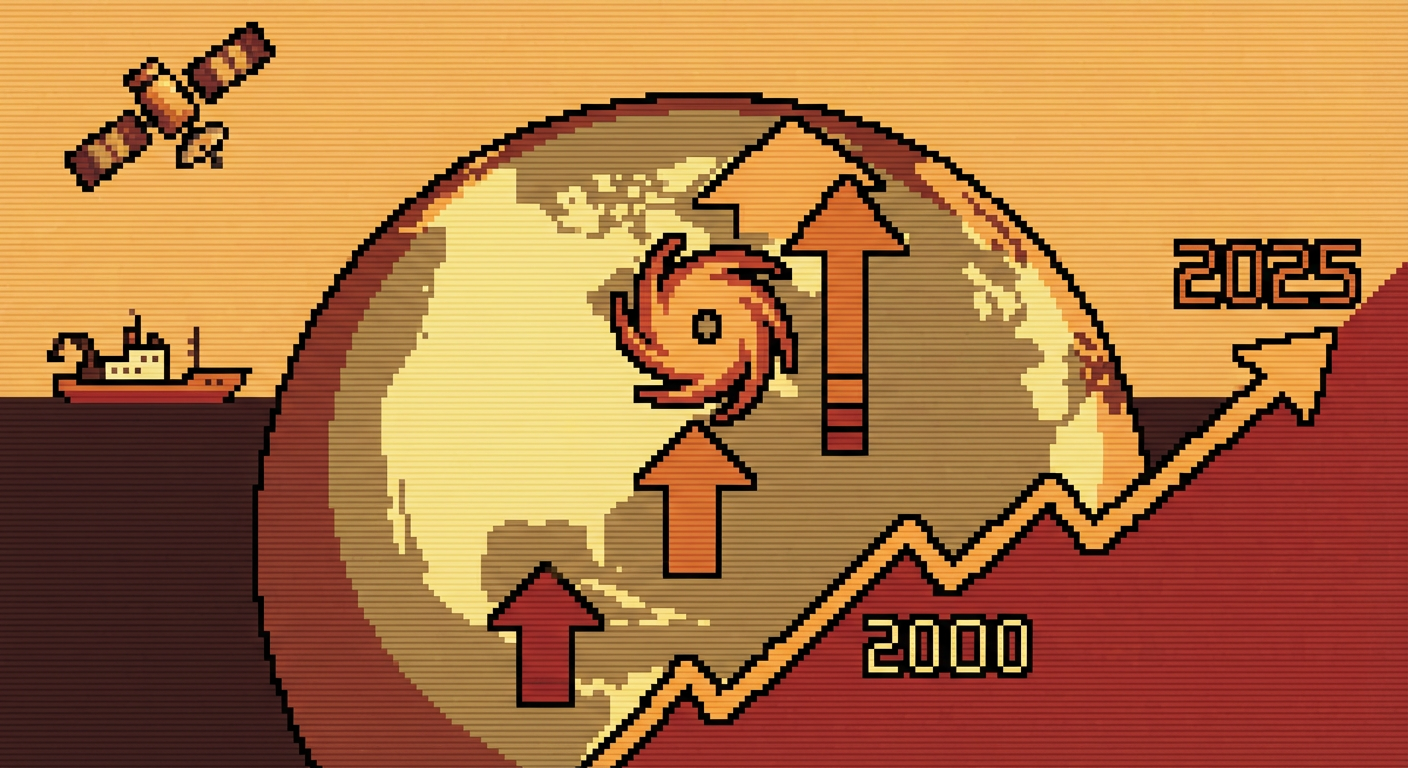
The 2025 Atlantic hurricane season just shattered a record that nobody wanted to see broken. The NOAA 2025 Atlantic Hurricane Season Summary confirmed that insured losses exceeded $130 billion, surpassing the previous record set in 2017. That’s not just a statistical footnote in some obscure meteorological journal. That’s real money, real homes, real lives disrupted across the continental United States. And it gets more specific when you look at the storms themselves: six major hurricanes at Category 3 strength or higher tore through the season, each one a reminder that we’re not watching climate change happen in slow motion anymore.

When Hurricanes Break Records: What 2025's Costliest Season Reveals About Our Changing Climate
When Hurricanes Break Records: What 2025’s Costliest Season Reveals About Our Changing Climate

But here’s what really caught my attention while reading through the latest research at 2am last week: the global picture is even grimmer. Swiss Re’s 2025 sigma report, which tallies natural catastrophe losses worldwide, pegged global losses at around $380 billion for the year. Atlantic hurricane activity alone accounted for the single largest category of losses. This marks the third consecutive year that Atlantic storms have claimed the top spot. We’re not talking about a fluke season or an outlier year. We’re watching a pattern solidify.

Illustration for When Hurricanes Break Records: What 2025's Costliest Season Reveals About Our Changing Climate
Illustration for When Hurricanes Break Records: What 2025’s Costliest Season Reveals About Our Changing Climate

The Attribution Science: Proving the Connection

Here’s where it gets scientifically interesting. You’ve probably heard climate scientists say that “we can’t attribute any single storm to climate change.” That was mostly true five years ago. But the field of rapid attribution science has advanced dramatically, and what researchers are finding now is almost unsettling in its precision. Within two weeks of Hurricane Helene’s devastating successor storm in 2025, the World Weather Attribution Science Reports team published findings showing that anthropogenic climate change made peak wind intensity approximately 11% higher and rainfall totals roughly 38% heavier than they would have been under pre-industrial conditions.

Let me put that 38% rainfall figure in perspective. That’s not a rounding error. That’s not within the noise of natural variability. That means climate change literally added more than a third more rain to an already catastrophic storm system. When you’re talking about a hurricane that dumps 20 inches of rain across a region, 38% more means nearly 8 additional inches falling on already-saturated ground. The difference between manageable flooding and community-destroying floods often comes down to inches.

Attribution science works by running climate models under two scenarios: one representing the world as it actually exists now, and another simulating what the world’s weather patterns would look like without human-caused warming. The difference between the two tells you what fraction of a storm’s intensity you can directly link to our greenhouse gas emissions. This methodology has become so refined that researchers can now publish these findings in peer-reviewed journals within days of major storms occurring, rather than months or years later.

The Ocean is Hotter Than We Expected

The engine powering all of this sits in the Atlantic itself. According to NOAA’s Coral Reef Watch data, sea surface temperatures in the Main Development Region of the Atlantic hit record anomalies of plus 1.8 degrees Celsius above the 1991-2020 baseline during the 2025 peak season. That might sound modest, but ocean temperatures don’t need to swing wildly to have dramatic effects on hurricane behavior. The relationship between sea surface temperature and hurricane intensity is roughly logarithmic: each additional degree of warming creates disproportionately more energy available for storm intensification.

Think of the ocean as a battery charging tropical cyclones. Warmer water means more energy stored. Hurricanes are heat engines that convert that thermal energy into powerful winds and heavy rainfall. When you boost the baseline temperature of the ocean by nearly two degrees Celsius across the breeding grounds where Atlantic hurricanes form, you’re fundamentally changing the upper limit of how intense storms can become before they run out of fuel.

Storms Are Migrating Poleward, and That Changes Everything

There’s another dimension to this crisis that deserves more attention than it typically receives. A 2025 study published in Geophysical Research Letters documented something that’s been quietly happening for decades but has now accelerated measurably: tropical cyclones are reaching their maximum intensity at higher and higher latitudes. The research found that storms are shifting poleward by roughly 56 kilometers per decade since 2000. In human terms, storms that historically would have reached peak intensity near the Caribbean are now reaching Category 4 and 5 strength closer to the continental United States.

Why does this matter? Because infrastructure, population density, and emergency preparedness increase dramatically as you move northward into the developed regions of North America. A catastrophic storm reaching full intensity over warm Gulf waters caused damage but was somewhat expected. A storm that intensifies explosively as it approaches the Florida coast or races toward the Carolinas gives less warning time and affects regions with more densely packed coastal development. The migration poleward is like moving the bullseye on a target toward more populated areas.

What This Means for Science, Policy, and Your Own Decisions

The cascade of record-breaking numbers from 2025 tells us something uncomfortable: the climate system isn’t changing in some distant, abstract way that future generations will have to worry about. It’s changing right now in ways that show up in insurance premiums, mortgage rates, evacuation orders, and supply chain disruptions. The attribution science, ocean monitoring data, and poleward migration research all point in the same direction: we’re not just experiencing bigger hurricanes. We’re experiencing a fundamentally altered hurricane system operating in a warmer ocean with different geographic patterns.

What fascinates me most about the current state of hurricane science is that we’ve moved past asking “Does climate change affect hurricanes?” and into much more specific territory: “By how much? In which ways? For which storms? How fast is the system changing?” That’s real scientific progress, even though the answers are sobering. The research community can now give policymakers and emergency managers specific, quantified information about climate risk in near-real time. Whether that information actually changes decisions at the policy level is a separate question, and honestly, a more urgent one.

If you’re tracking these developments, I’d encourage you to dig into the primary research yourself. The attribution reports are surprisingly readable for non-specialists, the NOAA data is publicly available, and the conversation happening across these fields right now is charged with both rigorous skepticism and genuine concern. What patterns are you noticing in your own community? Have you started thinking differently about where climate change shows up in everyday life?

Europa Clipper’s First Data Drop: Why I Can’t Stop Thinking About What’s Happening 25 Kilometers Above an Alien Ocean

The Moment Everything Changed

It was 3:47 AM when I first saw the telemetry. Europa Clipper had completed its inaugural close approach to Jupiter’s moon, skimming just 25 kilometers above that ice-locked surface, and all nine science instruments fired simultaneously. Nine instruments. Simultaneous. Do you understand what that means? We weren’t just pinging Europa with one narrow beam of curiosity anymore. We were flooding it with questions from every angle we could devise, listening to the answers with infrared cameras, magnetometers, mass spectrometers, and radiation detectors all at once. I should have gone to bed. I did not go to bed.

The data began arriving in chunks that afternoon, and by evening, the preliminary findings had circulated through the research community. Complex organic molecules detected in Europa’s exosphere. Hydrogen peroxide concentrations elevated beyond what our models predicted. These weren’t headline-grabbing anomalies that would make the evening news. They were something far more valuable: they were exactly what certain models had predicted, which meant our understanding of what’s actually happening beneath that icy crust just shifted from educated speculation toward confirmed reality.

What the Molecules Are Telling Us

Here’s what you need to understand before we go further: Europa’s exosphere is incredibly thin. We’re talking about wisps of material so sparse that calling it an “atmosphere” would be generous. Yet even in this vacuum-like environment, Europa Clipper’s mass spectrometer identified organic compounds and substantial hydrogen peroxide. Neither of these materials simply exists up there by accident. They’re the chemical fingerprints of what’s happening in the ocean below.

The hydrogen peroxide finding deserves special attention. In Europa’s subsurface ocean, which we estimate contains roughly twice as much liquid water as all of Earth’s oceans combined, chemical reactions between the rocky ocean floor and the water column generate peroxide. This matters because it represents available chemical energy. On Earth, life doesn’t simply need water. It needs chemical gradients to exploit, energy sources to metabolize. By that measure, Europa’s ocean appears to have both.

The organic molecules detected are more intriguing still because their complexity suggests active chemical processes. We’re not talking about simple compounds. The mass spectrometer resolved signatures consistent with more elaborate structures. Where do these come from? Radiation could be breaking down simpler molecules on the surface and in the exosphere. Chemical reactions in the ocean itself could be building them. The beauty of having nine instruments working together is that we can cross-reference. The magnetometer tells us about plasma interactions. The thermal imager shows us surface temperatures and heat distribution patterns. The spectrometer reveals what’s actually out there. Together, they start to paint a picture rather than showing us isolated puzzle pieces.

The Ocean Beneath: From Model to Measurement

For years, we’ve known Europa harbors a subsurface ocean. Gravity measurements from previous missions, combined with Europa’s relatively young surface, pointed to a vast body of liquid water maintained by tidal heating. Jupiter’s gravity flexes Europa constantly, and that mechanical stress generates heat. The calculation is straightforward once you understand it: a moon being pulled and compressed billions of times generates tremendous internal warmth. That warmth melts ice. Liquid water persists.

What we didn’t know with confidence was what that ocean actually contained. Was it a sterile reservoir of pure H2O? Or was it more like Earth’s oceans, rich with dissolved salts and minerals? In 2023, Caltech researchers Samantha Trumbo and Mike Brown analyzed Hubble Space Telescope data and published findings that should have broken the internet but somehow didn’t. They identified sodium chloride on Europa’s surface. Not just hints of it. Spectral signatures of table salt, the very mineral that dominates Earth’s seawater. The implication was unavoidable: the ocean below likely resembles our own in basic composition. We weren’t looking at an exotic chemical system. We were looking at something fundamentally similar to home.

Europa Clipper’s measurements now provide complementary evidence. The organic molecules and peroxide signatures fit within a framework of an ocean that isn’t just wet, but chemically active and potentially habitable. This is the crucial distinction: preliminary data from a single flyby doesn’t prove Europa hosts life. It proves that Europa’s ocean seems to operate according to chemical principles that could support it. That’s enormous. That’s the difference between “maybe” and “we should take this seriously.”

What Comes Next in the Four-Year Campaign

This first flyby was a proof of concept, and it worked. But think about what comes next. The NASA Europa Clipper Mission Page details the full scope: 49 planned flybys across four years. Forty-nine opportunities to refine our measurements, observe Europa across different hemispheres, track seasonal variations in the exosphere, and build a three-dimensional model of the moon’s physics and chemistry. That’s not a quick survey mission. That’s a methodical investigation.

Principal investigator teams from JPL, the University of Texas, and the Southwest Research Institute are coordinating instrument groups with clearly different objectives. The imaging teams want to map surface features and detect thermal anomalies that might indicate subsurface heat transport. The radiation instruments need to characterize the energetic particle environment and understand how radiation sculpts the surface. The mass spectrometer will refine its molecular inventory mission by mission. Each subsequent flyby will operate in a different mode, probing different questions. We’ll get mass spectrometry data from different altitudes. We’ll image the same regions under different lighting. We’ll build redundancy and cross-validation into our understanding.

What fascinates me most is the second-order thinking here. Yes, these early results suggest Europa’s ocean is chemically interesting. But spread across 49 flybys, we can start mapping where that chemical complexity concentrates. Are certain regions more geologically active? Are there plume sites where ocean material reaches the surface more readily? Are there patterns in where organic molecules concentrate in the exosphere? These answers won’t just satisfy scientific curiosity. They’ll guide the next phase of exploration. When we eventually send a lander or a submarine to Europa, the data from this mission will tell us where to go, what to expect, and which instruments will actually matter.

The Implications Game Has Only Started

I need to be rigorous here about what we actually know versus what we’re inferring. We have preliminary data from one close approach. We have chemical detections that align with predictions. We have measurements consistent with models suggesting Europa’s ocean is chemically dynamic. None of this proves the ocean is habitable. None of this proves anything lives there. What it does establish is that the foundation for habitability seems solid. The chemistry works. The energy sources exist. The ocean isn’t a frozen, inert reservoir.

From here, implications branch in multiple directions. In the near term, over this four-year mission, we’ll build a comprehensive chemical and geological profile of Europa. We’ll answer tactical questions: Where is material ejected from the ocean? What’s the composition of the surface ice? How does the magnetosphere interact with Europa’s exosphere? These answers feed into mission design for future probes.

In the medium term, once we understand Europa more completely, we can evaluate the second wave of exploration. Would a lander searching for organic compounds have a reasonable chance of success? Would a subsurface probe make sense? What instruments would actually detect biosignatures if they existed? The current mission is reconnaissance. It’s teaching us how to ask better questions before we commit the enormous resources required for direct surface or subsurface investigation.

The broader implication sits underneath all of this: we’re living in an era where we can actually investigate the habitability of worlds we can’t even see directly. We’re collecting data that will shape how we think about where life might exist throughout the cosmos. The Trumbo & Brown Europa Surface Chemistry Study – Science and now these first Europa Clipper measurements are building a coherent story about an ocean moon that isn’t alien in the way we once thought. It’s strange and distant, yes. But it’s not incomprehensibly exotic.

So here’s my question for you: what aspect of this intrigues you most? The chemistry of an alien ocean? The long-term mission design? The philosophical implications about where life might hide in our solar system? The comments section below is yours. Let’s figure out together what

The Threshold Moment for Brain-Computer Interfaces: From Lab Miracles to Messy Reality

We’re Actually Doing This Now

At some point in late 2023, a paralyzed person in California moved a computer cursor by thinking about it. This wasn’t a press release designed to resurrect a flagging stock price or a carefully curated social media moment. It was Neuralink’s first human trial participant, demonstrating what neuroscientists have been promising for decades: direct neural control of external devices. The cursor moved. The person thought, and the machine obeyed.

But here’s where I have to pump the brakes slightly, because the story gets more interesting when you zoom out. Neuralink got the headlines. What they didn’t get was the finish line first. Synchron, a less flashy competitor working with a stent-based electrode design rather than Neuralink’s surgically implanted array, had already demonstrated human brain-computer interface control eighteen months earlier. Two different approaches. Two different timelines. Same fundamental breakthrough happening in parallel.

This is the moment we’re in right now. Not the moment of sci-fi fantasy. The moment where multiple paths forward are actually working, which means we need to start thinking about which ones scale, which ones prove reliable over years rather than weeks, and what the second and third order consequences actually are.

The Architecture Problem Nobody Talks About

When people imagine brain-computer interfaces, they picture either the neurosurgeon’s operating room or the futuristic headset from a movie. The reality is messier and, honestly, more interesting. The invasive approach gives you incredible signal fidelity. Threading electrodes directly into neural tissue lets you listen to individual neurons firing. You get bandwidth. You get precision. The paralyzed patient using Neuralink’s implant can control a cursor at speeds that approach natural human movement. That’s not metaphorical. That’s actual, measured performance improvement over previous non-invasive attempts.

Non-invasive approaches meanwhile have their own momentum. Commercial EEG-based headsets are now reaching thirty-two channels in consumer products aimed at gaming and brain-training applications. These don’t require surgery. They don’t carry surgical risk. They also don’t give you the signal clarity that makes fine motor control intuitive. The signal-to-noise ratio is fundamentally different. Think of it like the difference between a direct fiber optic line versus your home wifi. Both can transfer information. One is categorically better for certain tasks.

What’s happening now is engineers exploring the middle ground. Synchron’s stent-based approach threads electrodes through blood vessels rather than directly into tissue. Less invasive than a full implant, potentially more signal than surface electrodes. It’s a compromise that might actually prove to be the sweet spot for widespread clinical adoption. But we won’t know that for several years of real-world data.

When the Impossible Becomes Almost Practical

Neural decoding of speech has crossed a threshold that deserves more attention than it gets. Researchers have demonstrated systems capable of translating brain activity into text at speeds around eighty words per minute in paralyzed patients. Eighty words per minute isn’t conversational speed, but it’s fast enough to make communication genuinely functional rather than novelty-level interesting. A person who has lost the ability to speak can communicate at a useful pace. The technology is reading motor intention from the brain and converting it to language.

This is where you need to think about second-order implications. What happens when this technology works reliably? Not someday. When it actually works reliably for the people who need it most. Suddenly you’re not talking about research papers in Nature Neuroscience journal anymore. You’re talking about medical devices that need approval pathways, manufacturing standards, warranty support, and insurance coverage. The engineering problem becomes a regulatory problem. And that’s where things get genuinely complicated.

Memory prosthetics are another area showing genuine clinical promise. Early human trials have demonstrated that direct stimulation of neural circuits involved in memory formation can improve recall by around thirty percent in participants with memory impairment. Thirty percent sounds modest until you consider what that means for someone with early cognitive decline. That’s the difference between remembering your grandchildren’s names and not. Genuinely transformative at the individual level, even if it looks like a modest statistical improvement on paper.

The Regulatory Maze That Might Actually Matter More Than the Neuroscience

Here’s the frustrating part, and I say this having read through FDA guidance documents at three in the morning like some people read thriller novels: the regulatory pathway for brain-computer interfaces is genuinely unclear. The FDA has general frameworks for neural devices. The European MDR, the Medical Device Regulation, has its own approach. Neither framework was designed with the unique challenges of BCIs in mind. You’re talking about devices that interface directly with the nervous system, that require precise neural positioning, that might need periodic recalibration, that could theoretically be hacked or malfunction in unpredictable ways.

Neuralink and Synchron are operating under expedited review processes because their devices target severely paralyzed patients with limited alternatives. That’s the path forward right now: proof of safety and efficacy for the most desperate use cases first, then expansion. But it’s not clear what the pathway looks like for a commercial product aimed at people who want cognitive enhancement, or memory backup, or direct brain-to-brain communication. Those are the sci-fi applications that get venture capital excited. They’re also the ones that will require regulatory frameworks that don’t really exist yet.

What should exist, and what I genuinely hope is being discussed in policy circles right now, is a forward-looking regulatory approach that doesn’t just treat BCIs as a special category of medical device but recognizes them as a fundamentally different class of technology. Something that enables innovation without creating a regulatory environment so permissive that the first serious adverse event generates a backlash that sets the field back five years.

The Next Frontier Is Integration, Not Invention

The breakthroughs are happening. Cursor control works. Speech decoding works. Memory enhancement shows promise. Non-invasive approaches are improving. Minimally invasive approaches are working. The hard problems are shifting from pure neuroscience to engineering, manufacturing, and governance.

What I’m watching closely over the next five years is which approach actually scales to thousands of patients while maintaining safety and efficacy. Not which one gets the most press coverage. Which one actually works reliably for regular clinical use. Synchron’s less invasive approach might prove more practical for widespread adoption than Neuralink’s higher-fidelity implant. Or both might coexist for different use cases. Either way, we’re entering the era where this technology stops being research and becomes clinical reality, with all the messy complications that implies.

If you want to stay current on the actual engineering challenges and clinical results as they happen, IEEE Spectrum brain-computer interfaces does solid reporting on the technical details. But I’m genuinely curious what aspects of this technology concern you most. Is it the safety question? The regulatory uncertainty? The ethical implications of memory enhancement? The potential for military applications? Drop your thoughts in the comments, because the conversations we have now about what we want this technology to be will matter more than any of the engineering challenges we solve.

Why We’re Wrong About the Deep Ocean (And Why That Matters More Than You Think)

The Myth That Won’t Die: We Know the Ocean

Here’s something that keeps me awake at night, and I mean that literally. We’ve sent people to the moon. We’ve photographed black holes. We can sequence your entire genome in hours. And yet, roughly 80 percent of Earth’s oceans remain unexplored and unmapped at any useful resolution. That’s not a poetic exaggeration. That’s the real state of our planet.

The sticky part of this misconception is that it sounds absurd on its face. We’ve been sailing ships for thousands of years. We’ve had submarines since the 1960s. Surely we know what’s down there by now? The problem is that “ocean” is almost comically massive, and “explored” means something very different from what most people imagine. We have decent maps of the seafloor in some regions, satellite data telling us sea surface temperatures, and scattered research stations collecting data from various depths. What we don’t have is comprehensive understanding of most marine ecosystems, especially in the deep zones where pressure reaches crushing extremes and sunlight never penetrates.

The Technology Revolution That Changed Everything

This is where things get genuinely exciting. Autonomous underwater vehicles are transforming the speed and cost of deep ocean research in ways that would have seemed impossible just fifteen years ago. These are essentially underwater drones, equipped with sophisticated sensors, cameras, and sampling equipment that can operate independently for days or weeks at a time. They don’t need a research ship hovering above them constantly. They don’t require human operators physically present. They can go places and do things that crewed submarines simply cannot.

The implications are staggering. What used to take a research vessel three months and cost millions of dollars can now be accomplished in a fraction of the time at a fraction of the cost. Organizations like MBARI ocean research have been pioneering this work for years, using these vehicles to explore trenches, hydrothermal vents, and deep canyons that remain almost completely unknown. The result? We’re discovering life in places we previously thought barren. We’re finding new species at a rate of roughly 2,000 per year from deep ocean surveys alone. Some of these organisms challenge our fundamental understanding of what life requires to survive.

The Discovery Machine Revealing Hidden Biodiversity

Every time I read about a new deep-sea discovery, I’m struck by how fundamentally wrong our assumptions have been. We assumed the deep ocean was mostly empty, a cold graveyard of sorts. The reality is that it’s teeming with life adapted to conditions that seem impossibly hostile. Creatures that thrive under pressures that would instantly crush us. Organisms that use bioluminescence to communicate in absolute darkness. Animals that have developed chemistry as exotic as anything in a lab.

These aren’t just curiosities. Every new species discovered provides insights into adaptation, resilience, and the sheer creativity of evolution. We’re finding organisms that produce compounds with potential medical applications. We’re discovering entirely new metabolic pathways that rewrite our understanding of biochemistry. The deep ocean is basically a library of evolutionary solutions to extreme problems, and we’ve barely cracked the cover.

But here’s the part that keeps me up at night in a different way. As we’re discovering this incredible biodiversity, we’re simultaneously facing pressure to exploit it. Deep-sea mining proposals are raising alarm among marine biologists globally. These operations would potentially disturb ecosystems that have existed for millions of years in stable conditions, creatures that reproduce slowly and exist in fragile equilibrium. We’re talking about mining metals from the seafloor at depths where we can barely conduct basic research, let alone understand the full consequences of industrial operations.

The Planetary Crisis Playing Out in Real Time

The deeper misconception here is that the deep ocean is somehow separate from our everyday concerns. It’s not. Ocean acidification is occurring at the fastest rate in 300 million years according to paleoclimate records. That’s not a gradual shift. That’s a catastrophic acceleration driven by our carbon emissions. The chemistry of the ocean is changing faster than most marine organisms can adapt, and the deeper parts of the ocean are not insulated from this problem.

Then there’s the plastic. In 2019, surveys found microplastics in the Mariana Trench at 11-kilometer depth. The deepest place on Earth. The bottom of our ocean. We’ve littered the planet so thoroughly that our waste shows up in the most remote, hostile place that physically exists. This isn’t hypothetical. This isn’t someone speculating about future problems. We’re actively poisoning ecosystems we haven’t even finished discovering.

Organizations like NOAA Ocean Service are working to document and understand these changes, but the scope of the problem vastly exceeds current research capacity. We’re trying to understand ecosystems while simultaneously changing their fundamental chemistry. It’s like trying to read a book while someone’s actively erasing the pages.

What We Actually Need to Understand

The real reason these misconceptions are sticky is that they comfort us. Thinking we know the ocean suggests it’s stable, manageable, under control. The truth is messier and more urgent. The ocean is largely unknown, rapidly changing, and full of life we haven’t met yet. That’s simultaneously wonderful and terrifying.

The technological revolution in autonomous research is giving us unprecedented tools to explore and understand. Every new species discovered, every ecosystem mapped, every metabolic pathway identified brings us closer to genuine knowledge. But knowledge without action is just data. We need to use what we’re learning to make better decisions about how we treat the ocean going forward.

So what do you think? Are you following the latest deep-sea discoveries? Have you thought about what it means that we’re still finding entirely new ecosystems in the 21st century? I’d love to hear your thoughts in the comments, especially if you’ve read any recent research that’s changed how you think about the ocean. This is exactly the kind of conversation that helps me understand not just the science, but why it matters.

The GLP-1 Revolution Beyond Weight Loss: Why 2025’s Heart Failure Data Changes Everything

The GLP-1 Revolution Beyond Weight Loss: Why 2025’s Heart Failure Data Changes Everything

The Headline Everyone Missed

When the STEP-HFpEF trial results landed in the New England Journal of Medicine earlier this year, the financial press barely blinked. Semaglutide reduced heart failure symptoms in patients with preserved ejection fraction, cut inflammatory markers like C-reactive protein by over 40 percent, and demonstrated genuine clinical benefit in a population that has limited therapeutic options. Yet the coverage stayed muted, drowned out by the relentless chatter about celebrity weight loss and insurance denials. This is precisely backward. The heart failure data is the inflection point where GLP-1 receptor agonists stop being a metabolic tool and become something far stranger and more profound: a class of drugs that appears to rewire fundamental biological pathways we’re only beginning to understand.

The GLP-1 Revolution Beyond Weight Loss: Why 2025's Heart Failure Data Changes Everything
The GLP-1 Revolution Beyond Weight Loss: Why 2025’s Heart Failure Data Changes Everything

I spent three hours last week parsing the STEP-HFpEF methodology, cross-referencing outcomes against prior trials, and I kept coming back to one question: how is a drug developed for diabetes management showing 40-plus percent reductions in inflammatory markers in heart failure patients? The answer pulls us into territory that should terrify and electrify every person interested in modern medicine simultaneously.

Illustration for The GLP-1 Revolution Beyond Weight Loss: Why 2025's Heart Failure Data Changes Everything
Illustration for The GLP-1 Revolution Beyond Weight Loss: Why 2025’s Heart Failure Data Changes Everything

Following the Money to Follow the Science

Let’s establish scale first, because the numbers genuinely matter for understanding what happens next. Novo Nordisk’s combined revenues from Ozempic and Wegovy exceeded 25 billion dollars in 2024 alone. That makes GLP-1 drugs the fastest-growing pharmaceutical class in recorded history. For context, that’s more revenue than the entire statin market generates in most years. This isn’t background noise—this is the entire structure of global pharmaceutical development tilting toward one mechanism of action.

When you have that much commercial momentum, two things happen. First, research funding floods into GLP-1 biology, which accelerates discovery. Second, the pressure to find new indications becomes intense, which can either drive genuine innovation or manufacture false positives. The art of reading the literature right now is learning to distinguish between those two outcomes. The heart failure data appears to be the former. A The Lancet GLP-1 Cardiovascular Meta-Analysis covering 85,000 patients found that GLP-1 agonists reduced major adverse cardiovascular events—myocardial infarction, stroke, cardiovascular death—by 14 percent across genuinely diverse populations. That’s not margin-of-error territory. That’s reproducible, clinically meaningful protection.

When the Indication Becomes Unrecognizable

Here’s where the story gets properly strange. In 2024, the FDA approved tirzepatide (Eli Lilly’s Zepbound) for obstructive sleep apnea. That’s not a typo. A drug originally developed as a diabetes agent, then marketed for weight loss, received its first approval ever for a sleep breathing disorder after trial participants experienced a 63 percent reduction in apnea episodes. We now have FDA-approved therapy for sleep apnea. The mechanism appears to involve both the GLP-1 and GIP pathways, suggesting this isn’t simply about weight loss improving airway mechanics. Something deeper is happening at the neurobiological level.

I remember the exact moment this clicked for me. I was reading about the sleep apnea trial at about 2:47 a.m., and I texted a friend: “These drugs are doing something we don’t have the language for yet.” Because we don’t. We keep calling them weight loss drugs. But weight loss is increasingly looking like a symptom, not the disease we’re treating.

The Brain’s Role in Everything We Didn’t Expect

This is the section where I need to be genuinely careful, because the exciting research here bumps directly against the frontier of uncertainty. Researchers at the Karolinska Institute published 2025 data suggesting that GLP-1 receptors located in the brain’s nucleus accumbens, a region implicated in reward processing and addiction, may reduce addictive behaviors. Clinical trials are now underway for alcohol use disorder. Let me be explicit: these are early-stage investigations. We don’t yet have the robust efficacy data that would justify prescribing semaglutide as addiction treatment. But the fact that the hypothesis is being tested at all represents a fundamental shift in how we understand what this drug class actually does.

Consider the biological coherence of what we’re observing across indications: GLP-1 agonists reduce inflammatory markers in heart failure. They improve apnea episodes. They’re showing promise in addiction pathways. They reduce body weight. These aren’t separate phenomena. They’re likely manifestations of coordinated changes in appetite regulation, metabolic inflammation, reward sensitivity, and neural homeostasis. The mechanism is probably far more integrated than our current disease categories can accommodate.

What We’re Actually Looking At

We’re in the early stages of recognizing that GLP-1 receptor agonists may represent a genuine therapeutic breakthrough, but not for the reason the headlines suggest. The weight loss is real and medically significant for many people. But the cardiovascular protection, the inflammatory reduction, the emerging neuropsychiatric applications—these point toward something more fundamental: a pharmacological lever that adjusts multiple systems at once. The question we should be asking isn’t “who should take these drugs for weight loss?” It’s “what biological processes are these drugs actually modulating, and what other disease states might respond?”

The STEP-HFpEF trial matters because it forced us to confront that question directly. Heart failure patients don’t necessarily need weight loss. Many of them do lose weight on semaglutide, yes. But the symptom improvement and inflammatory reduction appeared in people already receiving standard heart failure therapy. Something else is happening in the biology, something that operates independently of the metabolic changes we initially expected.

I’ll be tracking the addiction trials closely. I’ll be following the cardiovascular outcome data as it emerges. And I’ll be reading every mechanistic paper that lands on GLP-1 receptor distribution in the central nervous system. This class of drugs has already surprised us multiple times. The surprises probably aren’t finished. If you’re reading the literature yourself, I’d love to know what details caught your attention or what interpretations you’d challenge. The science is moving fast enough that conversation matters.