The Deep Ocean Revolution: How Cutting-Edge Technology Reveals Earth’s Last Frontier

Mapping the Unknown: The Scale of Our Ocean Ignorance

The numbers are staggering yet humbling. While we can map the surface of Mars with remarkable precision, roughly four-fifths of Earth’s ocean floors remain unmapped at the high resolution necessary for scientific understanding. This vast expanse of unexplored terrain beneath our feet is one of the most glaring knowledge gaps in planetary science.

The challenge goes beyond simple cartography. These unmapped regions harbor ecosystems, geological formations, and potentially critical resources that could reshape our understanding of life on Earth. The NOAA Ocean Service continues to lead international efforts to close this mapping gap, but the sheer scale of the task means we’re still decades away from comprehensive coverage.

This knowledge deficit has real implications for climate science, biodiversity conservation, and resource management. Without detailed maps of seafloor topography, our models of ocean circulation patterns remain incomplete. The deep ocean drives much of Earth’s climate system, yet we’re essentially operating with partial blueprints of the machinery.

Biodiversity Bonanza: New Species at Record Pace

Deep ocean surveys are revealing life at a pace that astounds marine biologists. Researchers now catalog approximately 2,000 new species annually from deep-sea expeditions. This suggests that current estimates of marine biodiversity represent only a fraction of reality. Each research dive seems to uncover organisms with novel adaptations, biochemistry, and ecological roles.

These discoveries have immediate implications for biotechnology and medicine. Deep-sea organisms often have unique enzymes capable of functioning under extreme pressure and temperature conditions. Such adaptations could prove invaluable for industrial processes or pharmaceutical development. The recent discovery of bacteria that break down plastics in deep trenches, for instance, offers potential solutions to waste management challenges.

More fundamentally, this biodiversity boom is rewriting our understanding of life’s limits and evolutionary pathways. Organisms thriving in environments once considered impossibly hostile are expanding the parameters for life on Earth and potentially other planets. The rate of discovery suggests we’re still in the early stages of cataloging life in the deep ocean.

The Pollution Paradox: Contamination in Earth’s Most Remote Places

Perhaps no discovery has been more sobering than the detection of plastic pollution in the Mariana Trench, the deepest point on Earth’s surface. Surveys conducted since 2019 have found plastic debris at depths exceeding 11 kilometers. This demonstrates that human impact now reaches literally every corner of the planet.

This pollution is more than an environmental concern. It signals a fundamental shift in Earth’s systems, where human activity has become a geological force comparable to natural processes. The presence of microplastics in deep-sea food webs suggests contamination pathways we’re only beginning to understand.

At the same time, paleoclimate records indicate that ocean acidification is occurring at the fastest rate in 300 million years. The combination of chemical changes and physical pollution creates a dual stress on deep-sea ecosystems that have remained stable for millennia. This rapid environmental transformation is happening faster than most organisms can adapt, potentially triggering ecosystem collapses in regions we’ve barely begun to study.

Mining the Abyss: The Resource Extraction Dilemma

Deep-sea mining proposals are generating intense debate among marine scientists worldwide. The seafloor contains vast deposits of rare earth elements, polymetallic nodules, and other materials essential for renewable energy technologies. Proponents argue that accessing these resources is crucial for transitioning away from fossil fuels.

Critics warn that deep-sea mining could devastate ecosystems we don’t yet understand. The slow growth rates and extreme specialization of deep-sea organisms mean that mining damage could persist for centuries. Unlike terrestrial mining sites, there are no established protocols for deep-sea ecosystem restoration.

The timing of this debate is critical. As terrestrial sources of rare earth elements become more difficult to access, pressure to exploit deep-sea resources intensifies. Yet the window for comprehensive baseline studies before commercial extraction begins is rapidly closing. This creates a classic development versus conservation tension, complicated by the global scale of the resources and their importance for clean energy infrastructure.

Technological Transformation: The Rise of Autonomous Ocean Exploration

Autonomous underwater vehicles are revolutionizing deep-sea research by dramatically reducing both the cost and risk of ocean exploration. These sophisticated robots can operate for months at depths impossible for human researchers, collecting data continuously while covering vast distances.

The impact on research timelines is profound. Surveys that once required years of planning and millions of dollars in ship time can now be conducted with fleets of autonomous vehicles operating simultaneously. MBARI ocean research exemplifies this technological shift, deploying advanced autonomous systems that are redefining what’s possible in marine science.

These technological advances are creating feedback loops that accelerate discovery. Better data collection enables more sophisticated models, which in turn guide more effective research strategies. The integration of artificial intelligence with autonomous systems promises to further amplify this effect, potentially enabling real-time species identification and ecological mapping.

The convergence of technological capability, environmental urgency, and economic interest is creating unprecedented opportunities and challenges in ocean science. The decisions made in the next decade about how to study, protect, and potentially exploit deep-sea environments will determine how we manage Earth’s final frontier. Understanding these implications requires ongoing engagement with both the science and the policy discussions that will shape our planet’s future in ways we’re only beginning to comprehend.
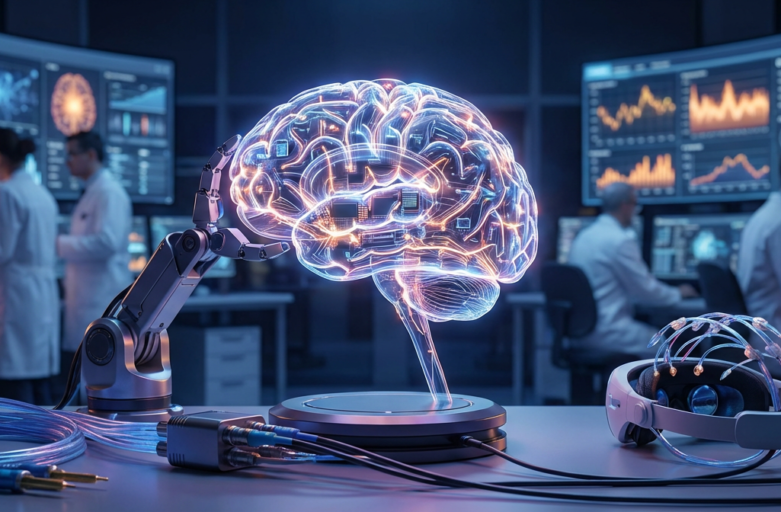
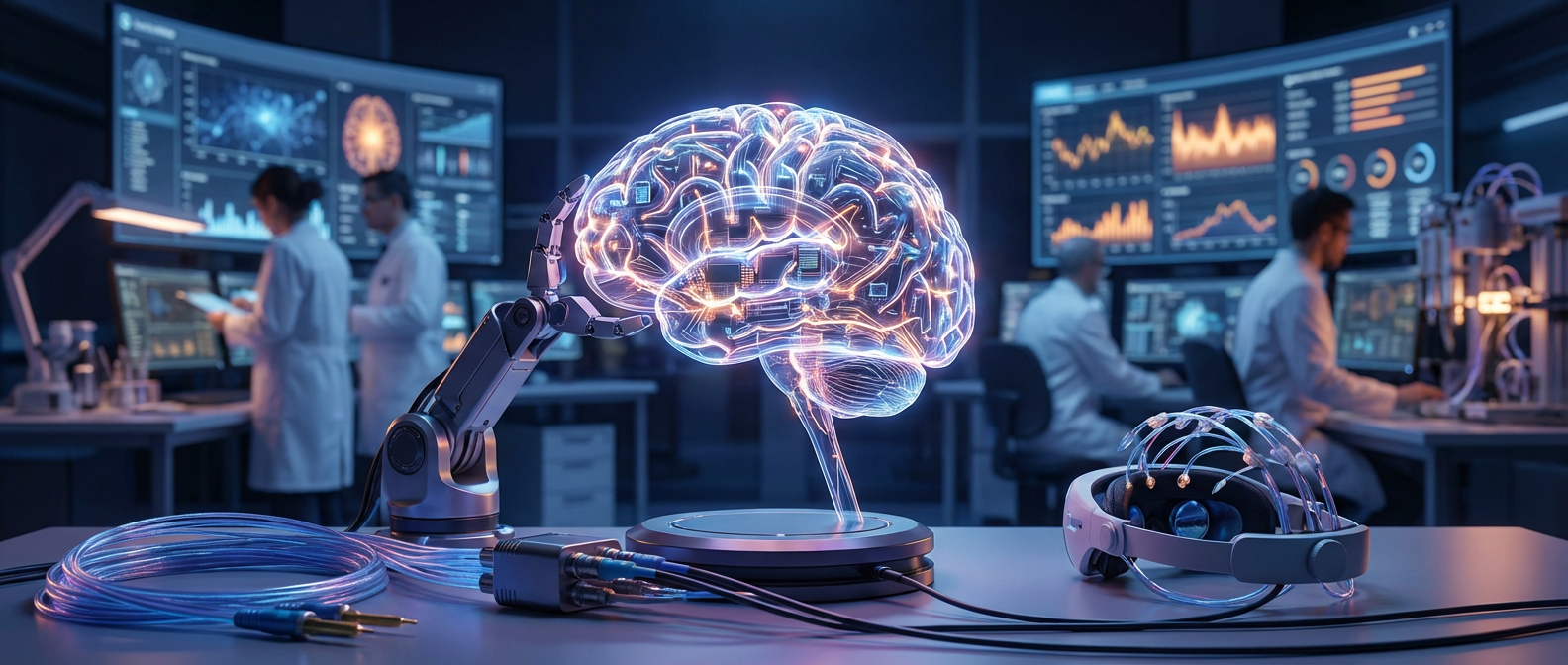
Brain-Computer Interfaces: Mapping the Territory Between Promise and Reality

The Human Trial Revolution Has Quietly Begun

When researchers at Neuralink demonstrated their first human participant controlling a computer cursor through thought alone, they did more than hit a tech milestone. This was decades of neuroscience research finally coming together into something that makes science fiction feel within reach. The participant had microscopic electrodes threaded into motor cortex tissue and could navigate digital interfaces using the same neural signals that once moved now-paralyzed limbs.

But here’s the thing – Neuralink wasn’t actually first. Synchron had already achieved human brain implantation eighteen months earlier using a completely different approach. Instead of threading electrodes directly into brain tissue, their system uses a stent-like device inserted through blood vessels, positioning sensors along the brain’s surface. This vascular pathway makes surgery less complex while still recording functional neural activity.

These parallel achievements show us something important about brain-computer interface development. Multiple tech pathways are hitting their stride at the same time, each with distinct trade-offs between invasiveness, signal quality, and how hard they are to implement. The race isn’t just about reaching human trials first. It’s about figuring out which approaches will actually scale from lab demos to treatments people can get.

Commercial Realities Beyond Medical Applications

While surgical brain implants grab headlines, non-invasive brain-computer interfaces are already hitting commercial markets. Gaming companies now sell headsets with 32-channel arrays that can detect neural activity through your skull. These devices translate brainwave patterns into game controls, letting players manipulate virtual environments through concentration and mental focus.

The gaming market has become an unexpected testing ground for neural interface tech. Consumers will tolerate imperfect performance in ways that create room for iterative improvement that clinical applications simply can’t afford. A gaming headset that works correctly 85 percent of the time? That’s entertaining tech. A medical brain-computer interface with the same reliability? That would be dangerously inadequate.

This performance gap shows just how far we are from the smooth neural control you see in movies. Current brain-computer interfaces are great at detecting broad categories of mental states but struggle with the precision needed for complex tasks. The neural signals you can access through non-invasive methods carry way less information than what you can record directly from brain tissue.

Decoding Communication and Memory

The potential of brain-computer interfaces becomes most striking when you look at restoring communication abilities. Recent trials have shown neural decoding systems that can translate imagined speech into text at nearly 80 words per minute in patients with paralysis. These systems monitor neural activity in language-processing brain regions, picking up patterns associated with intended words and phrases.

The implications go way beyond typing speeds. For people who have lost the ability to speak due to stroke, amyotrophic lateral sclerosis, or spinal cord injury, these technologies offer pathways back to fluid conversation. The Nature Neuroscience journal has documented multiple breakthrough studies showing how neural decoding can restore communication channels previously considered permanently severed.

Memory enhancement presents another frontier where brain-computer interfaces are showing real impact. Clinical trials testing memory prosthetics have demonstrated 30 percent improvements in recall performance among participants. These devices monitor hippocampal activity during memory formation, then deliver precisely timed electrical stimulation to strengthen neural encoding processes.

But memory enhancement raises some thorny questions about cognitive authenticity and fairness. If brain-computer interfaces can reliably boost memory performance, how will society distinguish between enhanced and natural cognitive abilities? The ripple effects of memory augmentation technology could reshape educational systems, professional competitions, and basic concepts of human achievement.

Regulatory Frameworks Struggling to Keep Pace

Brain-computer interface technology is advancing faster than the regulatory frameworks designed for conventional medical devices can handle. The Food and Drug Administration and European Union’s Medical Device Regulation present unclear pathways for neural interface approval, especially for devices that blur the lines between treatment and enhancement.

Traditional medical device regulation assumes clear distinctions between healthy and pathological states. Brain-computer interfaces mess with this framework by offering benefits to both populations. A memory enhancement device might treat Alzheimer’s disease while simultaneously boosting normal cognitive function. Current regulatory categories don’t know what to do with such dual-purpose technologies.

This regulatory uncertainty creates real problems for companies developing brain-computer interfaces. Without clear approval pathways, investors hesitate to fund development programs that might face years of regulatory delays. This could slow the translation of promising research into clinical applications, potentially delaying life-changing treatments for patients who desperately need them.

International coordination on brain-computer interface regulation is basically nonexistent. Different countries may develop incompatible standards, creating fragmented markets that increase development costs and reduce innovation incentives. The IEEE Spectrum brain-computer interfaces coverage highlights how regulatory divergence could shape which technologies ultimately reach clinical practice.

Distinguishing Hype from Realistic Timelines

The gap between current brain-computer interface capabilities and popular expectations remains huge. While recent achievements represent genuine breakthroughs, they fall way short of the smooth neural control you see in science fiction. Current systems require extensive training, produce occasional errors, and work reliably only in controlled environments.

Realistic timelines for brain-computer interface adoption depend heavily on what you want to use them for. Medical treatments for paralysis and communication disorders will likely reach clinical practice within the next decade, driven by clear patient need and regulatory pathways for life-saving interventions. Enhancement applications for healthy individuals face much higher regulatory bars and longer development timelines.

The most transformative impacts of brain-computer interfaces may come not from individual tech breakthroughs, but from their integration with artificial intelligence systems. Neural interfaces could provide unprecedented data about human thought processes, accelerating machine learning development while simultaneously benefiting from improved AI algorithms for neural signal interpretation.

Understanding brain-computer interfaces requires careful distinction between demonstrated capabilities and speculative possibilities. The field stands at a fascinating point where genuine scientific progress intersects with enormous technical challenges and complex societal implications. I’m curious – what aspects of this rapidly evolving space do you find most compelling or concerning?

The Messy Reality of Brain-Computer Interfaces: Why Failure Drives Progress

The Messy Reality of Brain-Computer Interfaces: Why Failure Drives Progress

When Silicon Meets Synapses

The promise of controlling computers with pure thought has captivated researchers for decades, but the path toward functional brain-computer interfaces looks less like a straight line and more like a chaotic maze of breakthroughs and setbacks. Recent developments show both the remarkable potential and persistent challenges facing this field. A Neuralink participant successfully guided a computer cursor using only neural signals, while competitor Synchron achieved human implantation eighteen months earlier using an innovative stent-based approach that avoids open brain surgery.

The Messy Reality of Brain-Computer Interfaces: Why Failure Drives Progress

These achievements represent years of incremental progress built upon countless failed experiments, abandoned prototypes, and refined hypotheses. The Nature Neuroscience journal regularly publishes studies documenting both successful neural decoding attempts and the numerous technical hurdles that researchers encounter. Each failure provides crucial data about signal stability, biocompatibility, and the complex relationship between neural activity and machine interpretation.

The field extends beyond invasive implants to include consumer-grade headsets with 32-channel designs for gaming applications. These non-invasive devices face different challenges related to signal clarity and user experience, yet their development follows the same iterative process of testing, failure, and refinement that defines all scientific progress.

Illustration for The Messy Reality of Brain-Computer Interfaces: Why Failure Drives Progress

Decoding the Neural Code

Speech restoration is one of the most compelling applications for brain-computer interfaces, particularly for individuals with paralysis or severe motor impairments. Recent trials demonstrate neural decoding systems achieving speeds of 80 words per minute by interpreting the brain signals associated with intended speech. This breakthrough emerged from decades of failed attempts to understand how the motor cortex generates commands for articulation.

Early speech decoding experiments yielded frustratingly poor results. Systems struggled to distinguish between basic phonemes or required extensive training periods that exhausted participants. Researchers systematically addressed each limitation through improved electrode designs, advanced machine learning algorithms, and better understanding of individual neural patterns. The current success rate reflects this accumulated knowledge from previous setbacks.

Memory enhancement through neural prosthetics presents another frontier where failure drives innovation. Clinical trials show 30 percent improvement in recall performance for participants using memory-assisting devices. These devices emerged from earlier attempts to stimulate memory regions that often produced confusing or contradictory results. Researchers learned that precise timing and location of stimulation proved critical, knowledge gained only through careful analysis of unsuccessful interventions.

Regulatory Uncertainty and Scientific Reality

The regulatory framework governing brain-computer interfaces remains frustratingly unclear across both FDA and European MDR systems. This uncertainty reflects the novel nature of these technologies and the challenge of establishing safety standards for devices that interact directly with neural tissue. Regulatory agencies must balance innovation encouragement with patient protection, often resulting in lengthy approval processes that can seem to stifle progress.

However, this apparent obstacle has an important scientific function by forcing researchers to document safety data thoroughly and consider long-term consequences of neural intervention. Early brain-computer interface studies often overlooked potential immune responses, tissue damage, or signal degradation over time. Regulatory scrutiny has highlighted these concerns and driven more comprehensive testing protocols.

The absence of clear guidelines also creates opportunities for different approaches to emerge. Synchron’s stent-based system gained approval partly because it leveraged existing vascular intervention techniques, while more novel implant designs face greater regulatory uncertainty. This diversity of approaches increases the likelihood that viable solutions will emerge, even as individual projects encounter setbacks.

The Innovation Ecosystem of Failure

Brain-computer interface development shows how scientific progress depends on embracing failure as an essential component of discovery. Companies like Neuralink generate significant media attention for their successes, but their progress builds upon decades of academic research that included numerous dead ends and abandoned approaches. Early attempts at neural interfaces often failed because of inadequate materials, primitive signal processing, or incomplete understanding of neural plasticity.

The field benefits from diverse research strategies that allow multiple teams to pursue different solutions simultaneously. IEEE Spectrum brain-computer interfaces coverage highlights how academic labs, startup companies, and established technology firms each contribute unique perspectives and risk tolerances. This ecosystem ensures that promising approaches receive continued development even when initial results disappoint.

Commercial gaming applications, while seemingly less critical than medical devices, provide valuable testing grounds for user interface design and signal processing algorithms. Failed gaming implementations reveal important limitations about attention spans, learning curves, and the practical challenges of translating neural signals into consistent user experiences.

Embracing Uncertainty in Neural Engineering

The current state of brain-computer interfaces reflects both remarkable achievements and persistent unknowns. Signal stability remains problematic for long-term implants. Many devices show degraded performance over months or years. Biocompatibility issues continue to limit implant lifespans, while individual variation in neural anatomy creates challenges for standardized approaches.

These ongoing challenges shouldn’t diminish appreciation for recent progress but rather highlight the complexity of interfacing artificial systems with biological networks that evolved over millions of years. Each failed experiment contributes to a growing understanding of neural engineering principles that will ultimately enable more robust and reliable brain-computer interfaces.

The path forward requires continued acceptance of setbacks as learning opportunities rather than obstacles to progress. The most significant breakthroughs in this field will likely emerge from researchers who view each failed experiment as valuable data rather than disappointment. What aspects of brain-computer interface development do you find most intriguing, and how might current limitations actually accelerate future discoveries?

CRISPR’s Rocky Road to the Clinic: When Gene Editing Meets Medical Reality

From Laboratory Promise to Regulatory Approval

The FDA approved the first CRISPR-based therapy for sickle cell disease in 2023, and honestly, it felt surreal to watch. After years of watching laboratory breakthroughs fizzle out in clinical trials, researchers finally delivered a treatment that could fundamentally alter the course of a devastating genetic disorder. But here’s what most coverage missed: this one success story sits on top of countless experiments that crashed and burned in early trials.

The path from CRISPR’s discovery to this therapeutic win shows how messy scientific progress really is. Those early clinical gene editing attempts? They hit wall after wall. Delivery systems failed. Immune responses blindsided researchers who thought their lab models had prepared them. Each crash taught them something crucial about the difference between editing genes in a petri dish versus inside an actual human being.

What strikes me about this achievement is how it came from grinding out incremental improvements rather than some eureka moment. The approved therapy builds on years of tweaking targeting accuracy, fixing delivery methods, and getting smarter about which patients to treat. Success didn’t come from dodging failure. It came from failing systematically and learning from each mistake.

Precision Gains and Persistent Challenges

Recent advances in base editing techniques have pushed CRISPR’s precision way up. Off-target editing rates now fall below one-tenth of one percent in many applications. That’s a massive improvement over earlier versions of the technology, where unintended modifications made everyone nervous about safety. But getting here required researchers to face problems that weren’t obvious when CRISPR first blew everyone’s minds.

More accurate editing tools came directly from early failures where off-target effects scrambled cells in unexpected ways. Instead of giving up, research teams picked apart these unwanted modifications to figure out what went wrong. This detective work led to clever solutions: new guide RNA designs and modified protein structures that slashed editing errors.

Meanwhile, in-vivo gene editing trials for conditions like transthyretin amyloidosis are showing real promise. Direct genetic modification inside patients can actually be safe and effective. These wins build on previous trials where delivery systems flopped or editing efficiency wasn’t good enough. Each round taught researchers more about navigating the biological chaos inside the human body.

Regulatory Divergence and Agricultural Applications

The regulatory landscape for gene editing keeps shifting in ways that highlight some pretty fundamental disagreements about evaluating modified organisms. The United States and European Union have gone in opposite directions on agricultural gene editing. The US takes a more hands-off approach while Europe maintains much stricter oversight. These differences reflect deeper cultural splits about genetic modification and how to think about risk.

This regulatory divide has created some interesting policy experiments. American researchers can test gene-edited crops in field conditions more easily, while their European counterparts face extensive approval processes. Neither approach has proven definitively better, and both keep evolving as real-world data piles up about gene-edited agricultural products.

Agricultural applications also work as proving grounds for techniques that might eventually help humans. Many delivery methods and editing approaches get developed and refined in plant systems first, then adapted for medical use. This farm-to-clinic pipeline has sped up therapeutic development while generating valuable safety data.

Ethical Boundaries and Economic Barriers

The ethical debate around germline editing exploded after He Jiankui announced the birth of gene-edited babies in 2018. His work was widely condemned by the scientific community and highlighted the massive gap between technical capability and ethical consensus. The incident forced renewed discussions about appropriate boundaries for human genetic modification and the need for international coordination in research oversight.

Rather than killing gene editing research, this controversy led to stronger ethical frameworks and clearer guidelines. Professional organizations and funding agencies developed more specific protocols for reviewing gene editing proposals, especially those involving heritable modifications. The scientific community’s response shows how ethical challenges can actually strengthen the research enterprise when handled transparently.

Economic accessibility remains a huge barrier for gene therapy treatments. Costs range from one to three million dollars per patient. These price points reflect complex manufacturing processes and extensive clinical testing required for approval, but they also limit treatment access to a tiny fraction of patients who could benefit. High costs have pushed researchers to explore more efficient production methods and alternative delivery approaches that might bring expenses down.

The Iterative Nature of Medical Innovation

Current STAT News biotech coverage loves breakthrough announcements, but gene editing progress actually involves countless small improvements and failed experiments that never make headlines. The Broad Institute CRISPR research shows this methodical approach, where researchers systematically test variations and modifications to improve both safety and efficacy.

The biggest advances often come from tackling problems that initially looked like roadblocks. Early CRISPR experiments that produced weird results led to discoveries about cellular repair mechanisms that are now central to therapeutic applications. Failed delivery attempts revealed important insights about tissue targeting that improved later trials. Even unsuccessful clinical trials provided crucial data about patient selection and dosing strategies.

This iterative process continues as gene editing moves beyond proof-of-concept studies toward broader clinical applications. Each new condition tested provides additional data about the technology’s capabilities and limitations. The accumulated knowledge from both successes and failures creates a foundation for increasingly sophisticated applications that tackle more complex genetic conditions.

CRISPR’s evolution from laboratory curiosity to approved medical treatment shows how transformative technologies emerge through persistent experimentation rather than sudden inspiration. As researchers continue pushing the boundaries of what’s possible with gene editing, they’re building on a foundation of carefully documented successes and failures that collectively advance our understanding of genetic medicine.

Neuroscience and brain-computer interfaces — An Honest Myth-busting

Neuroscience and brain-computer interfaces — An Honest Myth-busting

The standard take is missing the more important signal underneath. The topic of neuroscience and brain-computer interfaces deserves more careful attention than the typical coverage provides, and the reason is simple once you know where to look.

What makes this genuinely different from previous cycles is that Synchron beat Neuralink to human implant by 18 months with their stent-based design. The corrective but not condescending read of the situation is also the more accurate one once you examine what the evidence actually shows.

Neuroscience and brain-computer interfaces — An Honest Myth-busting

The Communication: Setting the Terms

Neuralink’s first human trial participant controlling a computer cursor with thoughts isn’t just another data point. It’s the structural condition that makes everything else in this analysis readable. Context like this doesn’t age quickly. The conditions that produced it have been building for years.

Here’s what’s been happening while everyone focused on Neuralink: Synchron beat them to human implant by 18 months with their stent-based design. Meanwhile, non-invasive BCI headsets reached 32-channel commercial products for gaming. When you look at both together, a pattern emerges that Nature Neuroscience journal has been covering from the inside. The conditions are more durable than they first appear.

To understand why this matters, look at what was true three years ago versus what’s true now. The difference isn’t simply quantitative, it’s qualitative. The participants, the infrastructure, and the incentive structures have all shifted in ways that compound rather than cancel out.

What makes this moment worth examining carefully isn’t the novelty but the confirmation. The underlying dynamics have been visible for some time. What’s new is that they’ve reached a threshold where ignoring them takes active effort rather than simple inattention.

And neural decoding of speech achieving 80 words per minute in paralysed patients fits the same picture. These elements aren’t separate developments. They’re reinforcing conditions in the same structural shift.

The Misconception Correction: The Analysis

Neural decoding of speech achieving 80 words per minute in paralysed patients is where the analysis gets specific. The surface reading is accessible and not wrong, but it misses the mechanism. And the mechanism is where the practical insight lives.

Consider what memory prosthetics trials showing 30 percent recall improvement really means in context. It’s not a correlation that happened to appear. It’s a downstream consequence of structural factors that have been compounding. Previous readings of similar situations failed because they treated the symptom as the cause.

The comparison to prior cycles is instructive precisely because of where it breaks down. Similar conditions resolved differently in previous iterations because the substrate was different. The regulatory pathway for BCI devices remains unclear across FDA and EU MDR frameworks, and this represents a substrate change. It alters how the system responds, not just its current state.

The skeptical counterargument deserves honest engagement: prior moments with similar surface characteristics didn’t produce the outcomes that seemed logical at the time. That history is real. What’s different now is the infrastructure condition that previous cycles lacked. Infrastructure changes tend to persist in ways that sentiment-driven changes don’t. IEEE Spectrum brain-computer interfaces tracks this dimension with appropriate rigor.

There’s also a distributional question that often goes unaddressed: who captures the value created by these shifts, and who absorbs the disruption costs? The aggregate picture can be positive while the distribution is uneven in ways that matter enormously to specific participants. I think keeping that lens in view is part of reading the situation clearly rather than simply optimistically.

Implications: What This Means If You Care About Popular science myths

The implications extend beyond the immediate context. Neuralink’s first human trial participant controlling a computer cursor with thoughts, combined with the structural conditions described above, creates a situation where adjacent fields and communities are affected in ways that aren’t always visible from inside the primary story.

The frame that matters here, and this is where the analysis departs from mainstream coverage, is that non-invasive BCI headsets reaching 32-channel commercial products for gaming is a leading indicator rather than a lagging one. The people positioned to respond to what this signals, rather than to what it confirms, will be less surprised by what follows.

The practical response depends heavily on your position relative to these dynamics. For those closest to the core of neuroscience and brain-computer interfaces, the implications are immediate and operational. For those at greater distance, the implications are strategic. It’s about understanding which adjacent pressures are building and which assumed stabilities are more fragile than they appear.

The practical question isn’t whether to engage with these dynamics but how. The answer depends on context, on what role you occupy and what your actual decision horizon is. But the first step is the same regardless: accurate understanding of what’s actually happening rather than what the most available narrative says is happening.

A few concrete observations worth separating out. First: Synchron beating Neuralink to human implant by 18 months with stent-based design isn’t a temporary condition, it’s a new baseline. Second: memory prosthetics trials showing 30 percent recall improvement suggests the adjustment period isn’t over. Third, and most important: the organizations treating the current moment as a new steady state rather than a transition are making a categorization error that will be costly to unwind later.

The Case Against: What the Critics Get Right

Intellectual honesty means acknowledging the strongest counterarguments, not just the weakest ones. The case against the optimistic reading of neuroscience and brain-computer interfaces isn’t trivial. There are structural vulnerabilities that deserve direct engagement rather than dismissal.

The most serious objection is about sustainability. Non-invasive BCI headsets reaching 32-channel commercial products for gaming can be read not as a foundation but as a ceiling. A point beyond which growth becomes self-limiting because of the very dynamics that produced it. If the current state has already incorporated most early-adopting participants, the remaining growth curve may be structurally shallower than the recent trajectory implies.

There’s also the policy and regulatory dimension. Neuralink’s first human trial participant controlling a computer cursor with thoughts describes a condition in a relatively permissive environment. Regulatory responses to the scale implied by these numbers aren’t inevitable, but they’re not implausible either. Organizations planning as though the current regulatory environment is permanent are making an assumption that the history of fast-growing sectors doesn’t support.

The rebuttal to these concerns isn’t that they’re wrong. It’s that they’re already partially priced into the current state of the field. The unclear regulatory pathway for BCI devices across FDA and EU MDR frameworks reflects an environment where participants are already adapting to constraints rather than operating in unconstrained space. The adjustment capacity of the ecosystem is higher than a purely top-down view of the risks suggests.

Looking Forward

The trajectory here is clearer than the pace. Making predictions about when specific thresholds will be crossed is genuinely difficult, and anyone claiming precision about timelines should be treated with skepticism. But the direction toward continued development of these conditions is supported by evidence in a way that doesn’t depend on a single variable going right.

The unclear regulatory pathway for BCI devices across FDA and EU MDR frameworks is the variable to watch as the leading indicator. Historical patterns suggest it moves first, with broader metrics following with some lag. This doesn’t make the outcome certain, but it makes it readable. And readability is the precondition for good decisions.

Three questions are worth holding as the story develops. First: are the structural conditions that enabled the current state durable, or are they cyclical? Second: who is positioned to benefit from the next phase, and does that differ materially from who benefited in the current phase? Third: what would a clean falsification of the optimistic thesis look like, and is there any evidence of that signal emerging? These questions don’t need answers today, but having asked them changes what you notice in the months ahead.

The direction here is clear even when the pace isn’t. The current moment in neuroscience and brain-computer interfaces is one where people who have built an accurate model of the underlying dynamics are better positioned than those relying on the surface story. Building that model isn’t a quick task, but it’s a tractable one. This analysis is intended as one input into it.

What other science misconception needs this treatment?

What Applied science education Reveals About Space exploration and commercial spaceflight

What Applied science education Reveals About Space exploration and commercial spaceflight

The standard take misses the more important signal underneath. Space exploration and commercial spaceflight deserve more careful attention than typical coverage provides. The reason isn’t complicated once you know where to look.

What makes this genuinely different from previous cycles is the Artemis programme targeting crewed lunar landing by 2026-2027. The educational read of the situation is also the more accurate one once you examine what the evidence actually shows. The “so what” matters as much as the explanation.

What Applied science education Reveals About Space exploration and commercial spaceflight

The Education: Setting the Terms

SpaceX Starship completing orbital flights and beginning commercial payload launches isn’t just a data point in space exploration. It’s the structural condition that makes everything else in this analysis make sense. This context won’t age quickly. The conditions that created it have been building for years, and their convergence makes the current moment distinct from previous moments that looked similar from a distance.

Look at the Artemis programme targeting crewed lunar landing by 2026-2027 alongside commercial space station programmes from Axiom and Blue Origin receiving NASA contracts. When you examine both together, a pattern emerges that NASA news has been covering from the inside. The conditions are more durable than they first appear, and the implications extend further than the immediate headlines suggest.

To understand why this matters, compare what was true three years ago versus what’s true now. The change isn’t just quantitative, it’s qualitative. The participants, the infrastructure, and the incentive structures have all shifted in ways that compound rather than cancel out. That compounding effect is the most important element to track.

What makes this moment worth examining carefully isn’t the novelty but the confirmation. The underlying dynamics have been visible for some time. What’s new is that they’ve reached a threshold where ignoring them requires active effort rather than simple inattention. That threshold crossing is the real event, not the underlying movement that produced it.

And asteroid mining regulatory framework development at the UN level is part of that same picture. These elements don’t exist in separate silos. They’re reinforcing conditions in the same structural shift.

Illustration for What Applied science education Reveals About Space exploration and commercial spaceflight

The Analysis With Stakes

Asteroid mining regulatory framework development at the UN level is where the analysis gets specific. The surface reading is accessible and not wrong, but it misses the mechanism. The mechanism is where the practical insight lives. What makes this genuinely different from previous cycles is space debris mitigation rules becoming mandatory for new satellite operators. Understanding this changes what you do with the information.

Consider what space debris mitigation rules becoming mandatory for new satellite operators represents in context. It’s not a random correlation. It’s a downstream consequence of structural factors that have been compounding. Previous readings of similar situations failed because they treated the symptom as the cause. The structural account is less satisfying as a headline but more useful as an analytical tool.

The comparison to prior cycles is instructive precisely because of where it breaks down. Similar-looking conditions resolved differently in previous iterations because the substrate was different. Lunar economy projections reaching $170 billion by 2040 represents a substrate change, the kind that alters the elasticity of the system rather than just its current value. Recognizing that distinction separates analysis from pattern-matching.

The skeptical counterargument deserves honest engagement. Prior moments with similar surface characteristics didn’t produce the outcomes that seemed logical at the time. That history is real. What’s different now is lunar economy projections reaching $170 billion by 2040, which isn’t a minor variable. It’s the infrastructure condition that previous cycles lacked. Infrastructure changes tend to be persistent in ways that sentiment-driven changes are not. Space News industry tracks this dimension with the rigor it requires.

There’s also a distributional question that often goes unaddressed in space exploration coverage: who captures the value created by these shifts, and who absorbs the disruption costs? The aggregate picture can be positive while the distribution is uneven in ways that matter enormously to specific participants. Keeping that distributional lens in view is part of reading the situation clearly rather than simply optimistically.

Implications: What This Means If You Care About Applied Climate Science

The implications of space exploration and commercial spaceflight extend beyond the immediate context. SpaceX Starship completing orbital flights and beginning commercial payload launches, combined with the structural conditions described above, creates a situation where adjacent fields, decisions, and communities are affected in ways that aren’t always visible from inside the primary story. The second-order effects are frequently more important than the first-order ones.

Here’s where the analysis departs from mainstream coverage: commercial space station programmes from Axiom and Blue Origin receiving NASA contracts is a leading indicator rather than a lagging one. The people positioned to respond to what this signals, rather than to what it confirms, will be less surprised by what follows.

The practical response depends heavily on your position relative to these dynamics. For those closest to the core of space exploration and commercial spaceflight, the implications are immediate and operational. For those at greater distance, the implications are strategic. It’s a matter of understanding which adjacent pressures are building and which assumed stabilities are more fragile than they appear.

The practical question isn’t whether to engage with these dynamics but how. The answer depends on context, on what role you occupy relative to space exploration and commercial spaceflight and what your actual decision horizon is. But the first step is the same regardless: accurate understanding of what’s actually happening rather than what the most available narrative says is happening.

A few concrete observations worth separating out from the broader analysis. First: the Artemis programme targeting crewed lunar landing by 2026-2027 isn’t a temporary condition. It’s a new baseline. Second: space debris mitigation rules becoming mandatory for new satellite operators suggests that the adjustment period isn’t over. Third, and most important: the organizations and individuals who are treating the current moment as a new steady state rather than a transition are making a categorization error that will be costly to unwind later.

The Case Against: What the Critics Get Right

Intellectual honesty requires acknowledging the strongest counterarguments, not just the weakest ones. The case against the optimistic reading of space exploration and commercial spaceflight isn’t trivial. There are structural vulnerabilities in the current picture that deserve direct engagement rather than dismissal.

The most serious objection is about sustainability. Commercial space station programmes from Axiom and Blue Origin receiving NASA contracts can be read not as a foundation but as a ceiling. A point beyond which growth becomes self-limiting because of the very dynamics that produced it. If the current state has already incorporated most of the available supply of early-adopting participants, the remaining growth curve may be structurally shallower than the recent trajectory implies.

There’s also the policy and regulatory dimension. SpaceX Starship completing orbital flights and beginning commercial payload launches describes a condition in a relatively permissive environment. Regulatory responses to the scale implied by these numbers aren’t inevitable, but they’re not implausible either. Organizations planning as though the current regulatory environment is permanent are making an assumption that the history of fast-growing sectors doesn’t support.

The rebuttal to these concerns isn’t that they’re wrong. It’s that they’re already partially priced into the current state of the field. Lunar economy projections reaching $170 billion by 2040 reflects an environment where participants are already adapting to constraints rather than operating in an unconstrained space. The adjustment capacity of the ecosystem is higher than a purely top-down view of the risks suggests.

Looking Forward

The trajectory here is clearer than the pace. Making predictions about when specific thresholds will be crossed is genuinely difficult. Anyone claiming precision about timelines should be treated with skepticism. But the direction toward SpaceX Starship completing orbital flights and beginning commercial payload launches and continued development of the conditions described above is supported by the evidence in a way that’s not contingent on a single variable going right.

Lunar economy projections reaching $170 billion by 2040 is the variable to watch as the leading indicator. Historical patterns suggest it moves first, with broader metrics following with some lag. This doesn’t make the outcome certain, but it makes it legible. And legibility is the precondition for good decisions.

Three questions are worth holding as the story develops. First: are the structural conditions that enabled the current state durable, or are they cyclical? Second: who is positioned to benefit from the next phase, and does that differ materially from who benefited in the current phase? Third: what would clean falsification of the optimistic thesis look like, and is there any evidence of that signal emerging? These questions don’t need answers today, but having asked them changes what you notice in the months ahead.

The direction here is clear even when the pace isn’t. The current moment in space exploration and commercial spaceflight is one where the people who have built an accurate model of the underlying dynamics are better positioned than the people relying on the surface story. Building that model isn’t a quick task, but it’s a tractable one. This analysis is intended as one input into it.

How does this show up in decisions you make? Share it below.

Space exploration and commercial spaceflight — An Honest Science

The standard take misses the more important signal underneath. Space exploration and commercial spaceflight deserve more careful attention than the typical coverage provides, and the reason is simple once you know where to look.

What makes this genuinely different from previous cycles — from a science process and culture perspective — is the Artemis programme targeting a crewed lunar landing by 2026-2027. The intellectually honest read of the situation is also the more accurate one once you examine what the evidence actually shows.

The Culture: Setting the Terms

SpaceX Starship completing orbital flights and beginning commercial payload launches isn’t just a data point in the story of space exploration and commercial spaceflight. It’s the structural condition that makes everything else in this analysis make sense. Context like this doesn’t age quickly. The conditions that produced it have been building for years, and the convergence makes the current moment distinct from previous moments that looked similar from a distance.

The Artemis programme targeting a crewed lunar landing by 2026-2027, commercial space station programmes from Axiom and Blue Origin receiving NASA contracts. When you look at both together, a pattern emerges that NASA news has been covering from the inside: the conditions are more durable than they first appear, and the implications extend further than the immediate headline suggests.

To understand why this matters, it helps to look at what was true three years ago versus what’s true now. The delta isn’t simply quantitative, it’s qualitative. The participants, the infrastructure, and the incentive structures have all shifted in ways that compound rather than cancel out. That compounding is the most important element to track.

What makes this moment worth examining carefully isn’t the novelty but the confirmation. The underlying dynamics have been visible for some time. What’s new is that they’ve reached a threshold where ignoring them requires active effort rather than simple inattention. That threshold crossing is the event, not the underlying movement that produced it.

And the asteroid mining regulatory framework under development at UN level is part of that same picture. These elements don’t exist in separate silos, they’re reinforcing conditions in the same structural shift.

The Failed Experiment: The Analysis

The asteroid mining regulatory framework under development at UN level is where the analysis gets more specific. The surface reading is accessible and not wrong, but it misses the mechanism. The mechanism is where the practical insight lives. What makes this genuinely different from previous cycles is space debris mitigation rules becoming mandatory for new satellite operators, and understanding it changes what you do with the information.

Consider what space debris mitigation rules becoming mandatory for new satellite operators represents in context. It’s not a correlation that happened to appear, it’s a downstream consequence of structural factors that have been compounding. Previous readings of similar situations failed because they treated the symptom as the cause. The structural account is less satisfying as a headline but more useful as an analytical tool.

The comparison to prior cycles is instructive precisely because of where it breaks down. Superficially similar conditions resolved differently in previous iterations because the substrate was different. What lunar economy projections reaching $170 billion by 2040 represents is a substrate change, the kind that alters the elasticity of the system rather than just its current value. Recognizing that distinction is what separates analysis from pattern-matching.

The skeptical counterargument deserves honest engagement: prior moments with similar surface characteristics didn’t produce the outcomes that seemed logical at the time. That history is real. What’s different now is lunar economy projections reaching $170 billion by 2040, which isn’t a minor variable, it’s the infrastructure condition that previous cycles lacked. Infrastructure changes tend to be persistent in ways that sentiment-driven changes are not. Space News industry is one source tracking this dimension with the rigor it requires.

There’s also a distributional question that often goes unaddressed in coverage of space exploration and commercial spaceflight: who captures the value created by these shifts, and who absorbs the disruption costs? The aggregate picture can be positive while the distribution is uneven in ways that matter enormously to specific participants. Keeping that distributional lens in view is part of reading the situation clearly rather than simply optimistically.

Implications: What This Means If You Care About Failed hypotheses

The implications of space exploration and commercial spaceflight extend beyond the immediate context. SpaceX Starship completing orbital flights and beginning commercial payload launches combined with the structural conditions described above creates a situation where adjacent fields, decisions, and communities are affected in ways that aren’t always visible from inside the primary story. The second-order effects are frequently more important than the first-order ones, and they’re where careful attention pays the highest returns.

The frame that matters here, and this is where the analysis departs from the mainstream coverage, is that commercial space station programmes from Axiom and Blue Origin receiving NASA contracts is a leading indicator rather than a lagging one. The people positioned to respond to what this signals, rather than to what it confirms, are the ones who will be less surprised by what follows.

The practical response depends heavily on your position relative to the dynamics at play. For those closest to the core of space exploration and commercial spaceflight, the implications are immediate and operational. For those at greater distance, the implications are strategic, a matter of understanding which adjacent pressures are building and which assumed stabilities are more fragile than they appear.

The practical question isn’t whether to engage with these dynamics but how. The answer depends on context, on what role you occupy relative to space exploration and commercial spaceflight and what your actual decision horizon is. But the first step is the same regardless: accurate understanding of what’s actually happening rather than what the most available narrative says is happening.

A few concrete observations are worth separating out from the broader analysis. First: the Artemis programme targeting a crewed lunar landing by 2026-2027 isn’t a temporary condition, it’s a new baseline. Second: space debris mitigation rules becoming mandatory for new satellite operators suggests that the adjustment period isn’t over. Third, and most important: the organizations and individuals who are treating the current moment as a new steady state rather than a transition are making a categorization error that will be costly to unwind later.

The Case Against: What the Critics Get Right

Intellectual honesty requires acknowledging the strongest counterarguments, not just the weakest ones. The case against the optimistic reading of space exploration and commercial spaceflight isn’t trivial. There are structural vulnerabilities in the current picture that deserve direct engagement rather than dismissal.

The most serious objection is the one about sustainability. Commercial space station programmes from Axiom and Blue Origin receiving NASA contracts can be read not as a foundation but as a ceiling, a point beyond which growth becomes self-limiting because of the very dynamics that produced it. If the current state has already incorporated most of the available supply of early-adopting participants, the remaining growth curve may be structurally shallower than the recent trajectory implies.

There’s also the policy and regulatory dimension. SpaceX Starship completing orbital flights and beginning commercial payload launches describes a condition in a relatively permissive environment. Regulatory responses to the scale implied by these numbers aren’t inevitable, but they’re not implausible either. The organizations that are planning as though the current regulatory environment is permanent are making an assumption that the history of fast-growing sectors doesn’t support.

The rebuttal to these concerns isn’t that they’re wrong, it’s that they’re already partially priced into the current state of the field. Lunar economy projections reaching $170 billion by 2040 reflects an environment where participants are already adapting to constraints rather than operating in an unconstrained space. The adjustment capacity of the ecosystem is higher than a purely top-down view of the risks suggests.

Looking Forward

The trajectory here is clearer than the pace. Making predictions about when specific thresholds will be crossed is genuinely difficult, and anyone claiming precision about timelines should be treated with skepticism. But the direction, toward SpaceX Starship completing orbital flights and beginning commercial payload launches and continued development of the conditions described above, is supported by the evidence in a way that isn’t contingent on a single variable going right.

Lunar economy projections reaching $170 billion by 2040 is the variable to watch as the leading indicator. Historical patterns suggest it moves first, with broader metrics following with some lag. This doesn’t make the outcome certain, but it makes it legible, and legibility is the precondition for good decisions.

Three questions are worth holding as the story develops. First: are the structural conditions that enabled the current state durable, or are they cyclical? Second: who is positioned to benefit from the next phase, and does that differ materially from who benefited in the current phase? Third: what would a clean falsification of the optimistic thesis look like, and is there any evidence of that signal emerging? These questions don’t need answers today, but having asked them changes what you notice in the months ahead.

The direction here is clear even when the pace isn’t. The current moment in space exploration and commercial spaceflight is one where the people who have built an accurate model of the underlying dynamics are better positioned than the people who are relying on the surface story. Building that model isn’t a quick task, but it’s a tractable one, and this analysis is intended as one input into it.

What scientific failure do you think deserves more recognition?

Healthcomplexity — Science in Plain Language

Healthcomplexity — Science in Plain Language

Healthcomplexity — Science in Plain Language

Translating research into understanding, no PhD required.

Too much science journalism is either impenetrable or dumbed down beyond recognition. We shoot for the sweet spot in between. Our writing is rigorous enough to get the science right, but clear enough that you won’t need a dictionary every other sentence. Our writers include working scientists, educators, and journalists who actually understand what they’re explaining.

Topics we cover: Physics · Biology · Climate · Space · Health Science · Mathematics

The Real Picture on Ocean science and deep sea discovery

The Real Picture on Ocean science and deep sea discovery

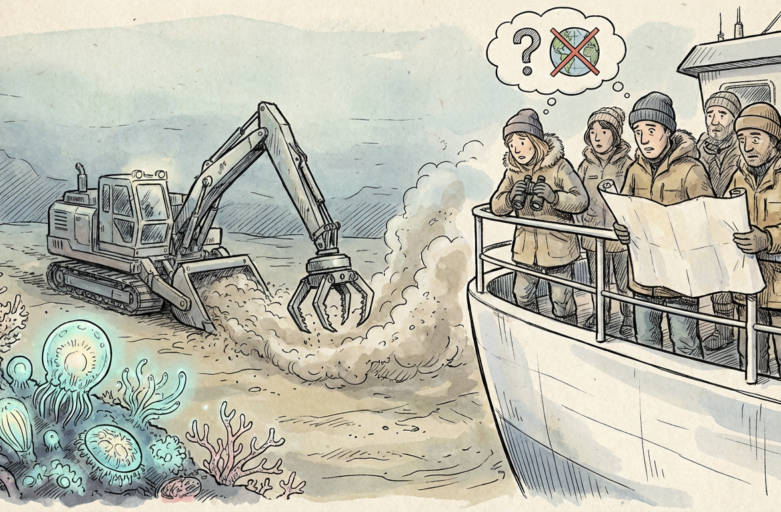
Most coverage of ocean science gets it backwards. The real story isn’t about discovery for its own sake—it’s about deep sea mining companies rushing to extract resources before we even know what’s down there. And marine biologists are sounding the alarm.

What makes this different from past environmental debates is the sheer scale of our ignorance colliding with industrial urgency. We’re essentially arguing over the future of places we’ve never seen. That’s not just ironic—it’s dangerous.

The Real Picture on Ocean science and deep sea discovery

The Communication: Setting the Terms

Here’s the number that should make you uncomfortable: 80 percent of Earth’s oceans remain unexplored and unmapped at high resolution. This isn’t just a cool fact for trivia night. It’s the fundamental problem that makes every other ocean policy debate feel premature.

Think about it this way. Mining companies want to scrape the seafloor for metals while scientists are still finding 2,000 new species per year down there. It’s like arguing over development rights to a continent we’ve only seen from airplane windows. MBARI ocean research has been documenting this mismatch between industrial timelines and scientific understanding.

Three years ago, deep sea mining felt like science fiction. Today, companies have permits and equipment. The science hasn’t caught up—it’s fallen further behind. We’re discovering new ecosystems at the same time we’re planning to destroy them.

I keep coming back to this tension because it’s where the real story lives. The popular narrative focuses on the wonder of discovery, the “alien world beneath the waves.” But the urgent story is about time running out before we can even catalog what we’re losing.

Ocean acidification at the fastest rate in 300 million years just adds urgency to the whole mess. We’re changing these environments faster than we’re studying them.

The Misconception Correction: The Analysis

The speed of ocean acidification tells you everything about how we approach ocean science. We measure what’s easy to measure and call it progress. Meanwhile, the hard questions get pushed aside until it’s too late to ask them properly.

Consider what it means that we found plastic pollution in the Mariana Trench at 11 kilometers depth. The surveys started in 2019—this isn’t old news we’re just hearing about. We’re finding human waste in places we’ve barely visited. That should change how we think about “pristine” deep ocean environments.

But here’s where it gets more complex. Autonomous underwater vehicles are transforming research speed and cost in ways that previous generations of ocean scientists couldn’t imagine. We can explore more, faster, and cheaper than ever before. The technology is finally catching up to the scale of the problem.

The frustrating part is timing. We developed these capabilities just as the pressure to exploit the deep ocean reached a tipping point. It’s like getting glasses right before someone turns off the lights. NOAA Ocean Service tracks these technological advances, but the data shows we’re still playing catch-up.

There’s also a fairness issue nobody talks about. Rich countries and corporations get first access to deep sea resources while the science—which benefits everyone—gets underfunded. We socialize the knowledge but privatize the profits. That’s not sustainable, and it’s not smart.

Implications: What This Means If You Care About Popular science myths

The ocean science story connects to bigger problems with how we handle scientific uncertainty. We act like incomplete knowledge means no knowledge, then use that as an excuse to postpone difficult decisions.

Here’s what I think matters most: discovering 2,000 new species per year from deep ocean surveys isn’t just interesting—it’s a warning signal. Each new discovery shows how much we don’t know. At this rate, we’re always going to be discovering more than we’re protecting.

The practical question becomes: how do you make policy in a state of massive ignorance? The current approach—let industry move first, study the consequences later—is exactly backwards. We should be requiring comprehensive baseline studies before any extraction permits.

But let’s be honest about the constraints. Deep ocean research is expensive, technically challenging, and takes years to produce usable results. Politicians and investors work on shorter timelines. That mismatch isn’t going away.

A few things seem clear regardless of how you feel about the politics. First, deep sea mining is happening whether scientists are ready or not. Second, plastic pollution reaching the deepest ocean trenches means nowhere is unaffected by human activity. Third, the organizations treating this as a temporary controversy are going to be surprised by how persistent these conflicts become.

The Case Against: What the Critics Get Right

I should acknowledge the strongest argument against the “study first” approach: we might not have time. Climate change and resource scarcity create real pressure to develop alternative supply chains quickly.

The counter-argument goes like this: finding 2,000 new species per year could continue indefinitely without ever producing actionable knowledge for policy makers. Perfect information is impossible, and waiting for it guarantees paralysis. Some risk is unavoidable.

There’s truth in that. The 80 percent of unexplored ocean won’t be mapped tomorrow, no matter how much funding we throw at it. Meanwhile, land-based mining is causing documented environmental damage right now. Deep sea mining might be the lesser evil.

The regulatory concern is also real. If deep ocean research reveals ecosystems that are impossible to mine around, we might lock ourselves out of resources we desperately need. Industry argues for learning by doing rather than studying forever.

These aren’t bad-faith arguments. The challenge is that autonomous underwater vehicles and improved survey technology are making comprehensive baseline studies possible for the first time. We’re not asking for decades of delay—just enough time to understand what we’re affecting.

Looking Forward

I can’t predict exactly when the collision between mining timelines and scientific understanding will reach crisis point. But I’m confident it will happen, and probably sooner than most people expect.

Autonomous underwater vehicle deployment is the metric I watch most closely. It moves faster than policy changes, and it determines how quickly we can fill knowledge gaps. The technology is improving exponentially, but so is the pressure to begin extraction.

Three questions help me think about what comes next. Are we building research capacity fast enough to inform policy decisions? Who benefits if we rush forward, and who pays the costs of mistakes? What would convincing evidence of serious harm look like, and would we recognize it in time?

The honest answer is that we’re conducting a massive experiment with systems we don’t understand. That might be unavoidable—but we should at least admit what we’re doing and monitor the results carefully.

The current moment in ocean science feels like a test case for how we handle complex, uncertain, high-stakes decisions. So far, we’re not doing great. But the tools for doing better exist if we choose to use them.

What other science misconception needs this treatment?

AI in the Creative Arts: When Algorithms Wear Berets

bmokeqxwpv

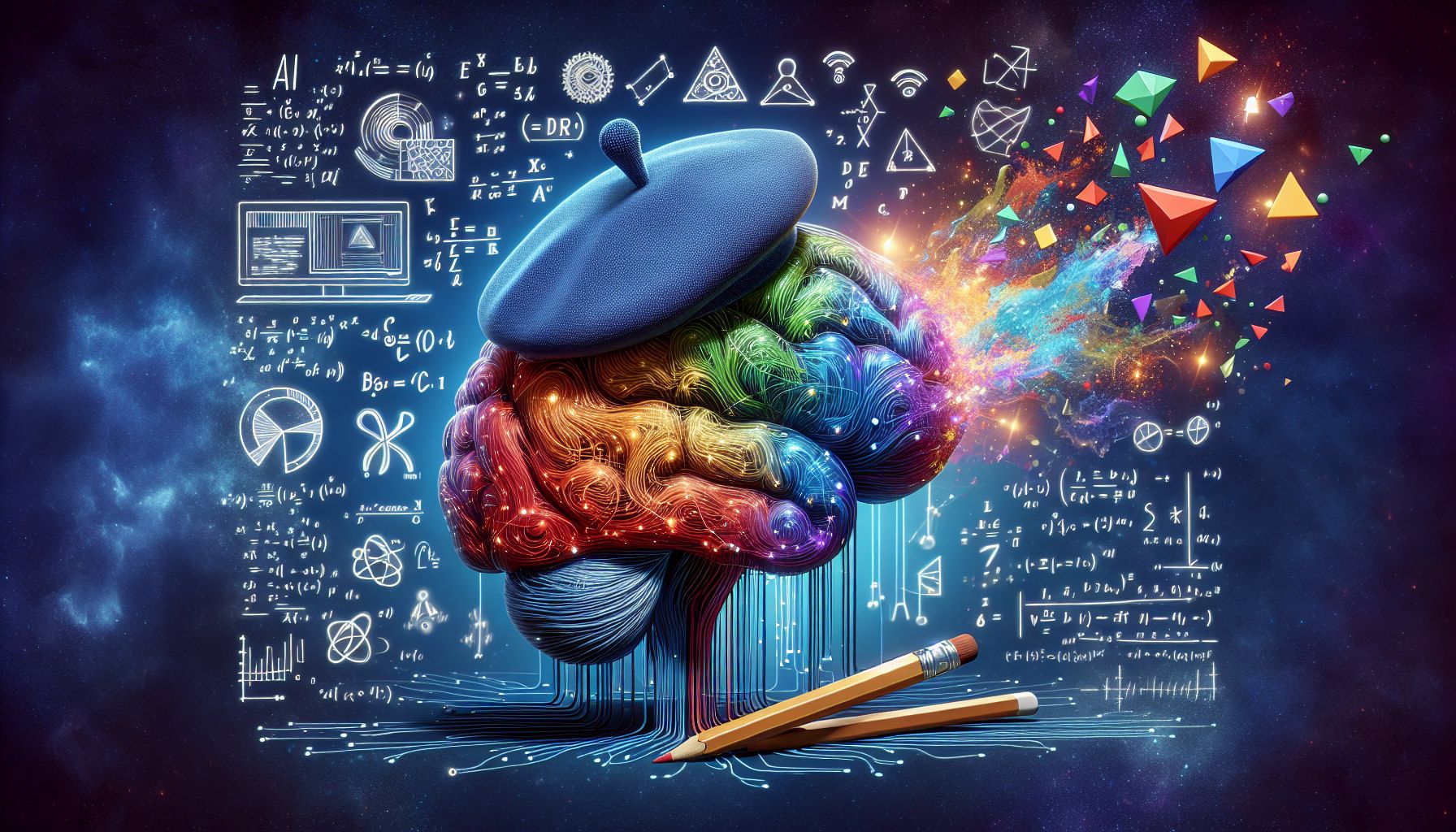
Hey there tech aficionados and the creatively curious! Today, we’re diving headfirst into a fascinating fusion of pixels and paintbrushes, algorithms and art history — I’m talking about Artificial Intelligence (AI) in the creative arts. It’s like Bob Ross meets the Matrix, and it’s as mesmerizing as it sounds. So grab your mocha latte, put on your metaphorical beret, and let’s get our gears turning on how AI is reshaping creativity. And because I love a good teaser, I’ll say this: by the end of this post, you might find yourself pondering whether it’s time to give your laptop some art supplies.

The New Renaissance

Remember when AI was just about automating mundane tasks? Yeah, those days are long gone. Now, AI is kicking its metaphorical feet up on the creative arts sofa, sipping an espresso, and making itself right at home. Developers and artists have teamed up like never before, crafting artworks using complex algorithms that might someday rival the masters of the Renaissance. It’s as if Da Vinci and DeepMind had a backyard barbecue and decided to start a new culture.

The tools of this modern renaissance aren’t chisels and marble but neural networks and datasets. Take the mind-boggling work from OpenAI with GPT-3 and its younger sibling ChatGPT. These language models are starting to write poetry, prose, and even scripts that feel so authentic, you might momentarily forget you’re reading words that came from the digital ether. AI-generated art has come a long way since the simplistic pixelated outputs of its early days. Now it can produce works so lifelike and filled with emotion, it’s tough not to feel a twinge of insecurity about your paint-by-numbers kit.

The Great Algorithmic Imagination

At its core, AI in art challenges the very notion of creativity. Traditionally, creativity has been considered a uniquely human trait—our domain and, perhaps, our one-upmanship over our silicon counterparts. AI questions this assumption and does it with style. Google’s DeepDream, back in 2015, was one of the first glimpses into the surreal artistry possible through AI. DeepDream’s psychedelic outputs were a trip down the rabbit hole, making us see ordinary images in completely transformed iterations—the stuff of Salvador Dalí’s wildest dreams.

These innovations aren’t just curious artifacts to display in museums anymore. AI-generated art is being auctioned at art houses, sometimes for staggering sums. Take Christie’s auction of an AI-generated artwork, “Portrait of Edmond de Belamy,” which sold for $432,500. To put it in perspective, that’s enough to buy an actual Monet, or perhaps even a room full of them!

Music and Movies: The AI Jam Session

Turning our attention to the world of music and film, AI is doing more than just banging on the digital drums. It’s composing symphonies. Platforms like Amper Music allow musicians to craft original compositions with the help of AI, essentially having a digital Mozart as your jam buddy. Sure, it might not replace the raw passion of a live human from Liverpool in the 60s, but it gets pretty darn close to sounding authentic.

On the cinematic front, AI is dabbling in filmmaking as well. From helping streamline editing processes to even scripting elements of a film, its role is growing. AI-assisted scripts may never win an Oscar, but they’re starting to play important roles in the world of amateur and even professional filmmaking.

But Can Machines Really Be Creative?

Here’s the billion-dollar question (or trillions, once inflation catches up): Can machines be truly creative? Some skeptics argue that AI merely mimics human creativity, recycling data from countless human-generated works and algorithms pre-tuned by developers. Others insist that creativity itself relies on constraints and that AI, with its vast array of learned limitations, expresses its creativity through them.

Perhaps the answer lies in a middle ground. AI can be seen as a tool that enhances human creativity rather than replacing it. It provides new canvas and color palette options, so to speak. Artists aren’t being replaced by AI. They’re changing, enhanced by the powers these technologies offer.

Challenges and Possibilities

As we’ve all probably learned from superhero movies, with great power comes even greater responsibility, and AI artistry is no exception. Intellectual property and authorship controversies abound. Who owns the rights to an artwork created by an artificial entity? The lines are blurry, and the legal world is playing catch-up.

On the tech side, AI-generated art’s impact on employment raises questions. Will AI sideline human artists, or will it lead to new roles we’ve yet to imagine? It’s a conundrum wrapped in an enigma, laced with the tantalizing whiff of opportunity.

A Speculative Future

Looking forward, AI in creative arts is ready to revolutionize education, potentially redefining how we teach art and design by personalizing learning experiences in ways traditional methods can’t. We might even see AI collaborate in real-time with artists, creating dynamic art exhibitions that change and grow.

Picture this: an art gallery where each painting changes depending on the mood of its viewers, detected by sensors and processed by AI. It’s not sci-fi—it’s the near-future horizon of artistic expression.

In this brave new world of AI in creative arts, technology and creativity aren’t at odds. They’re partners in a dance, a swirling, unpredictable, and utterly thrilling waltz into uncharted territory. Whether you’re cheering from the sidelines or jumping into the fray yourself, one thing is for sure: the artistic revolution that AI brings is as awe-inspiring as it is unstoppable.

To wrap it up, remember to tip your robots and visit your local neural network studio soon. There’s a brave new world out there just waiting to be created. Keep your inner artist curious and never stop exploring the abstract paths where humans and machines come together to create something genuinely magical.

Quantum Computing: The Next Frontier in the Tech Universe

zfkzsqfckx

Hey, fellow tech enthusiasts! I’ve been wanting to talk about quantum computing for ages because honestly, it’s one of the most fascinating things happening in tech right now. Yeah, it sounds like something out of a sci-fi movie, but the reality is way cooler than fiction (and no, you don’t need a silver jumpsuit). We’re talking about computing power that could change everything. I might be getting a little carried away here, but when you see what this technology might do to cryptography and climate modeling, you’ll get why I’m excited. Let me walk you through this mind-bending tech that has me completely hooked.

So, What Exactly is Quantum Computing?

Okay, let’s start simple. Your regular computer uses bits—little pieces of data that are either 0 or 1. Quantum computers? They use qubits, and here’s where it gets weird. These qubits can be 0, 1, or both at the same time. I know that makes zero sense, but it’s called superposition. Think of Schrödinger’s cat if you remember that from physics class, except no cats get hurt in quantum computing. This weird property means quantum computers can crunch way more information than regular computers, and they do it incredibly fast.

Then there’s entanglement, which is even weirder. You can link qubits together so that changing one instantly affects the other, no matter how far apart they are. Einstein called it “spooky action at a distance,” and honestly, that’s still the best description I’ve heard.

The Unimaginable Potential

Now here’s where things get really interesting. Quantum computing is still pretty young—we’re talking prototype stage—but even now, the possibilities are incredible.

Cryptography Game Changer

If you follow cybersecurity at all, you know keeping hackers out gets harder every day. Here’s the thing about quantum computers: they could crack most of our current encryption methods. That’s terrifying and exciting at the same time. But they’ll also let us build new encryption that’s basically unbreakable. It’s like an arms race, and I’m not sure who’s winning.

Drugs and Material Discovery

This part gets me really excited. Quantum computers could simulate how molecules actually behave at a level we’ve never managed before. We’re talking about designing new drugs and materials by understanding the basic building blocks of matter. Imagine finding treatments for diseases that have stumped researchers for decades, all because we finally have the computing power to model what’s actually happening at the molecular level.

Tackling Climate Change (For Real)

Climate modeling is insanely complex—there’s just so much data and so many variables. Current computers can only do so much. Quantum computers might be able to run climate simulations that are actually accurate enough to help us make real policy decisions. That could be huge.

The Challenges Ahead

But let’s be real—this stuff is hard. Really hard. Building quantum computers is like trying to solve a Rubik’s cube while riding a unicycle. In the dark.

The Error Rates

The biggest problem right now? Qubits are incredibly fragile. They lose their quantum properties if you look at them wrong—okay, not literally, but almost. It’s called decoherence, and it’s like trying to balance a pencil on its point while someone’s shaking the table. Getting quantum error correction right is probably the biggest technical challenge we face.

Scalability

We’ve built some impressive quantum computers, but scaling them up to be actually useful? That’s the million-dollar question. IBM, Google, and a bunch of startups are all racing to solve this, but they’ll be the first to tell you we’ve got a long way to go.

The Future is Quantum

So where does this all lead? Are we about to see a quantum revolution? Maybe, but probably not tomorrow. Right now, it feels a lot like the early days of digital computing—we know something big is coming, but we’re not sure exactly what it’ll look like.

I think quantum computing will probably start as a partner to regular computers rather than replacing them entirely. We’ll use quantum computers for specific problems they’re really good at, while classical computers handle everything else. That might not sound as exciting as a complete technological revolution, but honestly, it’s probably more realistic.

The funny thing about quantum mechanics is that it keeps proving our everyday understanding of the world is completely wrong. Whether that’s amazing or just gives you a headache probably depends on your personality. But one thing’s certain: quantum computing has opened up possibilities we couldn’t even imagine before. To quote Captain Picard, we’re going where no one has gone before.

I’m definitely keeping an eye on how this develops, and I’ll keep you posted on what I find. In the meantime, stay curious—this quantum world definitely isn’t boring. See you in the next deep dive!