
We Just Crossed a Line We Cannot Uncross
In May 2025, the Keeling Curve did something it has never done in 67 years of continuous measurement: it recorded a monthly mean atmospheric CO2 concentration of 430 parts per million. If you have been following climate data for years, you might think this is just another incremental step in a long, predictable climb. You would be wrong. This is the moment when the curve’s trajectory forced climate scientists to sit down with their models and ask harder questions about what we actually do not know.

The Keeling Curve, maintained since 1958 by the Scripps Institution of Oceanography and now housed within NOAA Global Monitoring Laboratory – Mauna Loa CO2 Data, is the longest continuous atmospheric measurement on Earth. It is the backbone of modern climate science. Every policy decision, every climate model, every projection of future warming traces back to the reliability of this dataset. And right now, it is telling us something we need to hear very carefully: the problem is accelerating faster than we thought.
The Acceleration We Cannot Ignore
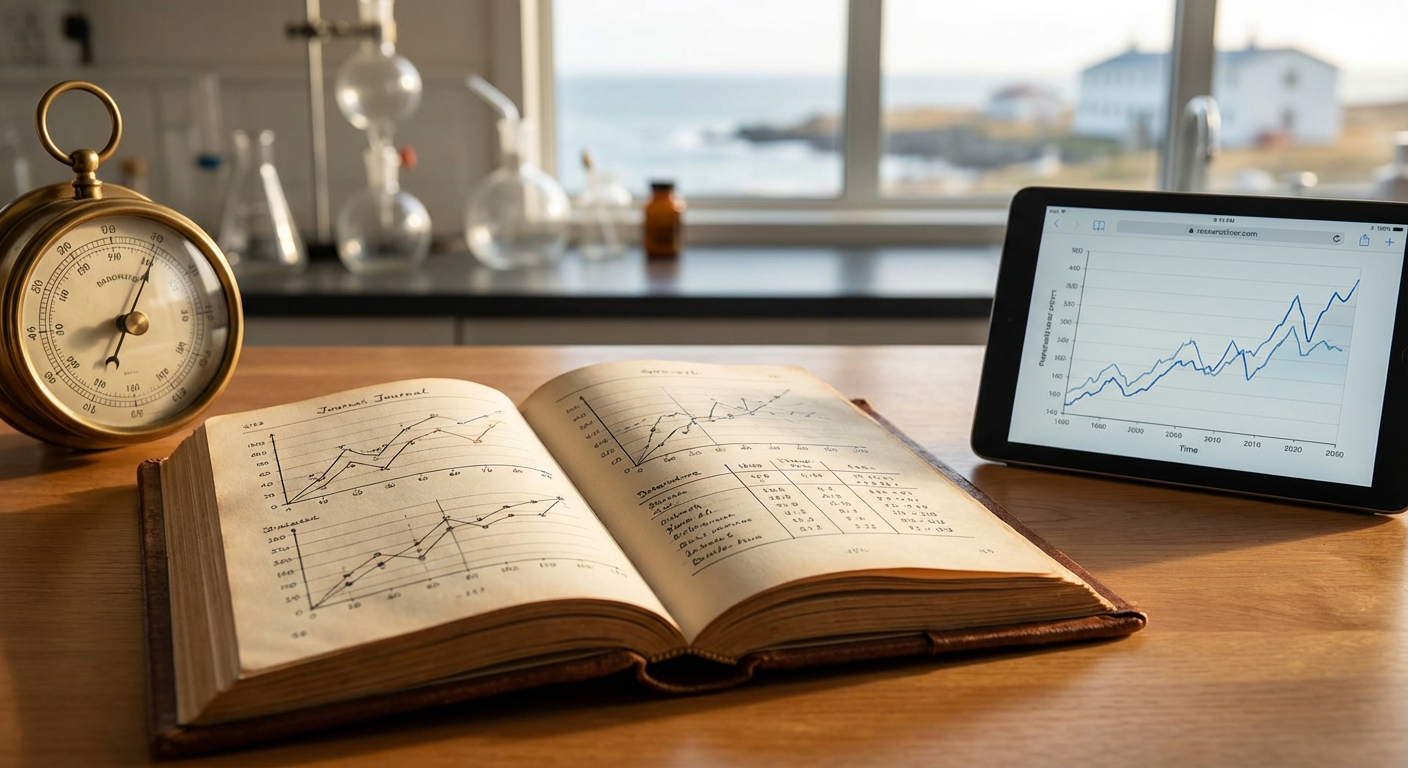
Here is what should alarm you: the rate at which CO2 is accumulating in the atmosphere has nearly doubled since the 1990s. During that decade, atmospheric CO2 was climbing at roughly 1.6 parts per million per year. Fast forward to the last ten years, and that rate has jumped to an average of 2.4 ppm annually. We are not just adding more CO2 to the air. We are adding it faster than we were adding it before. This is not a plateau. This is not stabilization. This is acceleration, and it reflects a simple, brutal fact: global emissions are still rising.
The temptation is to view 430 ppm as just a number, a milestone that sounds significant but means little in isolation. Resist that temptation. What matters is the rate of change, and the rate of change is worrying. When you extrapolate current trends forward, the arithmetic becomes uncomfortable. We are not on a path toward emissions reduction at the scale and speed required by the Paris Agreement. We are on a path that makes the most optimistic climate scenarios look increasingly improbable.
The Models Were Hiding Something
This is where 2025 gets genuinely interesting from a scientific standpoint. A study published in Nature Climate Change this January revealed something that should prompt a serious reckoning in climate research: the IPCC’s models systematically underestimated how much carbon will be released from Arctic permafrost as it thaws. By approximately 40 percent. That is not a small error band. That is a systematic blind spot.
Permafrost is essentially a frozen time capsule containing hundreds of billions of tons of organic matter accumulated over millennia. As Arctic temperatures rise, that permafrost does not just melt passively. It releases its carbon as methane and CO2, which then accelerates warming, which releases more permafrost carbon. It is a positive feedback loop, the kind that keeps climate scientists awake at night because positive feedback loops do not stabilize. They amplify. What the January research suggests is that this particular feedback is roughly 40 percent more potent than current climate models account for. This could add an additional 0.3 degrees Celsius of warming that current IPCC projections do not include.
Let me be precise about what this means and what it does not mean. This is not a doomsday revelation. The permafrost carbon cycle was not unknown to climate science. But the magnitude was underestimated, and that matters enormously when you are trying to predict future temperatures with any confidence. If you thought we were headed toward 2.8 degrees of warming by 2100 under current policies, this kind of finding suggests we might be looking at 3.1 degrees instead. That half-degree difference translates to millions of lives, trillions of dollars, and ecosystems we cannot rebuild.
2024 Already Broke the Record We Hoped Would Stay Unbroken
Here is the thing that most news coverage glossed over in January 2025: 2024 was officially confirmed as the first calendar year in recorded history to exceed 1.5 degrees Celsius above pre-industrial temperatures. Not a decade. Not a projection. A single year. According to Copernicus Climate Change Service – 2024 Annual Report, the global mean temperature in 2024 surpassed the Paris Agreement’s aspirational threshold that negotiators had hoped to defend against permanent exceedance.
This is not the same as saying we have permanently failed the Paris goals. There is a technical distinction between a single-year excursion above 1.5 degrees and a multi-decade average above that threshold. Climate scientists are careful to maintain this distinction, and they should be. But let us not pretend the distinction provides much comfort. We crossed a line in 2024 that we hoped would hold a little longer. The question now is not whether we will cross it again. The question is whether we will cross it and never come back down.
What This Means for Science Moving Forward
The 430 ppm measurement and the permafrost research do not contradict each other. They reinforce each other. They are telling the same story from different angles: our models have structural gaps. We have been relatively good at measuring CO2 concentrations directly, thanks to the Keeling Curve and similar programs. We have been far less reliable at modeling the feedback mechanisms that determine how much additional warming that CO2 will ultimately cause.
This is not a crisis of the data. It is a crisis of the models. And paradoxically, that means there is room for the science to improve. Researchers are taking the permafrost findings seriously and building them into the next generation of climate simulations. The question is whether those improved models will reveal other underestimated feedbacks lurking in our assumptions. Methane hydrate release from warming oceans. Changes in cloud cover and albedo. Vegetation dieback. These are not theoretical concerns. They are processes happening right now, and they may be happening faster than we modeled them.
If you are a scientist working on climate prediction, this moment is uncomfortable and energizing in equal measure. We have a dataset that is fundamentally reliable, spanning decades, showing changes we can measure directly. We have high-confidence measurements of current atmospheric CO2 at 430 ppm. We have evidence that our models of future warming might be systematically underestimating key processes. That is the state of the field right now: precise measurement, accelerating change, and nagging uncertainty about what we do not yet see.
What questions are you sitting with after reading this? What aspects of the climate-model-feedback problem do you want to go deeper on? The research is happening now, the data is getting richer, and the next refinements to our understanding could come from unexpected directions. That uncertainty is not an invitation to complacency. It is an invitation to pay closer attention.