The data aren’t subtle. They don’t whisper cautions from a hazy future. They are a clamorous, present-tense indictment of our refusal to grasp the sheer physicality of climate change. We keep framing it as a matter of politics, economics, abstract carbon budgets. That’s a category error with teeth. Climate change is, at its core, a reorganization of the planet’s heat engine. And when you retune a heat engine, the first and most predictable responders are the cold-blooded couriers of disease: the vectors. To call this a ‘future threat’ is to be willfully blind to the entomological and epidemiological records already being rewritten on every continent except Antarctica.
I’ve spent my career dismantling the mechanistic links between environmental variables and pathogen transmission. The math isn’t hard. The basic reproductive number (R0) for a vector-borne pathogen is exquisitely sensitive to temperature, biting rate, and vector mortality. A fraction of a degree of warming doesn’t just make a mosquito ‘a bit more active.’ It compresses the extrinsic incubation period—the time it takes for a pathogen to develop inside the vector and become transmissible. It speeds up the gonotrophic cycle, forcing the vector to bite more often. It stretches the thermodynamic envelope where both vector and pathogen can survive. This isn’t some delicate ecological ballet. It’s a brutal, physics-driven expansion of transmission potential, and we’re watching it unfold in real time.
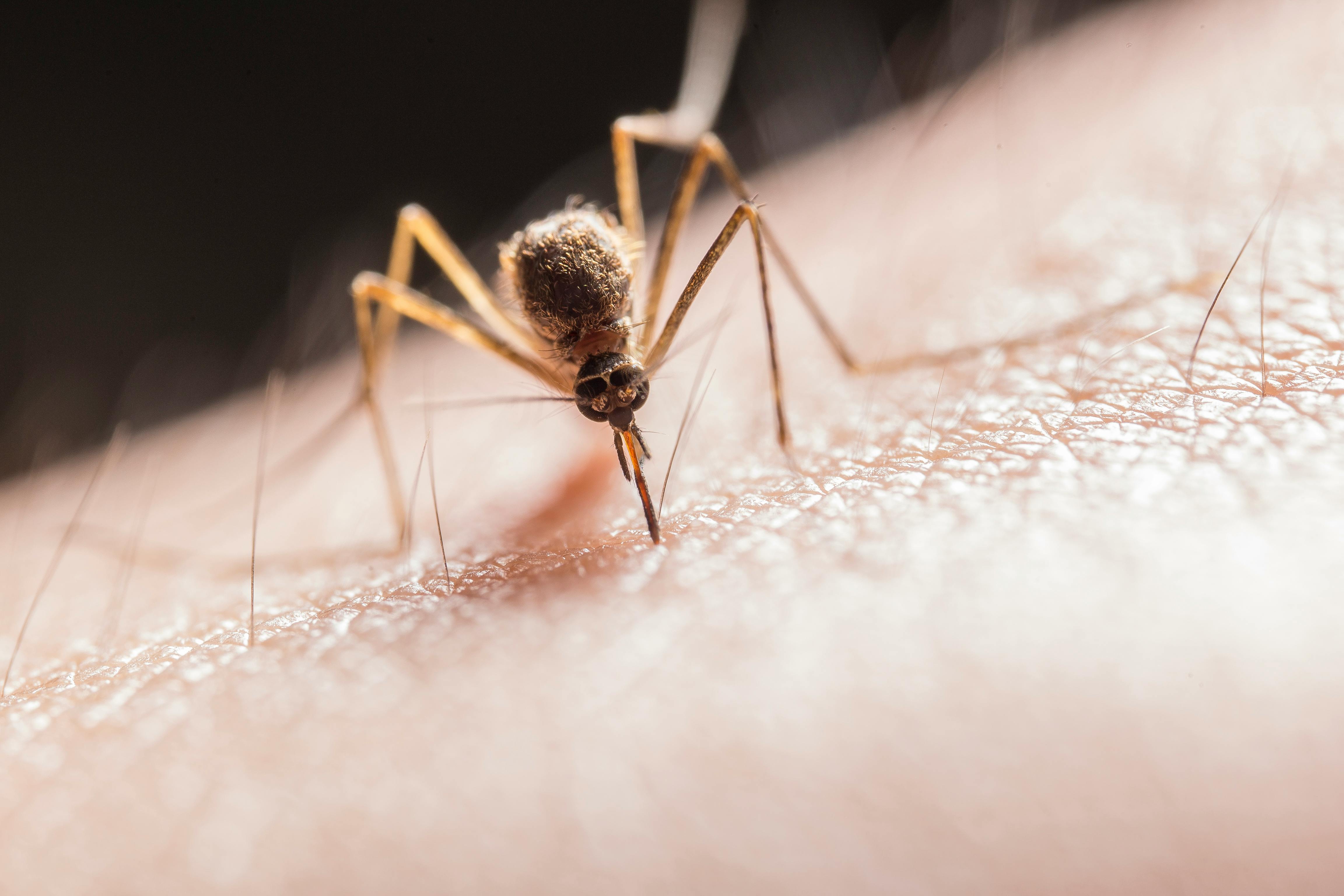
The Unforgiving Arithmetic of Ectothermy
Let’s drop the hand-waving about ‘complex systems.’ The relationship between temperature and vectorial capacity is governed by well-characterized thermal performance curves. For Aedes aegypti, the main vector of dengue, Zika, and chikungunya, the sweet spot for transmission sits around 29°C. Below that, the extrinsic incubation period drags on, often outlasting the mosquito’s lifespan. Above it, vector mortality spikes. But the curve isn’t symmetrical. As mean temperatures shift from 25°C to 28°C, transmission potential doesn’t inch upward—it jumps. A 2019 analysis in PLOS Neglected Tropical Diseases showed that for dengue, a 1°C temperature bump in a temperate zone can amplify the basic reproduction number by a factor that steamrolls conventional control measures. This isn’t a linear game. It’s a game of thresholds, and we’re crossing them.
Look at the altitudinal expansion. In the Ethiopian highlands, where malaria was historically a sporadic visitor, Anopheles arabiensis is now setting up permanent breeding sites above 2,000 meters. The local human populations, immunologically naive, are getting hit with explosive epidemics. This isn’t a model projection. It’s a documented shift, measured in blood slides and larval surveys. The same pattern is carved into the slopes of the Andes and the Nepalese Terai. The vector isn’t ‘invading.’ It’s simply following the isotherm it’s always been physiologically chained to. The isotherm is what moved.
The Collapse of Seasonality
One of the most irritating refrains I hear is that ‘mosquitoes have always been with us.’ That’s a statement of profound ignorance. The critical variable isn’t the vector’s presence. It’s the length of the transmission season. In a stable climate, the season is bracketed by temperature and rainfall patterns that constrain vector abundance and pathogen replication. Climate change isn’t just making these seasons more intense. It’s erasing the brackets. Warmer winters mean lower overwintering mortality for Aedes albopictus, the Asian tiger mosquito, now firmly established in southern Europe. Milder autumns stretch the transmission window for West Nile virus in North America, pushing human cases into November in regions where the season once shut down in September.
Take Lyme disease in Canada. The blacklegged tick, Ixodes scapularis, needs a specific accumulation of degree-days above freezing to complete its life cycle. Two decades ago, the 2,800 degree-day isopleth—the line showing where the tick could establish—sat well south of the Canadian border. Today, it has surged northward at a rate of up to 46 kilometers per year, hauling Borrelia burgdorferi along with it. This isn’t a subtle ecological shift. It’s a measurable, directional, and accelerating range expansion driven by the physics of a warming atmosphere. Calling it ’emerging’ is a misuse of the word. It has emerged. It’s here.

The Water Cycle and the Breeding Substrate
Temperature is only half the story. The hydrological cycle, supercharged by a warmer atmosphere, is generating the breeding sites. We’re seeing a global pattern of precipitation extremes: longer droughts punctuated by heavier rainfall events. This is a perfect recipe for urban vectors. Aedes aegypti, the main vector of dengue, chikungunya, and Zika, is a paradox. It thrives in drought because households store water in open containers, creating ideal larval habitats. It thrives in floods because the receding waters leave behind a mosaic of debris-filled pools. Climate change isn’t simply making things wetter or drier. It’s amplifying the variance, and the mosquito exploits both tails of the distribution.
Look at the 2023-2024 dengue outbreak in Bangladesh. It was the worst on record, with over 300,000 cases and 1,500 deaths. The monsoon was erratic, with extended dry spells followed by intense, short-duration rainfall. The Aedes mosquito, a container-breeder, found a perfect storm of human water storage and flooded urban detritus. The hospitals collapsed. This isn’t a ‘natural disaster.’ It’s a predictable consequence of altered precipitation regimes intersecting with inadequate infrastructure. The climate signal is unmistakable.
The Expanding Envelope of Aedes-Borne Disease
Let’s talk about Europe. The European Centre for Disease Prevention and Control (ECDC) now maps the establishment of Aedes albopictus across 13 countries, with Aedes aegypti reintroduced to Cyprus and parts of the Black Sea coast. This isn’t a theoretical risk. In 2023, Italy reported 82 locally-acquired dengue cases, France reported 45, and Spain reported 3. These aren’t travel-related infections. They’re autochthonous transmissions, meaning the mosquito bit an infected traveler and then bit a local resident, completing the transmission cycle on European soil. The vector is established. The pathogen is being introduced. The climate is permissive. The only missing ingredient is sustained importation, and global travel provides that in abundance.
I find the public health response to this deeply inadequate. We’re still acting as if these are isolated incidents, anomalies to be managed with reactive insecticide fogging. That’s a failure of imagination. The entomological and climatological data tell us that the Mediterranean basin is becoming a receptive zone for dengue, chikungunya, and Zika. The question isn’t whether these diseases will become endemic in southern Europe. The question is how quickly, and whether the health systems will adapt before they’re overwhelmed.
The Tick-Borne Disease Frontier
While mosquitoes dominate the headlines, ticks are executing a quieter but equally alarming expansion. Ixodes ricinus, the castor bean tick, is the primary European vector for Lyme borreliosis and tick-borne encephalitis (TBE). Its distribution is tightly coupled to temperature and humidity. As winters warm, its range is pushing northward into Scandinavia and upward into the Alps. Sweden has documented a doubling of TBE cases over the past two decades, with the disease now endemic as far north as Västerbotten County, near the Arctic Circle. This isn’t a subtle signal. It’s a population-level health impact driven by a shifting climate envelope.
In North America, the lone star tick (Amblyomma americanum) is expanding its range from the southeastern United States into the Midwest and Northeast. This tick is a vector for ehrlichiosis and tularemia, and its bite can induce alpha-gal syndrome, a delayed allergic reaction to mammalian meat. The expansion is linked to warmer winters and increased white-tailed deer populations, which are themselves influenced by climate-driven habitat changes. The result is a novel, chronic, and poorly understood allergic condition emerging in populations that have never encountered this tick before. The medical community is scrambling to diagnose and manage a disease that didn’t exist in these regions a decade ago.
The Melting Permafrost and the Paleolithic Pathogen Question
There’s a more speculative but scientifically grounded concern I’m often asked about: the release of ancient pathogens from thawing permafrost. I’m less worried about a 30,000-year-old virus wiping out humanity—our immune systems aren’t naive to the broad classes of pathogens, and most ancient microbes are unlikely to outcompete modern ones. What concerns me more is the thawing of burial sites from known historical epidemics. In the 1890s, a smallpox epidemic swept through Siberia. Victims were buried in the permafrost. In 2016, an anthrax outbreak in the Yamal Peninsula, linked to a thawed reindeer carcass from a 1941 outbreak, hospitalized dozens and killed a child. The permafrost isn’t a sterile freezer. It’s a reservoir of viable spores and, potentially, viral particles. The risk isn’t extinction-level, but it’s real, and it’s a direct consequence of the thermal erosion of the cryosphere.

The Misguided Allure of Simple Narratives
I’m frequently exasperated by the binary framing of this issue. On one side, a catastrophism that predicts climate-driven plagues sweeping the globe, ignoring the role of socioeconomic factors, vector control, and public health infrastructure. On the other, a dismissive skepticism that attributes every outbreak to ‘travel and trade’ while ignoring the thermodynamic reality that vectors are ectotherms. Both positions are intellectually lazy. The truth is that climate change is a threat multiplier. It expands the geographic and seasonal envelope in which transmission is possible. Whether that potential is realized depends on a cascade of other factors: housing quality, access to healthcare, vector surveillance, and human behavior. But to ignore the expansion of the envelope is to willfully misunderstand the nature of the risk.
A 2022 study in Nature Climate Change modeled the climate suitability for dengue under different warming scenarios. By 2050, under a business-as-usual emissions trajectory, the number of people living in areas climatically suitable for dengue transmission will increase by 2.25 billion. That’s not a prediction of cases. It’s a statement of exposure. The distinction matters. But it also means that the margin for error in vector control, in urban planning, in water management, becomes razor-thin. We’re loading the dice.
The Failure of Reactive Surveillance
Our current surveillance systems are largely reactive. We wait for human cases to appear, then scramble to identify the vector and the pathogen. This is a 20th-century model being applied to a 21st-century problem. By the time a cluster of human cases is detected, the pathogen has already been circulating in the vector population for weeks or months. We’re always behind the curve. What’s needed is active, climate-informed surveillance: monitoring vector populations, testing them for pathogens, and using meteorological data to forecast periods of elevated transmission risk. This is technically feasible. It’s not happening at scale because public health budgets are perpetually inadequate and because the political will to invest in prevention, rather than reaction, is scarce.
I’ve seen this pattern repeatedly. A heatwave hits. A drought forces people to store water. Cases spike. The health system panics. Insecticides are sprayed. The outbreak subsides. Then the funding dries up, the entomologists are reassigned, and the cycle repeats. This isn’t preparedness. It’s a ritual of failure.
The Path Forward: Hard Truths
Let me be clear about what’s required. First, we need to stop treating vector-borne disease as a tropical curiosity and recognize it as a direct consequence of planetary warming that will affect every temperate region. Second, we need to invest in permanent, climate-informed surveillance systems that track vectors and pathogens in real time, not just human cases. Third, we need to redesign our cities. Urban heat islands, inadequate housing, and poor water management aren’t just quality-of-life issues; they’re epidemiological liabilities. Green infrastructure, improved drainage, and screened windows are public health interventions. Fourth, we need to accept that the climate is already changed. We’re not preventing a future crisis. We’re managing an ongoing one. The question is whether we’ll manage it with intelligence and resources, or with denial and ad hoc panic.
The vectors aren’t waiting for us to finish our policy debates. They’re responding to the physical reality of a warmer, wetter, more volatile world. Every fractional degree of warming, every extreme weather event, every hectare of habitat altered, is a signal to which they adapt with ruthless efficiency. We, with our big brains and our complex institutions, are being outcompeted by organisms with ganglia. That should tell us something about the urgency of the situation.
Frequently Asked Questions
Is climate change the only reason vector-borne diseases are spreading?
No, and I’ve never claimed it is. Global travel, urbanization, deforestation, and changes in agricultural practices all play significant roles. But climate change is the factor that’s altering the fundamental physical and biological constraints on transmission. It’s expanding the geographic and seasonal envelope within which all other risk factors operate. To ignore it is to miss a primary driver of the changing landscape.
Can we adapt to these changing disease patterns?
Yes, but adaptation requires acknowledging the scale of the problem. It means building climate-informed surveillance systems, investing in resilient infrastructure, and integrating vector control into urban planning. It also means accepting that some regions will become permanently unsuitable for certain vectors, while others will become permanently suitable. Adaptation isn’t a one-time fix; it’s an ongoing process of managing a dynamic risk.
Are we at risk of seeing malaria return to Europe or North America?
Malaria was eliminated from Europe and North America through a combination of vector control, improved housing, and land-use changes, not because the climate was unsuitable. The vectors are still present in many areas. With a warming climate, the transmission potential increases. Sustained local transmission is unlikely without a breakdown in public health infrastructure, but sporadic outbreaks are a real and growing risk, as seen in Greece and Italy in recent years. The key is vigilance and maintaining the systems that keep the basic reproduction number below one.
What can individuals do to protect themselves?
Personal protection measures—using repellent, wearing long sleeves, eliminating standing water—are important but insufficient. This is a population-level problem that requires systemic solutions. However, individuals can advocate for better surveillance, support policies that reduce emissions, and hold local governments accountable for vector control and climate adaptation planning. The most dangerous thing you can do is assume this is someone else’s problem.
The evidence isn’t ambiguous. The trends aren’t subtle. The vectors aren’t waiting. The only question is whether we’ll continue to mistake our own inertia for a lack of signal.